
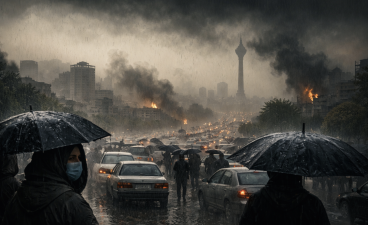
Recent events in Tehran have brought to light a severe environmental and health crisis. Following Israeli airstrikes on multiple oil facilities in early March 2026, the city experienced unusual black rain. This rain was laden with toxic chemicals, raising concerns about public health and environmental damage.
Formation of Black Rain
On the night of March 7-8, Israeli strikes targeted four oil storage sites and a refinery in Tehran and nearby Alborz province. The attacks ignited large fires, releasing vast amounts of toxic hydrocarbons, sulfur oxides, and nitrogen compounds. As rain passed through the polluted atmosphere, it absorbed these chemicals. This process caused the rain to fall as oily, black droplets, known as black rain. Weather patterns contributed by bringing rain into the already contaminated skies.
Health Risks from Black Rain
The World Health Organization (WHO) warned that black and acidic rain poses serious health risks. Exposure can cause respiratory problems, headaches, skin and eye irritation, and difficulty breathing. Long-term contact with some chemicals may increase cancer risk. The Iranian Red Crescent also cautioned about risks of lung damage and chemical burns. The toxic hydrocarbons include benzene, a known carcinogen. People are advised to stay indoors to avoid exposure.
Environmental and Urban Factors
Tehran’s geography worsens the problem. Surrounded by mountains, pollutants tend to settle over the city rather than disperse. The dense urban layout limits air circulation, trapping toxic particles. This has led to unprecedented pollution levels and thick smog that blocks sunlight. The black rain has coated cars, buildings, and streets miles from the strike sites. Experts warn that contamination could persist for months or years.
Long-Term Consequences and Chemical Contamination
Beyond immediate effects, the crisis may leave lasting damage. Forever chemicals from flame retardants used at the oil facilities could contaminate groundwater and enter the air again through evaporation. Acid rain could corrode buildings already weakened by pollution. The Conflict and Environment Observatory has documented over 230 environmental risk incidents since the conflict began, denoting threats to food chains and ecosystems due to toxic contamination.
Topics for Prelims:
Black Rain
- Result of rain absorbing toxic chemicals from air pollution
- Contains hydrocarbons, sulfur oxides, nitrogen compounds
- Causes respiratory and skin health issues
- Occurs due to industrial or war-related chemical release
- Can lead to long-term environmental damage
Tehran Geography and Pollution
- Mountainous terrain traps air pollutants
- Dense urban areas reduce air circulation
- Prone to smog and poor air quality
- Pollution levels can reach hazardous levels
- Vulnerability to chemical contamination from industrial sites
Forever Chemicals
- Chemicals resistant to environmental degradation
- Common in flame retardants and industrial products
- Can contaminate soil and groundwater
- May bioaccumulate in food chains
- Linked to long-term health risks including cancer
Questions for Mains:
- Discuss the environmental and health impacts of chemical pollution caused by armed conflicts in urban areas with reference to Tehran’s black rain incident. [GS-III-Environment & DM]
- Critically examine the role of urban geography in exacerbating air pollution and its health effects, using Tehran as a case study. [GS-I-World & Physical Geography]
- Explain the concept of forever chemicals and discuss their environmental persistence and risks to human health in the context of industrial disasters. [GS-III-Science & Technology]
- With suitable examples, discuss the challenges in managing environmental risks during wartime and the responsibilities of international organisations in mitigating such crises. [GS-II-International Relations]
Answer Hints:
1. Discuss the environmental and health impacts of chemical pollution caused by armed conflicts in urban areas with reference to Tehran’s black rain incident. [GS-III-Environment & DM]
- Armed conflicts can cause large-scale release of toxic chemicals from damaged industrial sites, as seen in Tehran’s oil facility strikes.
- Black rain formed when rain absorbed hydrocarbons, sulfur oxides, and nitrogen compounds released by fires, contaminating air and water.
- Health impacts include respiratory problems, skin and eye irritation, chemical burns, headaches, and increased long-term cancer risk.
- Urban populations face acute exposure due to dense habitation and limited evacuation options during conflicts.
- Environmental damage includes contamination of soil, water, and food chains, with persistent pollutants like forever chemicals prolonging harm.
- Conflict-related pollution exacerbates pre-existing urban environmental vulnerabilities, worsening public health crises.
2. Critically examine the role of urban geography in exacerbating air pollution and its health effects, using Tehran as a case study. [GS-I-World & Physical Geography]
- Tehran’s mountainous terrain traps pollutants, preventing their dispersal and causing accumulation of toxic air particles.
- Dense urban layout restricts airflow, leading to stagnation of polluted air and increased smog formation.
- Geographical enclosure results in downward and inward movement of pollutants, intensifying exposure for residents.
- Limited natural ventilation exacerbates health hazards from airborne toxic substances, increasing respiratory and cardiovascular diseases.
- Urban geography influences microclimate, worsening acid rain and black rain effects through pollutant concentration.
- Geography combined with industrial activity creates hotspots of pollution, requiring tailored mitigation strategies.
3. Explain the concept of forever chemicals and discuss their environmental persistence and risks to human health in the context of industrial disasters. [GS-III-Science & Technology]
- Forever chemicals (PFAS) are synthetic compounds resistant to environmental degradation and breakdown.
- Commonly used in flame retardants, coatings, and industrial products, they persist in soil, water, and air for decades.
- In industrial disasters, these chemicals can be released and contaminate groundwater and atmosphere, re-entering ecosystems repeatedly.
- They bioaccumulate in food chains, posing chronic health risks including cancer, immune system disruption, and hormonal effects.
- Due to persistence and toxicity, they require long-term monitoring and remediation efforts post-disaster.
- Examples include contamination following oil facility fires, like Tehran’s black rain incident where flame retardants may contribute.
4. With suitable examples, discuss the challenges in managing environmental risks during wartime and the responsibilities of international organisations in mitigating such crises. [GS-II-International Relations]
- Wartime environmental risks include uncontrolled release of toxic chemicals, destruction of infrastructure, and disruption of monitoring systems.
- Challenges – limited access to affected areas, ongoing conflict hindering relief, lack of accountability, and prioritization of military objectives over environment.
- Examples – Tehran’s black rain from oil facility strikes; 1991 Gulf War oil well fires causing massive pollution and health crises.
- International organisations (WHO, UNEP, ICRC) have roles in risk assessment, health advisories, humanitarian aid, and advocating for environmental protection laws.
- Responsibility includes enforcing international conventions (e.g., Geneva Conventions, Environmental Protocols) to minimize civilian and environmental harm.
- Need for coordinated post-conflict environmental remediation, data sharing, and capacity building to manage long-term impacts.