
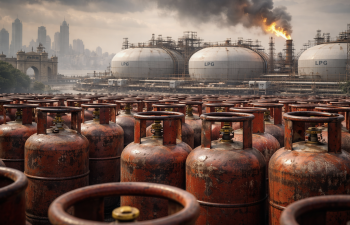
India is facing a severe LPG shortage in 2026. The shortage has impacted daily life across the country. This crisis marks India’s growing reliance on imported LPG and the lack of adequate strategic storage. Despite a sharp rise in LPG consumption, especially among poor households, India has not expanded its long-term LPG reserves. The situation differs from oil reserves, where India maintains about two months of stock.
Rising LPG Consumption and Import Dependency
India’s LPG imports have tripled since 2011-12, reaching 20 million tonnes in 2024-25. Imports now cover 60% of the country’s LPG needs, up from 47% in 2015. India is the world’s second-largest LPG consumer, using about 3 million tonnes monthly. Over 85% of LPG is consumed by households. The surge is largely due to the Pradhan Mantri Ujjwala Yojana (PMUY), which added 10 crore domestic connections since 2017 to provide clean cooking fuel to poor families.
Storage Capacity and Infrastructure Gaps
India’s total LPG storage capacity is insufficient. It can feed less than half a month’s consumption, mostly stored at import terminals like Ennore. Long-term underground storage consists of only two caverns – Visakhapatnam (commissioned in 2007) and Mangaluru (operational in 2025). Together, they hold 1.4 lakh tonnes, less than two days’ consumption. No new caverns are planned despite growing demand. The Ministry of Petroleum and Natural Gas (MoPNG) has not proposed expanding underground storage.
Geological Zones and Storage Options
India’s geological zones affect LPG storage feasibility. The Peninsular Shield, made of granite and gneiss, hosts the current caverns. The Deccan Traps basalt plateau poses engineering challenges. Salt formations in Rajasthan’s Bikaner-Barmer region offer a promising option. Salt caverns are cheaper, faster to build, and naturally sealed. Engineers India Limited is exploring these with German partners. Depleted offshore gas reservoirs are also under study for future storage.
International and Strategic Context
India imports over 85% of LPG through the Strait of Hormuz, a geopolitical hotspot. US LPG imports signed in 2026 take 45 days to arrive, slower than Gulf cargoes. The International Energy Agency (IEA) has flagged India’s lack of strategic LPG reserves as a vulnerability. Unlike oil, LPG lacks a mandated emergency stockpile. Europe’s gas storage policies post-Ukraine war offer lessons in resilience through mandated filling targets.
Topics for Prelims:
Pradhan Mantri Ujjwala Yojana (PMUY)
- Launched to provide LPG connections to poor households.
- Added 10 crore domestic LPG connections since 2017.
- Reduces dependence on firewood and kerosene for cooking.
- Subsidises LPG refills for eligible users.
- Key driver of increased LPG consumption in India.
India’s LPG Storage Facilities
- Two underground caverns at Visakhapatnam and Mangaluru.
- Total underground storage capacity – 1.4 lakh tonnes.
- Storage covers less than two days of national LPG use.
- Most LPG stored at import terminals, not underground.
- No new underground caverns planned as of 2026.
Geological Zones for Gas Storage in India
- Peninsular Shield – granite and gneiss rock, proven for storage.
- Deccan Traps – basalt plateau, presents engineering challenges.
- Rajasthan Salt Formations – potential for cheap, fast salt caverns.
- Offshore depleted reservoirs under study for future use.
- Salt caverns naturally impermeable and allow rapid gas flow.
Questions for Mains:
- Critically analyse the impact of the Pradhan Mantri Ujjwala Yojana on India’s energy consumption patterns and import dependency. [GS-III-Economic Development]
- Explain the strategic importance of LPG storage infrastructure in India and comment on the challenges posed by its current geological and geopolitical context. [GS-III-Internal & External Security]
- With suitable examples, underline the role of geological formations in determining energy storage solutions and discuss how India can leverage its natural resources for energy security. [GS-III-Science & Technology]
- What are the implications of India’s LPG import dependency on international relations, especially in the context of the Strait of Hormuz and US-India energy ties? Critically analyse India’s preparedness for supply disruptions. [GS-II-International Relations]
Answer Hints:
1. Critically analyse the impact of the Pradhan Mantri Ujjwala Yojana on India’s energy consumption patterns and import dependency. [GS-III-Economic Development]
- PMUY provided 10 crore LPG connections to poor households since 2017, increasing LPG access.
- Shift from traditional fuels (firewood, kerosene, cow dung) to clean LPG reduced indoor pollution and improved health.
- Surge in domestic LPG consumption, making India the second-largest LPG consumer globally.
- Increased LPG demand led to a rise in imports from 47% in 2015 to 60%+ currently, raising import dependency.
- Enhanced energy access but created vulnerability due to reliance on imported LPG and lack of strategic reserves.
- Subsidies and deposit-free connections encouraged uptake but fiscal sustainability and supply security remain concerns.
2. Explain the strategic importance of LPG storage infrastructure in India and comment on the challenges posed by its current geological and geopolitical context. [GS-III-Internal & External Security]
- LPG storage ensures supply continuity, buffers against import disruptions, and stabilizes prices.
- India’s underground LPG storage is limited to two caverns (Visakhapatnam and Mangaluru) with total capacity less than two days’ consumption.
- Storage at import terminals is operational but vulnerable to supply chain shocks.
- Geological challenges – Peninsular Shield suitable; Deccan Traps basalt pose engineering difficulties; salt formations in Rajasthan promising but underutilized.
- Geopolitical risks – Over 85% LPG imports pass through Strait of Hormuz, a sensitive chokepoint prone to disruption.
- Lack of strategic reserves flagged by IEA, with no current plans to expand underground storage, increasing national energy security risks.
3. With suitable examples, underline the role of geological formations in determining energy storage solutions and discuss how India can leverage its natural resources for energy security. [GS-III-Science & Technology]
- Peninsular Shield’s granite and gneiss formations host existing LPG caverns (Visakhapatnam, Mangaluru) demonstrating proven storage feasibility.
- Deccan Traps basalt plateau presents engineering challenges due to rock permeability and structure, limiting cavern construction.
- Salt formations in Rajasthan (Bikaner-Barmer) offer ideal conditions – naturally impermeable, cheaper and faster to build salt caverns for LPG storage.
- Offshore depleted gas reservoirs (Krishna-Godavari, Cambay, Mumbai basins) are potential future storage sites under study.
- Leveraging salt caverns and offshore reservoirs can expand strategic storage capacity, reducing import vulnerability.
- Collaboration with international partners (e.g., Germany’s DEEP) can accelerate technology adoption and infrastructure development.
4. What are the implications of India’s LPG import dependency on international relations, especially in the context of the Strait of Hormuz and US-India energy ties? Critically analyse India’s preparedness for supply disruptions. [GS-II-International Relations]
- India imports over 85% of LPG via Strait of Hormuz, a geopolitically volatile chokepoint affecting energy security.
- Disruptions here can cause immediate supply shocks due to limited strategic LPG reserves and storage capacity.
- India’s LPG import agreement with the US diversifies sources but US shipments take ~45 days, longer than Gulf cargoes, affecting supply timelines.
- India lacks mandated emergency LPG stockpiles unlike oil reserves, making it vulnerable to sudden disruptions.
- International Energy Agency (IEA) marks India’s infrastructural weaknesses in LPG storage and calls for strategic reserves.
- India’s preparedness is limited by infrastructure gaps, lack of new cavern projects, and high import dependency, necessitating urgent policy focus.