
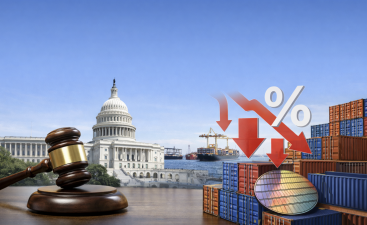
In 2026, the US Supreme Court ruled against former President Donald Trump’s 2025 tariffs on imports. The Court declared that the President cannot impose tariffs without Congress’s approval. This judgment reaffirmed the constitutional division of powers and the rule of law in the United States.
Background of the Tariff Dispute
Recently, President Trump imposed 10% tariffs on imports from many countries using the International Emergency Economic Powers Act (IEEPA) of 1977. He claimed emergency powers allowed him to act without Congress. The tariffs generated over $175 billion in revenue. Trump threatened higher tariffs to negotiate trade deals with partners like the UK, EU, Japan, and South Korea.
Supreme Court Ruling and Legal Reasoning
In a 6-3 decision, the Court ruled the President lacked authority to impose tariffs unilaterally. Chief Justice John Roberts stated tariffs are taxes and only Congress can levy taxes. The Court applied the major questions doctrine, requiring clear congressional authorisation for major economic actions. Justices agreed IEEPA does not permit tariffs. The ruling limits executive power under emergency laws.
Impact on US Trade Policy
The ruling restricts presidential tariff powers, ensuring Congress controls trade taxes. Trump announced new tariffs under the Trade Act of 1974, but these are temporary and subject to congressional review. The decision creates uncertainty for businesses and international trade relations. The EU and other partners are cautious in responding to US tariff changes.
Future Legal and Trade Challenges
Refund claims for the struck-down tariffs are expected. Trump’s use of other statutes like sections 232 and 301 for tariffs remains valid. Legal challenges to new tariffs under these laws are likely. The ruling emphasises the need for clear legal frameworks in trade policy and the importance of checks and balances in US governance.
Topics for Prelims:
International Emergency Economic Powers Act (IEEPA)
- Enacted in 1977 to allow presidential emergency economic actions.
- Used to impose sanctions and control trade during emergencies.
- Does not explicitly authorise tariffs as per Supreme Court ruling.
- Requires clear congressional approval for major economic measures.
- Central to the 2025 US tariff dispute.
Major Questions Doctrine
- Legal principle requiring clear congressional authorisation for major executive actions.
- Used by Supreme Court to limit expansive presidential powers.
- Applied in the 2026 tariff ruling.
- Ensures separation of powers in US government.
- Prevents unchecked executive decisions on economic policies.
US Tariff Laws
- Tariffs are taxes on imports regulated by Congress.
- Trade Act of 1974 allows temporary tariffs under specific conditions.
- Sections 232 and 301 used for national security and unfair trade practices.
- Trump’s tariffs partly imposed under these statutes.
- Legal limits on presidential tariff powers reaffirmed by Supreme Court.
Questions for Mains:
- Critically discuss the role of the US Supreme Court in maintaining the balance of powers between the executive and legislature in the context of tariff imposition. [GS-II-Constitution of India & Polity]
- Analyse the impact of unilateral trade policies on global economic relations with examples from recent US tariff actions. [GS-II-International Relations]
- With suitable examples, examine the major questions doctrine and its significance in limiting executive overreach in democratic governance. [GS-II-Constitution of India & Polity]
- Discuss in the light of international trade law how tariffs affect developing economies and global supply chains, citing recent US-China trade tensions. [GS-III-Economic Development]
Answer Hints:
1. Critically discuss the role of the US Supreme Court in maintaining the balance of powers between the executive and legislature in the context of tariff imposition. [GS-II-Constitution of India & Polity]
- The US Constitution vests taxation powers, including tariffs, exclusively in the legislature (Congress).
- The Supreme Court ruled that President Trump’s unilateral tariff imposition exceeded executive authority, reaffirming separation of powers.
- Use of the International Emergency Economic Powers Act (IEEPA) by the President was struck down as lacking clear congressional authorization.
- The Court applied the major questions doctrine to require explicit legislative approval for economic actions.
- This judgment reinforces judicial checks on executive overreach and upholds the rule of law in US governance.
- The ruling prevents arbitrary executive economic decisions, preserving constitutional balance and democratic accountability.
2. Analyse the impact of unilateral trade policies on global economic relations with examples from recent US tariff actions. [GS-II-International Relations]
- Unilateral tariffs disrupt established trade partnerships and provoke retaliatory measures, increasing global trade tensions.
- Trump’s 2025 tariffs on multiple countries (UK, EU, Japan, South Korea) strained diplomatic relations and complicated negotiations.
- Such policies create uncertainty for international businesses and weaken multilateral trade frameworks like the WTO.
- EU’s cautious response and halted parliamentary approvals show diplomatic challenges from unilateral US actions.
- Economic impacts include increased costs, disrupted supply chains, and potential loss of market access for affected countries.
- Unilateralism undermines global cooperation necessary for stable economic growth and development.
3. With suitable examples, examine the major questions doctrine and its significance in limiting executive overreach in democratic governance. [GS-II-Constitution of India & Polity]
- The major questions doctrine mandates clear and explicit congressional authorization for executive actions with vast economic or political impact.
- In the 2026 ruling, the doctrine was used to reject President Trump’s claim that IEEPA allowed broad tariff imposition without Congress.
- This principle ensures that major policy decisions are made by elected representatives, not unilaterally by the executive.
- It acts as a constitutional safeguard preventing arbitrary expansion of executive powers under vague statutes.
- The doctrine promotes accountability, transparency, and adherence to the separation of powers in democratic systems.
- Similar doctrines exist in other democracies to check executive discretion in policy domains.
4. Discuss in the light of international trade law how tariffs affect developing economies and global supply chains, citing recent US-China trade tensions. [GS-III-Economic Development]
- Tariffs increase costs of imports, raising prices for consumers and businesses in developing economies dependent on global supply chains.
- US-China trade tensions, including tariffs on steel, aluminium, and other goods, disrupted supply chains and investment flows globally.
- Developing countries often face reduced market access and retaliatory tariffs, harming export-led growth strategies.
- Tariff volatility creates uncertainty, discouraging foreign direct investment and long-term economic planning in developing regions.
- Global supply chains become fragmented, increasing production costs and delaying delivery times worldwide.
- International trade law encourages dispute resolution and multilateral cooperation to mitigate tariff-related disruptions.