
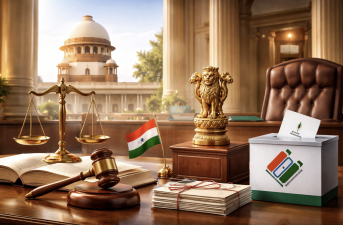
Recent developments in 2026 have seen the Chief Justice of India (CJI) Surya Kant recuse himself from hearing petitions challenging the Chief Election Commissioner (CEC) appointment law. This law replaced the CJI with a Union Minister on the selection panel for appointing the CEC and other Election Commissioners. The CJI cited conflict of interest and directed the case to be heard by judges not in line for the Chief Justice office. This marks the second time a CJI has recused from this case, raising important questions on judicial recusal and institutional impartiality.
Judicial Recusal – Principles and Practice
Recusal means a judge steps aside from a case due to potential bias. The principle is based on the Latin maxim “nemo judex in causa sua” (no one shall be a judge in their own cause). Indian courts apply a test of “reasonable apprehension of bias,” not just remote possibility. The decision rests solely on the judge’s conscience. Unlike the US, India has no codified law for judicial recusal, relying on conventions and precedents.
The NJAC Precedent and Doctrine of Necessity
In the 2015 NJAC case, Justice J.S. Khehar refused to recuse despite potential conflict, citing the doctrine of necessity. This doctrine holds that when no alternative forum exists, the judge must hear the case despite conflicts. All judges in the Supreme Court face similar institutional conflicts due to the seniority system. This precedent supports hearing cases even with possible conflicts to maintain judicial function.
Issues Raised by CJI Surya Kant’s Recusal
CJI Surya Kant’s recusal and direction to exclude judges in line for Chief Justice is unusual. Recusal is a personal decision and cannot be pre-assigned by another judge. This raises questions about institutional capacity and personal disqualification. The direction also ignores unexpected changes in succession due to health or resignation. Furthermore, as Master of the Roster, the CJI’s power to select judges for the case conflicts with his recusal rationale.
Need for Codified Recusal Rules in India
India lacks statutory rules governing judicial recusal or a review mechanism. The US has Section 455 of Title 28, which requires judges to disqualify themselves where impartiality might be questioned. However, even there, enforcement is self-regulated at the highest level. The repeated recusals in the CEC appointment case show the need for clear, binding recusal standards in India to ensure transparency and institutional trust.
Topics for Prelims:
Judicial Recusal
- Based on principle – nemo judex in causa sua.
- Indian standard – reasonable apprehension of bias.
- No statutory law or binding code in India.
- Decision rests on judge’s conscience.
- US law – Section 455 of Title 28 mandates recusal.
Chief Election Commissioner Appointment 2023 Law
- Replaced CJI with Union Minister on selection panel.
- Challenged in Supreme Court in 2024-26.
- Raised conflict of interest concerns.
- Two successive CJIs recused from hearing.
- Implications for election oversight independence.
Doctrine of Necessity
- Allows judges to hear cases despite conflicts.
- Applied in NJAC case 2015 by Justice Khehar.
- Ensures no institutional paralysis.
- Overrides personal disqualification for institutional duty.
- Relevant when no alternative court exists.
Questions for Mains:
- Critically discuss the principle of judicial recusal and its significance in maintaining impartiality in India’s judiciary. [GS-II-Constitution of India & Polity]
- Examine the doctrine of necessity in judicial practice and analyse its impact on the independence of the judiciary with suitable examples. [GS-II-Constitution of India & Polity]
- Discuss in the light of recent reforms, the challenges in appointment and independence of the Chief Election Commissioner in India’s democratic framework. [GS-II-Governance]
- With reference to international practices, critically discuss the need for codified judicial recusal rules in India and their potential impact on judicial transparency and accountability. [GS-II-Constitution of India & Polity]
Answer Hints:
1. Critically discuss the principle of judicial recusal and its significance in maintaining impartiality in India’s judiciary. [GS-II-Constitution of India & Polity]
- Rooted in natural justice maxim “nemo judex in causa sua” – no one shall be a judge in their own cause.
- Indian test – reasonable apprehension of bias not mere possibility, based on judge’s conscience.
- No statutory or binding code in India; recusal remains discretionary and self-regulated.
- Ensures public confidence, prevents conflict of interest, and preserves judicial impartiality.
- Challenges include lack of transparency, no review mechanism, and potential misuse or avoidance of duty.
- Recent CJI recusals in CEC appointment case show tension between personal disqualification and institutional responsibility.
2. Examine the doctrine of necessity in judicial practice and analyse its impact on the independence of the judiciary with suitable examples. [GS-II-Constitution of India & Polity]
- Doctrine allows judges to hear cases despite conflicts when no alternative forum exists.
- Applied in NJAC 2015 case – Justice Khehar refused recusal despite institutional stake, to avoid judicial paralysis.
- Balances individual disqualification against institutional functioning and continuity.
- Prevents abuse of recusal to derail important cases or create vacancies.
- Supports judiciary’s independence by ensuring cases are adjudicated even amid conflict risks.
- However, may raise concerns about perceived bias and public trust if not transparently applied.
3. Discuss in the light of recent reforms, the challenges in appointment and independence of the Chief Election Commissioner in India’s democratic framework. [GS-II-Governance]
- 2023 law replaced CJI with Union Minister on selection panel, altering appointment mechanism.
- Raises concerns over executive influence and erosion of CEC independence.
- Judicial challenges and successive CJI recusals reflect conflict of interest and institutional dilemmas.
- CEC’s role as guardian of free and fair elections demands impartial and autonomous appointment process.
- Lack of transparent, consensus-based selection risks politicization of Election Commission.
- Need for reforms to balance independence, accountability, and democratic legitimacy of CEC office.
4. With reference to international practices, critically discuss the need for codified judicial recusal rules in India and their potential impact on judicial transparency and accountability. [GS-II-Constitution of India & Polity]
- India currently lacks codified rules; recusal is discretionary and self-enforced by judges’ conscience.
- US law (Section 455, Title 28) mandates objective recusal standards where impartiality might reasonably be questioned.
- Codification promotes uniformity, predictability, and reduces arbitrary decisions or perceptions of bias.
- Enhances judicial transparency and public trust by requiring disclosure of reasons for recusal.
- However, even codified rules require enforcement and external review to be fully effective.
- Given recent high-profile recusals, India needs binding standards to strengthen institutional accountability and democratic legitimacy.