
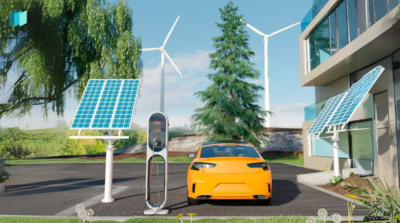
Electric vehicles dominate today’s low-carbon transport narrative, but two decades ago, biofuels were widely seen as the future. The idea was appealing: instead of extracting oil, societies could grow crops such as sugarcane or maize and convert them into fuel. Yet even as electric mobility becomes cheaper and more widespread, global biofuel production continues to rise. This raises a fundamental question that often escapes policy debate — is land being used in the most climate-efficient way?
How biofuels became central to transport decarbonisation
Biofuels gained prominence in the early 2000s as a response to oil dependence and climate change. Today, they supply roughly 4% of global transport energy, almost entirely for road transport.
Most biofuels are derived from:
- Sugarcane, largely cultivated in “”
- Cereal crops such as corn in the “” and the “”
- Oil crops like soybean and palm oil, especially in “”
While biofuels do displace some fossil fuel use, their overall climate benefit is mixed once fertiliser use, processing emissions, and land-use impacts are considered.
The hidden cost: land as a scarce climate resource
Land is not climate-neutral. Agricultural land used for biofuels carries an opportunity cost. If not farmed, it could be rewilded or reforested, allowing ecosystems to absorb carbon naturally. Alternatively, it could be used for other energy technologies that deliver far higher emissions reductions.
Recent research estimates that biofuel production occupies about 32 million hectares of land globally, once land used for animal feed is excluded. This is a conservative estimate, but it already equals the land area of countries such as Germany or Italy.
What if biofuel land was used for solar power?
Using that same 32 million hectares for solar energy would dramatically change the picture. Solar panels placed on this land could generate roughly 32,000 terawatt-hours (TWh) of electricity annually — about 23 times more energy than today’s global biofuel output.
For context:
- The world generated about 31,000 TWh of electricity in 2024.
- Solar panels convert 15–20% of sunlight into electricity, compared to less than 1% efficiency for crops through photosynthesis.
This stark contrast explains why land-based energy efficiency differs so sharply between biofuels and solar power.
Can solar replace biofuels in transport?
At first glance, biofuels and solar appear incomparable: one fuels vehicles directly, the other produces electricity. But electrification bridges this gap. With the rise of electric vehicles, solar power can now decarbonise transport more effectively than liquid fuels.
Estimates suggest:
- All global cars would need around 3,500 TWh annually.
- All trucks would require a similar amount.
Together, global road transport could be powered with about 7,000 TWh of electricity per year — less than one-quarter of what solar panels could generate on existing biofuel land.
What this comparison really tells us
This does not imply that all biofuel cropland should be converted into solar farms. Land can and should serve multiple purposes — food production, limited biofuels (especially for aviation), renewable power, or ecological restoration.
The comparison instead highlights how inefficient current land use for energy can be. Using crops to capture sunlight and then converting them into fuel loses most of that energy along the way. Direct solar conversion avoids these losses.
Rethinking land use in climate policy
Debates around renewable energy often scrutinise the land footprint of solar and wind projects. Yet the land already committed to biofuels receives far less attention, despite delivering modest climate gains.
In a world constrained by land, food security, and climate limits, how land is allocated matters as much as which technology is chosen. The broader lesson is not anti-biofuel, but pro-efficiency: climate policy must weigh opportunity costs, not just emissions at the tailpipe.
What to note for Prelims?
- Biofuels currently supply about 4% of global transport energy.
- Biofuel production uses tens of millions of hectares of agricultural land.
- Solar energy has far higher land-use efficiency than biofuels.
What to note for Mains?
- Analyse land-use trade-offs in renewable energy transitions.
- Discuss biofuels versus electrification for transport decarbonisation.
- Examine opportunity costs of land in climate mitigation strategies.