
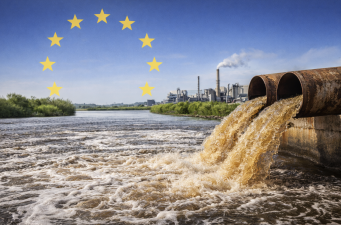
The European Union (EU) Parliament approved updated water pollution standards on March 26, 2026. These new rules aim to tackle harmful substances in Europe’s rivers, lakes and groundwater. The legislation expands the list of pollutants to include forever chemicals (PFAS), pharmaceuticals, industrial substances and pesticides. It also tightens existing environmental quality standards and addresses emerging concerns like microplastics and antimicrobial resistance.
Updated Water Pollution Directive
On March 30, 2026, the EU Parliament and Council passed a directive amending three earlier directives related to water policy. These are Directive 2000/60/EC (Water Framework Directive), Directive 2006/118/EC (Groundwater Protection), and Directive 2008/105/EC (Environmental Quality Standards). Member states have until December 21, 2027, to align their national laws with these new standards.
Key Pollutants and Measures
The updated standards include Per- and polyfluoroalkyl substances (PFAS), which are persistent forever chemicals that do not break down easily. Pharmaceuticals such as painkillers, microplastics and pesticides are also targeted. The directive enhances monitoring, data reporting and focuses on substances of emerging concern to protect human health and aquatic ecosystems.
Alignment with EU Green Deal
These measures support the European Green Deal’s goal of making Europe climate-neutral by 2050. The Green Deal aims to transform Europe’s economy and environment sustainably. Environmental groups like the European Environmental Bureau (EEB) welcomed the update but expressed concerns over delayed full compliance, which may extend to 2039 or even 2045.
Implementation Challenges
While the directive strengthens pollution control, enforcement depends on member states. The delay in mandatory compliance could weaken immediate impact. The legislation also seeks to reduce administrative burdens and improve responsiveness to emerging pollution risks.
Topics for Prelims:
Per- and Polyfluoroalkyl Substances (PFAS)
- Known as forever chemicals due to persistence in environment.
- Used in firefighting foams, non-stick cookware and waterproof fabrics.
- Linked to health risks including cancer and immune issues.
- Do not break down easily in water or soil.
- Subject to new EU water quality standards from 2026.
European Green Deal
- Launched in 2019 to achieve climate neutrality by 2050.
- Focuses on clean energy, sustainable economy and biodiversity.
- Includes Zero Pollution Action Plan targeting air, water and soil.
- Integrates environmental goals with economic growth.
- Supports updated water pollution directives in EU.
EU Water Framework Directive (2000/60/EC)
- Established a framework for water protection across EU.
- Aims for good ecological and chemical status of water bodies.
- Sets river basin management plans every six years.
- Basis for subsequent directives on groundwater and pollutants.
- Updated in 2026 to include new pollutants and standards.
Questions for Mains:
- Critically discuss the role of the European Green Deal in shaping environmental policies like water pollution standards and its relevance to global climate goals. [GS-III-Economic Development]
- Analyse the challenges of implementing EU-wide environmental directives in member states and how these challenges affect policy effectiveness and public health. [GS-II-Governance]
- Examine the environmental and health impacts of persistent organic pollutants such as PFAS and microplastics and evaluate international efforts to regulate them. [GS-III-Environment & DM]
- Point out the significance of updated water quality standards in preserving freshwater ecosystems and discuss their potential implications for sustainable water management globally. [GS-I-World & Physical Geography]
Answer Hints:
1. Critically discuss the role of the European Green Deal in shaping environmental policies like water pollution standards and its relevance to global climate goals. [GS-III-Economic Development]
- European Green Deal (2019) aims for climate neutrality by 2050, integrating sustainability in economy, energy, transport, and industry.
- Drives policy updates like the 2026 EU water pollution standards to reduce harmful pollutants, supporting Zero Pollution Action Plan.
- Promotes ecosystem health and human well-being by targeting emerging pollutants (PFAS, microplastics, pharmaceuticals).
- Aligns EU environmental legislation with global climate goals, setting an example for other regions.
- Facilitates transition to sustainable economy by reducing pollution-related health costs and environmental degradation.
- Challenges include balancing economic growth with stringent environmental targets and ensuring timely compliance.
2. Analyse the challenges of implementing EU-wide environmental directives in member states and how these challenges affect policy effectiveness and public health. [GS-II-Governance]
- Diverse economic, political, and administrative capacities across member states delay uniform implementation.
- Extended compliance deadlines (up to 2039 or 2045) weaken immediate environmental and health benefits.
- Variability in enforcement and monitoring reduces overall directive effectiveness and data reliability.
- Administrative burdens and coordination gaps hinder rapid response to emerging pollutants and risks.
- Public health impacted by delayed pollution control, especially exposure to persistent pollutants (PFAS, microplastics).
- Need for stronger EU oversight and support mechanisms to ensure timely, consistent adoption of standards.
3. Examine the environmental and health impacts of persistent organic pollutants such as PFAS and microplastics and evaluate international efforts to regulate them. [GS-III-Environment & DM]
- PFAS are forever chemicals that bioaccumulate, causing cancer, immune dysfunction, and endocrine disruption.
- Microplastics contaminate water bodies, enter food chains, and pose risks to aquatic life and human health.
- Both pollutants resist degradation, persist in soil, water, and air, complicating remediation efforts.
- EU’s updated water pollution standards (2026) include PFAS and microplastics as regulated pollutants, enhancing monitoring and control.
- International frameworks like Stockholm Convention and UNEA address POPs but face challenges in enforcement and global coordination.
- Growing global consensus on reducing production, use, and emissions; innovation in alternatives and cleanup technologies ongoing.
4. Point out the significance of updated water quality standards in preserving freshwater ecosystems and discuss their potential implications for sustainable water management globally. [GS-I-World & Physical Geography]
- Updated standards expand pollutant lists, including emerging contaminants (PFAS, pharmaceuticals, microplastics), improving ecosystem protection.
- Stricter environmental quality standards help maintain biodiversity, aquatic health, and ecosystem services.
- Enhanced monitoring and reporting enable early detection and mitigation of pollution threats.
- Sets a benchmark for global water governance, encouraging adoption of similar standards worldwide.
- Supports sustainable water use by safeguarding freshwater resources critical for drinking, agriculture, and industry.
- Facilitates integrated water resource management aligned with climate change adaptation and biodiversity goals.