
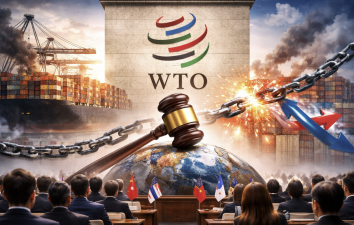
The World Trade Organization (WTO) faces important moment at its 14th Ministerial Conference (MC14) held in Yaoundé, Cameroon, in March 2026. The global trade landscape is shifting towards power-driven and transactional relations. The WTO must adapt quickly to remain relevant and effective in governing international trade under these new dynamics.
Current Crisis in WTO Functioning
The WTO is in its worst crisis since 1995. Its dispute settlement system is paralysed due to stalled appointments in the Appellate Body. This undermines trust because rules matter only if enforced. Negotiations are slow and often produce limited results. The 166 members have diverse interests, making consensus difficult. Meanwhile, geopolitical tensions have increased tariff use as political tools, disrupting markets. Despite challenges, most global trade still follows WTO rules, which protect smaller countries from economic coercion.
Changing Global Trade Dynamics
Global production and trade have evolved . Emerging economies now export high-tech goods. Climate-related trade measures and digital commerce are growing fast. However, WTO rules remain rooted in late 20th-century realities. This mismatch calls for urgent reform. The MC14 must address fairness and predictability in trade. Developing countries seek more justice, not just legal correctness, in trade outcomes. Issues like agricultural subsidies and market distortions need transparent solutions.
Needed Reforms and Institutional Adaptability
Restoring a functioning dispute settlement system is critical. A trusted enforcement mechanism removes politics from trade conflicts. Transparency on subsidies and distortive practices must improve. Special and differential treatment for developing countries needs updating to reflect current realities. Smaller groups of countries are advancing issues like e-commerce and investment facilitation. These efforts should remain inclusive and support the wider WTO framework to avoid fragmentation. Flexibility is key to moving forward.
WTO’s Role in a Changing World Order
The global order is shifting towards wrecking-ball politics where disruption and short-term deals dominate. This risks replacing rule-based trade with power-based arrangements. The WTO’s value lies in preventing economic domination through rules. Reform at MC14 requires political will and shared responsibility. It is essential to secure cooperation in a world of growing economic interdependence.
Topics for Prelims:
World Trade Organization (WTO)
- Founded in 1995 to regulate international trade.
- Has 166 member countries as of 2026.
- Operates a dispute settlement system to enforce trade rules.
- Faced paralysis of Appellate Body since early 2020s.
- MC14 held in Yaoundé, Cameroon, March 2026.
Dispute Settlement System
- Ensures enforcement of WTO trade rules.
- Appellate Body hears appeals on trade disputes.
- Stalled appointments have paralysed the system.
- Weak enforcement reduces trust in WTO.
- Reform aims to restore binding and credible mechanisms.
Global Trade Trends
- Rise of digital commerce and technology-intensive exports.
- Increasing use of tariffs as geopolitical tools.
- Growth of bilateral and regional trade agreements.
- Climate-related trade measures expanding.
- Shift towards transactional and power-based trade relations.
Questions for Mains:
- Critically discuss the challenges faced by the World Trade Organization in enforcing multilateral trade rules in the current geopolitical environment. [GS-III-Economic Development]
- Analyse the impact of digital commerce and climate-related trade measures on global trade governance, with examples from recent WTO negotiations. [GS-III-Economic Development]
- Examine the role of dispute settlement mechanisms in maintaining fairness and predictability in international trade, and discuss the consequences of their paralysis. [GS-II-International Relations]
- Discuss in the light of rising unilateral tariffs and bilateral trade deals, how can multilateral institutions like the WTO adapt to preserve rule-based global trade? [GS-III-Economic Development]
Answer Hints:
1. Critically discuss the challenges faced by the World Trade Organization in enforcing multilateral trade rules in the current geopolitical environment. [GS-III-Economic Development]
- WTO’s dispute settlement system paralysed due to stalled Appellate Body appointments, weakening enforcement.
- Diverse membership (166 countries) creates difficulty in reaching consensus and slows decision-making.
- Geopolitical tensions have increased use of unilateral tariffs and economic coercion as political tools.
- Rise of bilateral and regional trade agreements bypassing multilateral commitments undermines WTO authority.
- Rules lag behind evolving trade realities like digital commerce and climate measures, reducing relevance.
- Smaller and developing countries rely on WTO rules for protection but suffer most when enforcement weakens.
2. Analyse the impact of digital commerce and climate-related trade measures on global trade governance, with examples from recent WTO negotiations. [GS-III-Economic Development]
- Digital commerce is rapidly growing, forming a large part of cross-border trade, but WTO rules are outdated.
- Emerging economies now export technology-intensive products, changing trade patterns and governance needs.
- Climate-related trade measures (e.g., carbon border adjustments) are expanding, requiring new regulatory frameworks.
- Recent WTO negotiations have struggled to address e-commerce rules and environmental trade policies effectively.
- Smaller coalitions of members pursue digital trade and climate issues, denoting need for institutional adaptability.
- Governance must balance innovation facilitation with fairness and inclusivity for developing countries.
3. Examine the role of dispute settlement mechanisms in maintaining fairness and predictability in international trade, and discuss the consequences of their paralysis. [GS-II-International Relations]
- Dispute settlement system enforces WTO rules, ensuring that commitments are credible and binding.
- It removes politics from trade conflicts by providing a neutral, rule-based adjudication process.
- Paralysis of the Appellate Body since early 2020s has eroded trust and weakened the system’s authority.
- Without enforcement, rules lose value, leading to unpredictability and increased unilateral actions.
- Developing countries are most vulnerable as they rely on dispute mechanisms for protection against stronger economies.
- Reform is needed to rebuild a trusted, transparent, and universally accepted dispute resolution framework.
4. Discuss in the light of rising unilateral tariffs and bilateral trade deals, how can multilateral institutions like the WTO adapt to preserve rule-based global trade? [GS-III-Economic Development]
- WTO must reform to restore enforcement credibility and dispute settlement functionality.
- Institutional adaptability is key – allowing smaller groups to negotiate issues like e-commerce while ensuring inclusivity and transparency.
- Updating rules to reflect current realities – technology, climate policies, and development needs.
- Strengthening transparency on subsidies and distortive practices to build trust among members.
- Preserving special and differential treatment to maintain fairness for developing countries.
- Political will and shared responsibility are essential to prevent fragmentation and maintain a stable, rule-based system.