
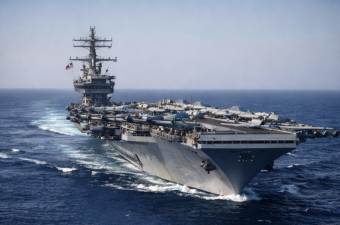
Recent developments in 2026 have seen a temporary pause announced by the United States on attacks against Iran’s electricity infrastructure. This move was welcomed but does not signal a permanent resolution. The core issue remains the power imbalance between Iran and its smaller Arab neighbours in the Gulf. This imbalance has shaped regional security for over a century and continues to challenge stability.
Historical Context of Gulf-Iran Relations
Iran has long sought dominance over the Gulf region. Its population of 90 million far exceeds the combined 27 million of the Gulf Cooperation Council (GCC) states. Historically, British power maintained a balance by protecting smaller Gulf states while engaging with Iran. The withdrawal of Britain from the region in 1971 and the 1979 Islamic Revolution marked the end of this order. Both the Shah’s monarchy and the Islamic Republic pursued regional hegemony, though with different methods and alliances.
Strategies of Regional Powers
Iran’s ambitions have included military interventions and proxy support in neighbouring countries. The GCC was formed in 1981 by Arab states to counter Iran but has suffered from internal divisions. The Gulf Arabs once allied with Iraq’s Saddam Hussein against Iran, but this alliance backfired when Iraq invaded Kuwait in 1990. The US then became the primary security guarantor in the Gulf, replacing Iraq’s role but making Gulf security dependent on American policy.
Contemporary Security Challenges
Iran’s influence now stretches from the Zagros Mountains to the Mediterranean through proxies in Iraq, Lebanon, and beyond. This expansion has led to new alignments, including a quiet rapprochement between Israel and Gulf Arab states. The US, Israel, and GCC seek to curb Iran’s missile and nuclear programmes and limit its regional interference. Iran demands the right to nuclear development, security guarantees, and control over the Strait of Hormuz, a vital shipping route.
Future Prospects and Regional Balance
Iran remains too powerful to be ignored but not dominant enough to control the region alone. Gulf states cannot balance Iran without external support, primarily from the US. Other global powers lack the capacity or interest to replace America as the Gulf’s security provider. The ongoing cycle of tension and uneasy balance is likely to persist, with stability dependent on careful management and international diplomacy.
Topics for Prelims:
Iran
- Population approximately 90 million (2026).
- Unified Persian state with long-standing regional ambitions.
- Islamic Revolution occurred in 1979.
- Uses proxy forces across Middle East (Iraq, Lebanon).
- Claims right to nuclear and missile development.
Gulf Cooperation Council (GCC)
- Formed in 1981 by six Arab states.
- Population around 27 million (2026).
- Created to counter Iranian influence.
- Internal divisions weaken collective security.
- Relies heavily on US for military protection.
United States in Gulf Security
- Primary external security guarantor since 1991.
- Military presence on Arabian Peninsula.
- Supports Gulf states against Iran.
- Security policy influenced by domestic political shifts.
- Engaged in balancing Iran’s regional ambitions.
Questions for Mains:
- Critically analyse the impact of historical British withdrawal on the security dynamics of the Gulf region. [GS-II-International Relations]
- Explain the role of proxy forces in Iran’s regional strategy and comment on their effects on Middle Eastern geopolitics. [GS-III-Internal & External Security]
- With suitable examples, discuss the limitations of regional organisations like the Gulf Cooperation Council in managing collective security. [GS-II-Governance]
- What are the implications of US security dependence by Gulf Arab states on regional stability and global power balance? Critically analyse. [GS-II-International Relations]
Answer Hints:
1. Critically analyse the impact of historical British withdrawal on the security dynamics of the Gulf region. [GS-II-International Relations]
- British withdrawal in 1971 ended the protectorate system, leaving Gulf states vulnerable.
- Created power vacuum exploited by Iran’s renewed regional ambitions post-Shah and post-Islamic Revolution.
- Shifted security reliance from Britain to the United States, altering regional alliances.
- Led to emergence of independent Gulf monarchies with weak collective defense mechanisms.
- Triggered formation of GCC in 1981 as a regional response to Iranian assertiveness.
- Contributed to long-term instability due to absence of a balancing external power until US military presence.
2. Explain the role of proxy forces in Iran’s regional strategy and comment on their effects on Middle Eastern geopolitics. [GS-III-Internal & External Security]
- Proxy forces extend Iran’s influence from the Zagros mountains to the Mediterranean (e.g., Hezbollah in Lebanon, Shia militias in Iraq).
- Allow Iran to project power without direct military confrontation, reducing costs and risks.
- Destabilize neighboring states by fomenting sectarian tensions and internal conflicts.
- Complicate regional security, forcing GCC and US to counter asymmetric threats.
- Drive new alignments, such as covert cooperation between Gulf Arabs and Israel.
- Undermine state sovereignty and fuel proxy wars, prolonging regional conflicts.
3. With suitable examples, discuss the limitations of regional organisations like the Gulf Cooperation Council in managing collective security. [GS-II-Governance]
- Internal divisions among member states weaken unified response (e.g., Qatar diplomatic crisis).
- Disparate national interests hinder effective collective security planning and action.
- GCC’s reliance on external powers (mainly US) limits autonomous security capabilities.
- Failure to prevent or manage major conflicts like the Iran-Iraq War or Gulf War marks operational weaknesses.
- Lack of a unified military command structure reduces rapid response capacity.
- Political rivalries and sectarian differences impede trust and cooperation.
4. What are the implications of US security dependence by Gulf Arab states on regional stability and global power balance? Critically analyse. [GS-II-International Relations]
- US presence deters Iranian aggression but makes Gulf security vulnerable to US domestic political shifts.
- Dependence limits Gulf states’ strategic autonomy and encourages external intervention.
- Creates a security dilemma, provoking Iran to enhance missile and nuclear programs.
- US-Gulf alliance influences global energy security and international maritime routes (Strait of Hormuz).
- Other global powers (Russia, China) lack capacity or willingness to fill US role, reinforcing US dominance.
- Potential US disengagement risks destabilization and power vacuums, increasing regional conflicts.