
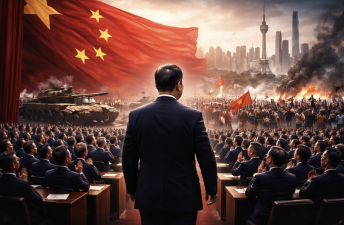
Recent developments in China reveal shifts in political power and internal challenges within the ruling Communist Party of China (CPC). Since 1949, leaders Mao Zedong, Deng Xiaoping, and Xi Jinping have shaped China’s trajectory. However, recent purges at the highest levels of the CPC and the military suggest rising internal tensions. China’s global influence faces tests amid economic and geopolitical pressures. About these dynamics is vital for grasping China’s current and future position in world affairs.
Evolution of Leadership in Communist China
China’s leadership began with Mao Zedong’s establishment of the CPC’s control in 1949. Mao’s rule was marked by strong central authority and ideological campaigns. Deng Xiaoping later introduced economic reforms while maintaining party dominance. Xi Jinping, the current leader, has consolidated power through anti-corruption drives and purges. These purges target senior military and party officials, indicating ongoing struggles to maintain control. Such actions echo past internal conflicts but also suggest deeper challenges within the CPC.
Internal Party Struggles and ‘Inner Devils’
Despite China’s image as a united front, internal dissent exists. Recent removals of top military figures like General Zhang Youxia reveal cracks in party unity. Official language describing these figures as ‘toxins’ hints at severe factionalism. Past episodes under Mao and Deng also involved purges to suppress opposition. The persistence of these ‘inner devils’ undermines trust in leadership and may affect policy consistency. The anti-corruption narrative often masks power struggles at the highest levels.
China’s Global Image and Geopolitical Challenges
China’s international standing has suffered setbacks. Failures to counter U.S. influence in Venezuela and West Asia exposed limitations in China’s global reach. Comparisons of Chinese and Western military capabilities have damaged China’s reputation. This has likely intensified internal party tensions. China’s cautious foreign policy recently contrasts with its usual assertiveness. This reticence may reflect economic concerns and political uncertainties within the CPC.
Economic Innovation Amid Political Uncertainty
China leads in sectors like electric vehicles, pharmaceuticals, and artificial intelligence. A Chinese cargo ship’s swift Arctic voyage suggested new trade routes but was downplayed to avoid provoking Western powers. This restraint is unusual given China’s ambitions. Economic challenges and political purges coexist, creating a complex environment. The mood of pessimism and possible party fissures call for close observation of China’s future course.
Topics for Prelims:
Key Chinese Leaders
- Mao Zedong founded the People’s Republic of China in 1949.
- Deng Xiaoping initiated market reforms in the late 1970s.
- Xi Jinping became General Secretary of CPC in 2012.
- All three used purges to consolidate power.
- Xi’s anti-corruption campaign is the largest since Mao.
Recent Military Purges in China
- General Zhang Youxia removed from Central Military Commission.
- Other senior generals including Li Qiaoming also purged.
- Purges target perceived threats to Xi’s leadership.
- Official media used harsh language against purged officials.
- Military purges signal internal party factionalism.
China’s Global Geopolitical Challenges
- China failed to counter U.S. influence in Venezuela (2026).
- China was ineffective in preventing attack on Iran.
- Chinese military seen as inferior to U.S. and Western forces.
- China’s Arctic ambitions are downplayed despite strategic gains.
- China’s cautious foreign policy reflects internal and external pressures.
Questions for Mains:
- Critically analyse the role of purges in consolidating political power in Communist regimes with special reference to China’s leadership transitions. [GS-II-Constitution of India & Polity]
- Point out the economic and geopolitical factors influencing China’s cautious foreign policy in the Arctic and West Asia regions. [GS-II-International Relations]
- Estimate the impact of internal party factionalism on China’s global image and domestic stability, with suitable examples from recent years. [GS-I-Modern World History]
- Underline the challenges faced by China in balancing rapid technological innovation with political control and economic reforms. How do these challenges affect China’s future global role? [GS-III-Economic Development]
Answer Hints:
1. Critically analyse the role of purges in consolidating political power in Communist regimes with special reference to China’s leadership transitions. [GS-II-Constitution of India & Polity]
- Purges historically used by Mao, Deng, and Xi to eliminate opposition and consolidate authority within CPC.
- Mao’s purges (e.g., Liu Shaoqi episode) reinforced ideological conformity and centralized control.
- Deng’s purges facilitated transition from ideological rigidity to pragmatic economic reforms while maintaining party dominance.
- Xi’s anti-corruption campaigns and military purges remove perceived rivals, signaling factional struggles and power consolidation.
- Purges serve dual purpose – anti-corruption narrative masks deeper political factionalism and internal challenges.
- Repeated purges indicate persistent ‘inner devils’ and trust deficit within CPC, essential to understand China’s political stability.
2. Point out the economic and geopolitical factors influencing China’s cautious foreign policy in the Arctic and West Asia regions. [GS-II-International Relations]
- Economic concerns amid slowing growth and challenges in key sectors prompt China to avoid confrontational postures.
- Geopolitical setbacks – failure to counter U.S. influence in Venezuela and inability to prevent attack on Iran undermine China’s global standing.
- China’s Arctic ambitions (e.g., Polar Silk Road) downplayed to avoid provoking Western powers, especially U.S. and Greenland concerns.
- Internal party factionalism and leadership uncertainties encourage cautious diplomacy to maintain domestic stability.
- Desire to preserve image as a responsible global power while managing complex U.S.-China rivalry shapes restrained foreign policy.
- Strategic innovation strengths coexist with political risk aversion, impacting assertiveness in sensitive regions.
3. Estimate the impact of internal party factionalism on China’s global image and domestic stability, with suitable examples from recent years. [GS-I-Modern World History]
- Recent purges of top military officials (e.g., General Zhang Youxia) reveal cracks within CPC’s unity and leadership challenges.
- Factionalism undermines public trust and creates ‘trust deficit’ affecting policy coherence and governance.
- Anti-corruption campaigns double as tools to suppress dissent, indicating ongoing power struggles rather than pure governance reforms.
- International failures (Venezuela, West Asia) expose weaknesses, damaging China’s image as a global power.
- Reticence in foreign policy and downplaying achievements (Arctic voyage) reflect internal caution stemming from factional tensions.
- Such instability risks domestic unrest and challenges China’s long-term strategic ambitions on the world stage.
4. Underline the challenges faced by China in balancing rapid technological innovation with political control and economic reforms. How do these challenges affect China’s future global role? [GS-III-Economic Development]
- China leads in electric vehicles, AI, pharmaceuticals, and logistics, showcasing rapid innovation and global competitiveness.
- Political purges and factionalism create uncertainty, potentially stifling creativity and reform momentum.
- Economic reforms face headwinds from internal distrust and cautious leadership, limiting bold policy shifts.
- Balancing authoritarian control with market-driven innovation demands delicate governance strategies.
- Political instability risks investor confidence and international collaboration in technology sectors.
- China’s ability to sustain innovation alongside political stability will shape its future as a global economic and technological superpower.