
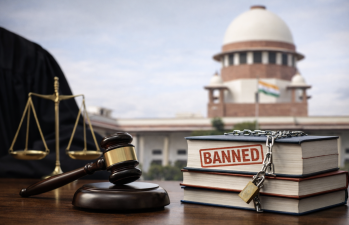
Recent events in 2026 have brought the Indian judiciary under intense public scrutiny. The Supreme Court of India imposed a blanket ban on an NCERT Class 8 social science textbook. The ban was due to the book’s references to judicial corruption and delays. The Court claimed the content aimed to undermine the judiciary’s dignity and authority. This move has raised concerns about freedom of speech and democratic values in India.
Supreme Court’s Book Ban And Its Implications
The Supreme Court banned the textbook citing selective references to corruption. The book included data on pending cases and discussed judicial conduct principles. The Court ordered removal of authors from future government projects without a hearing. This action bypassed due process and raised questions about censorship. The ban impacts Article 19 rights related to freedom of speech. No law under Article 19(2) justified this ban. The Court did not fully examine if the book’s content amounted to contempt of court. This sets a challenging precedent for democratic transparency.
Judicial Corruption And Delay Issues
Judicial delays and corruption are longstanding problems in India. The Supreme Court has acknowledged bad apples within the system. The Bangalore Principles of Judicial Conduct guide judicial ethics. The Prevention of Corruption Act applies to judges as public servants. Landmark rulings stress zero tolerance for judicial dishonesty. Addressing these issues openly is crucial for judicial reform. Silence or suppression harms public trust and democracy.
Global Judicial Reform Efforts
Several countries have tackled judicial corruption transparently. Kenya’s reforms between 2011-2013 increased public trust from 27% to 61%. Reforms included judicial ombudspersons and performance committees. Transparency and open dialogue helped restore credibility. India’s judiciary can learn from such models. Suppressing criticism hampers reform and public confidence.
Freedom Of Speech And Democratic Values
Freedom of speech is a constitutional right in India. Restrictions must be legally valid and justified. Book banning is an extreme form of censorship. Democracies require space for dissent and criticism. Judicial institutions must be open to reform and accountability. Public awareness of judicial challenges is essential. Courts must balance dignity with transparency to maintain trust.
Topics for Prelims:
Supreme Court Book Ban
- Supreme Court banned NCERT Class 8 social science textbook in 2026.
- Ban based on references to judicial corruption and delay.
- Order included removing authors from future government projects.
- Raised concerns on freedom of speech under Article 19.
- No state law justified the ban under Article 19(2).
Judicial Corruption and Conduct
- Bangalore Principles of Judicial Conduct guide judges’ ethics.
- Judges considered public servants under Prevention of Corruption Act.
- Supreme Court acknowledged existence of corrupt judges.
- Judicial delays and corruption affect public trust.
- Zero tolerance urged for judicial dishonesty.
Global Judicial Reforms
- Kenya’s reforms (2011-2013) improved judicial trust .
- Instituted judicial ombudspersons and performance committees.
- Transparency key to restoring credibility.
- India can adopt similar reforms.
- Suppressing criticism hinders judicial reform.
Questions for Mains:
- Critically discuss the impact of judicial censorship on freedom of speech and democracy in India. [GS-II-Constitution of India & Polity]
- Examine the role of judicial reforms in enhancing public trust and reducing corruption, with reference to international examples. [GS-II-Governance]
- Analyse the constitutional safeguards available against arbitrary restrictions on educational content and their importance in a democracy. [GS-II-Constitution of India & Polity]
- Point out the challenges in balancing judicial authority and transparency, and estimate their implications for democratic governance. [GS-II-Constitution of India & Polity]
Answer Hints:
1. Critically discuss the impact of judicial censorship on freedom of speech and democracy in India. [GS-II-Constitution of India & Polity]
- Judicial censorship, such as the NCERT book ban, restricts the fundamental right to freedom of speech under Article 19(1)(a).
- Restrictions on speech must be backed by a valid ‘law’ under Article 19(2); the ban lacked such legal basis.
- Book banning without due process undermines democratic values of transparency, dissent, and accountability.
- Suppressing criticism of judiciary hampers public awareness of institutional challenges like corruption and delays.
- Judiciary acting as censor conflicts with its role as protector of fundamental rights and last resort for remedy.
- Excessive judicial authority in censorship risks eroding public trust and democratic checks and balances.
2. Examine the role of judicial reforms in enhancing public trust and reducing corruption, with reference to international examples. [GS-II-Governance]
- Judicial reforms increase transparency, accountability, and efficiency, thereby restoring public confidence.
- Kenya’s reforms (2011-2013) introduced judicial ombudspersons, court user committees, and performance management.
- Public trust in Kenya’s judiciary rose from 27% to 61% due to these transparent reforms.
- India’s judiciary acknowledges corruption and delay but lacks comprehensive reform and open dialogue.
- Suppressing criticism impedes reform; acknowledging problems is the first step to improvement.
- Adopting international best practices can strengthen India’s judicial integrity and governance.
3. Analyse the constitutional safeguards available against arbitrary restrictions on educational content and their importance in a democracy. [GS-II-Constitution of India & Polity]
- Freedom of speech and expression under Article 19(1)(a) protects educational content from arbitrary censorship.
- Restrictions must be prescribed by ‘law’ and meet grounds under Article 19(2) like public order or contempt of court.
- Judicial orders are not ‘law’ under Article 19(2), hence cannot justify blanket bans without legislative backing.
- Due process and hearing are constitutional safeguards before imposing restrictions on educational material.
- Educational content encourages critical thinking and democratic awareness; undue restrictions weaken democratic discourse.
- Balancing protection of institutional dignity with academic freedom is essential for a healthy democracy.
4. Point out the challenges in balancing judicial authority and transparency, and estimate their implications for democratic governance. [GS-II-Constitution of India & Polity]
- Judicial authority demands respect and dignity to maintain rule of law and public confidence.
- Transparency is required to expose and address corruption, delays, and misconduct within judiciary.
- Excessive secrecy or censorship breeds mistrust and undermines accountability.
- Openness to criticism and reform strengthens judiciary’s legitimacy and democratic governance.
- Balancing protection from scandalisation with freedom of speech is complex and context-sensitive.
- Failure to balance these leads to erosion of democratic checks, public trust, and institutional integrity.