
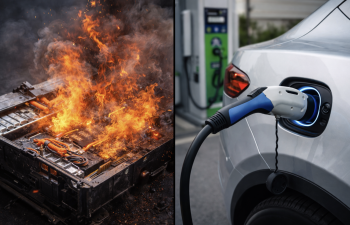
Recent incidents have raised concerns about the safety of electric vehicle (EV) batteries. On March 18, 2026, a fire at a house in Indore caused eight deaths. The fire reportedly started near an EV charging point. This tragedy has spotlighted the risks linked to lithium-ion batteries used in EVs and the measures needed to prevent such accidents.
About Lithium-ion Battery Risks
Most EVs use lithium-ion batteries. These batteries store more energy than older types and are generally safe. However, they can experience a dangerous event called thermal runaway. This happens when one cell overheats and triggers neighbouring cells to heat up in a chain reaction. The heat and toxic gases released can cause fires that spread quickly and burn intensely.
Causes of Thermal Runaway
Thermal runaway can start due to physical damage, like a hard impact that punctures the battery casing. Overcharging beyond the battery’s design limits, especially with uncertified chargers, also increases risk. Manufacturing defects inside cells and ageing of batteries contribute to failures. External factors such as hot weather, flooding, and poor electrical wiring can worsen the situation by increasing heat or causing short circuits.
Comparing EV and Petrol Vehicle Fires
Petrol vehicles catch fire more often due to flammable fuel near hot engines. EV fires are less frequent but are harder to control. Lithium-ion battery fires burn hotter and faster. They release oxygen, which fuels the fire. Firefighters use large amounts of water or special blankets to control these fires. The Indore fire was worsened by stored LPG cylinders and a sports bike in the building.
Industry and User Safety Measures
EV manufacturers use cooling systems to manage battery heat. New cooling technologies are being developed to improve safety. Solid-state batteries are under research to reduce fire risks. Firewalls inside batteries help contain fires if one cell fails. Users should use certified chargers, avoid unattended charging, and maintain home electrical systems. The Bureau of Indian Standards updated safety norms in 2023, requiring batteries to allow at least five minutes for escape during fires.
Topics for Prelims:
Electric Vehicle Batteries
- Most EVs use lithium-ion batteries.
- Thermal runaway is a chain reaction of overheating cells.
- Battery management systems control temperature.
- Physical damage and overcharging can cause fires.
- New battery technologies aim to improve safety.
Thermal Runaway Causes and Effects
- Started by cell overheating or short circuits.
- Releases toxic and flammable gases.
- Fires burn hotter and spread faster than petrol fires.
- External heat and flooding increase risk.
- Cooling systems and firewalls help prevent spread.
Safety Regulations and User Precautions
- Bureau of Indian Standards updated EV battery norms in 2023.
- Certified chargers and proper wiring reduce fire risk.
- Users should avoid unattended charging.
- Allow batteries to cool before charging after long drives.
- Battery inspection after impacts is essential.
Questions for Mains:
- Critically discuss the challenges of lithium-ion battery safety in electric vehicles and the role of regulatory standards in mitigating risks. [GS-III-Science & Technology]
- Analyse the environmental and safety implications of thermal runaway in electric vehicle batteries and its impact on urban fire safety management. [GS-III-Environment & DM]
- Examine the comparative risks of fire hazards in electric vehicles and petrol vehicles and assess the preparedness of emergency services to handle such incidents. [GS-III-Internal & External Security]
- Point out the significance of technological innovations in battery design and cooling systems in enhancing the safety and adoption of electric vehicles in India. [GS-III-Economic Development]
Answer Hints:
1. Critically discuss the challenges of lithium-ion battery safety in electric vehicles and the role of regulatory standards in mitigating risks. [GS-III-Science & Technology]
- Lithium-ion batteries prone to thermal runaway due to overheating, physical damage, overcharging, and manufacturing defects.
- Thermal runaway causes chain reactions, releasing toxic gases and flammable vapors leading to intense fires.
- External factors like high ambient temperature, flooding, and poor wiring increase risk.
- Battery Management Systems (BMS) regulate temperature but have limitations under extreme conditions.
- Regulatory frameworks like BIS AIS-156 (2023) mandate safety tests, fire containment, and minimum escape time during fires.
- Standards encourage certified chargers, proper wiring, and regular inspections to reduce fire incidents.
2. Analyse the environmental and safety implications of thermal runaway in electric vehicle batteries and its impact on urban fire safety management. [GS-III-Environment & DM]
- Thermal runaway releases toxic gases (e.g., hydrogen fluoride) harmful to health and environment.
- Battery fires burn hotter, spread faster, and are harder to extinguish compared to conventional fires.
- Urban fire services require specialized equipment (large water volumes, fire blankets) and training to manage EV fires.
- Increased EV adoption raises potential fire hazard incidents in densely populated areas.
- Flooding and heatwaves exacerbate risk, complicating disaster management in urban settings.
- Need for integrated safety protocols and public awareness to mitigate environmental and human risks.
3. Examine the comparative risks of fire hazards in electric vehicles and petrol vehicles and assess the preparedness of emergency services to handle such incidents. [GS-III-Internal & External Security]
- Petrol vehicles catch fire more frequently due to flammable fuel near hot engines.
- EV fires are less frequent but burn hotter, spread faster, and release oxygen, making extinguishing difficult.
- EV fires require specialized firefighting techniques – large water quantities, cooling, and fire-retardant blankets.
- Emergency services need updated training and equipment for EV-specific fire scenarios.
- Incidents worsened by secondary hazards (e.g., LPG cylinders, faulty electrical systems) show complexity.
- Preparedness includes public education, rapid response protocols, and coordination with EV manufacturers.
4. Point out the significance of technological innovations in battery design and cooling systems in enhancing the safety and adoption of electric vehicles in India. [GS-III-Economic Development]
- Advanced cooling systems (liquid and evaporative coolants) improve heat dissipation and prevent thermal runaway.
- Solid-state batteries under development reduce flammable liquid electrolyte risks, enhancing safety.
- Internal firewalls in battery packs contain cell failures, preventing fire spread.
- Technological improvements increase consumer confidence, boosting EV adoption and market growth.
- Improved battery safety lowers insurance and maintenance costs, supporting economic viability.
- Compliance with BIS standards and innovation aligns with India’s clean energy and climate goals.