
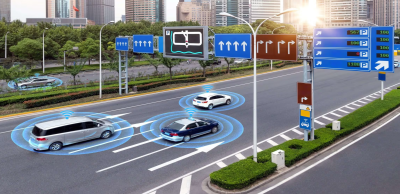
India is preparing to take a technological leap in road safety with plans to introduce Vehicle-to-Vehicle (V2V) communication systems. Announced during a parliamentary consultative committee meeting on January 22, the initiative reflects the government’s attempt to use real-time digital coordination between vehicles to tackle India’s persistently high road accident fatalities — the highest in the world.
What Is Being Proposed and Why It Matters
The Union Ministry of Road Transport and Highways has confirmed that the has allocated radio spectrum for V2V communication. This allocation will allow vehicles to exchange real-time safety information wirelessly, with the objective of preventing collisions, easing traffic congestion, and reducing fatalities.
India’s road safety challenge is acute. The country accounts for a disproportionate share of global road deaths, far exceeding fatalities recorded in countries such as China and the United States. Against this backdrop, V2V is being positioned as a systemic safety intervention rather than merely an in-car feature.
How Vehicle-to-Vehicle Communication Works
V2V technology allows vehicles to “talk” to each other using short-range wireless signals. Cars equipped with an On-Board Unit (OBU) continuously broadcast data such as speed, location, braking status, and direction. Nearby vehicles within a typical range of about 300 metres receive this information and process it instantly.
If a vehicle brakes suddenly, encounters fog, approaches a black spot, or detects an obstacle or a stationary vehicle on the roadside, the system can alert other vehicles even before the driver has a line of sight. In effect, this extends the driver’s situational awareness beyond human limits.
The concept is part of the broader Vehicle-to-Everything (V2X) ecosystem and falls under the Intelligent Transport System framework. It is comparable to aviation safety systems, where aircraft broadcast position and speed data to prevent mid-air collisions.
Implementation Plan and Cost Implications
According to officials from the , OBUs are expected to cost between ₹5,000 and ₹7,000 per vehicle. The rollout will begin with new vehicles, after which retrofitting of older vehicles will be taken up.
The ministry is currently working with original equipment manufacturers to finalise technical standards. A joint task force has also been formed with the telecom department to align spectrum usage, interoperability, and regulatory norms. Once standards are notified, installation will be mandated in phases.
Importantly, the spectrum will be provided free of charge under the National Frequency Allocation Plan, reducing cost pressures on manufacturers and consumers.
Global Experience with V2V Technology
V2V systems are already operational in a limited number of countries. The United States has led research and deployment, supported by regulatory frameworks. Several European countries, including Germany, France and the UK, have integrated V2V into smart mobility and urban transport initiatives.
China has rapidly expanded adoption as part of its intelligent transport and smart city programmes, while Japan’s ITS Connect system provides real-time alerts on traffic signals, blind spots and emergency vehicles. In contrast, India, along with countries such as Brazil, Mexico and the UAE, remains at the pilot or early adoption stage.
Potential Gains for Road Safety and Traffic Management
The expected benefits of V2V go beyond accident prevention. By smoothing braking patterns and reducing sudden stops, the technology can improve traffic flow and fuel efficiency. Early warnings about congestion or hazards can also help emergency services and logistics operators optimise routes.
Given that a significant proportion of fatal accidents in India involve parked trucks, poor visibility, and delayed driver reactions, automated warnings could save thousands of lives annually.
Challenges: Reliability, Privacy and Cybersecurity
Despite its promise, V2V raises serious concerns. Communication errors or incomplete vehicle coverage could create false signals, potentially triggering accidents instead of preventing them. Ensuring system reliability across different vehicle types and manufacturers will be critical.
Data privacy is another major issue. Continuous transmission of vehicle location and movement data creates risks of surveillance, misuse, or commercial exploitation. Strong data protection rules and clear limits on data storage and access will be essential.
Cybersecurity poses an even larger threat. A compromised V2V network could be weaponised to disrupt traffic at scale, creating safety and national security risks. This makes robust encryption, authentication, and regulatory oversight indispensable.
Why This Is a Structural Shift in Road Safety Policy
V2V marks a shift from driver-centric safety — helmets, seatbelts, speed limits — to system-level prevention. It recognises that human error cannot be eliminated but can be anticipated and mitigated through collective intelligence among vehicles.
If implemented carefully, V2V could become the backbone of future autonomous and semi-autonomous mobility systems in India.
What to Note for Prelims
- Vehicle-to-Vehicle (V2V) is part of Vehicle-to-Everything (V2X) technology
- Uses wireless communication via On-Board Units in vehicles
- India has allocated radio spectrum for V2V under the National Frequency Allocation Plan
- India ranks highest globally in road accident fatalities
What to Note for Mains
- Role of intelligent transport systems in reducing road accidents
- Technological solutions versus regulatory and behavioural approaches to road safety
- Data privacy and cybersecurity challenges in connected mobility
- Lessons from global best practices in V2V deployment