
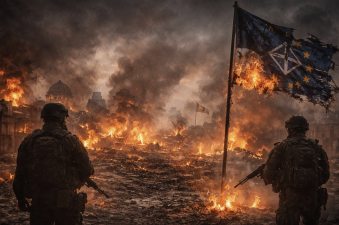
Recent reports show a growing global conflict centred in Iran that is largely ignored or downplayed by democratic societies. Public opinion in countries like the United States shows widespread disapproval, yet media coverage remains minimal and abstract. This silence masks the true scale and consequences of the war, creating a dangerous disconnect between reality and public awareness.
Media and Public Perception of War
Democratic media often fail to provide clear, comprehensive war coverage. Instead, they use technical jargon such as “targeted operations” and “escalation logic” that sanitise violence. Social media fragments information, giving an illusion of knowledge but no real understanding. This leads to public disengagement and moral anaesthesia, where citizens avoid confronting the harsh realities of conflict.
Political and Moral Responses
Governments and middle powers like India, Japan, and Canada focus on self-interest, avoiding direct responsibility to end the conflict. Calls for moral leadership are dismissed as impractical. This attitude deepens the crisis by allowing war to continue unchecked. The refusal to name and condemn violence weakens democratic accountability and international cooperation.
Complexity of the Global Conflict
The war is not confined to one region but involves multiple interconnected theatres including Ukraine, Saudi Arabia, Israel, Iran, and others. Actions in one area affect others globally. Key players such as the US, Israel, Iran, and Gulf states pursue aggressive strategies that include targeted killings and proxy wars. These tactics increase instability and the risk of state failures.
Psychological and Institutional Consequences
Beyond physical destruction, the war causes widespread psychological trauma and institutional breakdowns. It fuels global paranoia and suspicion. The use of asymmetric warfare and attacks on civilian infrastructure set dangerous precedents. Nuclear risks rise, and fragile states multiply. Democracies risk losing their moral core if they remain indifferent.
Topics for Prelims:
War and Media
- Democratic media often use abstract language to describe war.
- Fragmented social media creates illusion of knowledge.
- Public disengagement leads to moral anaesthesia.
- Media coverage affects public perception of conflict.
- Propaganda-like effects seen even in free societies.
Global Conflict Dynamics
- War theatres include Iran, Ukraine, Israel, Yemen, Sudan.
- Proxy wars increase regional instability.
- Targeted assassinations and asymmetric warfare common.
- Middle powers avoid direct intervention.
- Conflict risks global catastrophe and nuclear escalation.
Questions for Mains:
- Critically analyse the role of media in shaping public perception during international conflicts with suitable examples. [GS-II-Governance]
- Comment on the challenges faced by middle powers in addressing global conflicts and the implications for international peace. [GS-II-International Relations]
- Explain the concept of proxy wars and their impact on regional stability and global security. [GS-III-Internal & External Security]
- Underline the psychological and institutional consequences of prolonged wars on democratic societies and suggest measures to mitigate these effects. [GS-IV-Ethics, Integrity and Aptitude]
Keywords for Prelims:
1. Democratic Media
- Use abstract language to describe war.
- Often fragmented and partisan.
- Creates illusion of knowledge.
- Can resemble propaganda in authoritarian states.
- Influences public disengagement.
2. Middle Powers
- Countries like India, Japan, Canada.
- Seek to avoid direct conflict involvement.
- Focus on self-interest over moral responsibility.
- Potential stabilisers if proactive.
- Often criticised for moral narcissism.
3. Proxy Wars
- Conflicts fought indirectly through other states or groups.
- Common in regions like Yemen, Sudan, Ethiopia.
- Increase regional instability and state failure.
- Involve targeted killings and asymmetric tactics.
- Raise global security and nuclear risks.
Answer Hints:
1. Critically analyse the role of media in shaping public perception during international conflicts with suitable examples. [GS-II-Governance]
- Democratic media often use abstract, sanitized language (e.g., targeted operations, escalation logic) that obscures war’s brutal realities.
- Fragmented media ecosystems and partisan reporting create an illusion of knowledge but lack comprehensive, experiential understanding.
- Social media spreads random clips and expert opinions without synthesis, leading to public disengagement and moral anaesthesia.
- Media coverage in democracies increasingly resembles authoritarian propaganda by downplaying or distorting war consequences.
- Example – Minimal meaningful US media coverage of Iran conflict despite high public disapproval; similar patterns in other democracies.
- This media environment weakens democratic accountability and inhibits public reflection and moral responsibility on war.
2. Comment on the challenges faced by middle powers in addressing global conflicts and the implications for international peace. [GS-II-International Relations]
- Middle powers like India, Japan, Canada prioritize self-interest and seek to avoid direct involvement in conflicts to shield from fallout.
- They often engage in circumlocution and moral distancing, avoiding responsibility to actively end or mediate wars.
- Calls for moral leadership or coalition-building are dismissed as impractical or moralistic, reflecting moral narcissism.
- Without naming and condemning violence, middle powers remain ineffective, trapped in self-delusion and political inertia.
- This reluctance undermines potential stabilizing coalitions crucial to preventing escalation and global catastrophe.
- Implication – Weak middle-power action prolongs conflicts, destabilizes regions, and erodes international peace architecture.
3. Explain the concept of proxy wars and their impact on regional stability and global security. [GS-III-Internal & External Security]
- Proxy wars involve indirect conflict where major powers support local actors or states to fight on their behalf.
- Common theatres include Yemen, Sudan, Ethiopia, and the Gulf region, with states like UAE and Saudi Arabia engaging in such conflicts.
- Proxy wars increase regional instability by prolonging violence, causing state failures, and deepening humanitarian crises.
- Tactics include targeted assassinations, asymmetric warfare, and attacks on civilian infrastructure, escalating conflict severity.
- They raise global security risks by spreading conflict beyond borders and increasing nuclear escalation potential.
- Proxy wars complicate diplomatic resolution and fuel cycles of suspicion and paranoia internationally.
4. Underline the psychological and institutional consequences of prolonged wars on democratic societies and suggest measures to mitigate these effects. [GS-IV-Ethics, Integrity and Aptitude]
- Prolonged wars cause moral and psychological fatigue, leading to public disengagement and democratic anaesthesia toward violence.
- Democratic institutions weaken as society evades moral responsibility, avoiding judgment and action on war’s ethical burdens.
- Wars produce widespread trauma, paranoia, suspicion, and social fragmentation within democracies.
- Legitimization of targeted killings, asymmetric tactics, and attacks on civilian infrastructure erode rule of law and norms.
- Mitigation measures include transparent media coverage, public education on war realities, and encouraging democratic reflection and accountability.
- Building coalitions for peace, promoting ethical leadership, and encouraging active citizen engagement can restore democratic resilience.