
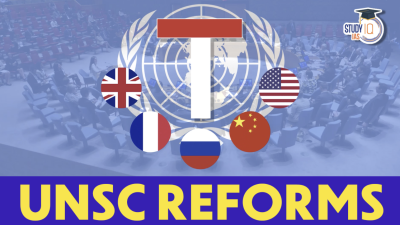
India has formally reiterated its demand for reforms in the United Nations Security Council (UNSC), seeking permanent membership and veto powers. The demand was articulated during recent diplomatic engagements at the UN headquarters in New York. India emphasised the need for the UNSC to reflect contemporary geopolitical realities.
India’s Position on UNSC Reforms
India advocates for expanding the UNSC permanent membership to include countries representing Africa, Asia, and Latin America. It argues that current permanent members do not represent the demographic and economic weight of rising powers. India seeks veto rights similar to the five existing permanent members: the US, UK, France, Russia, and China.
Current UNSC Structure
The UNSC comprises 15 members: five permanent members with veto power and ten non-permanent members elected for two-year terms. The permanent members can block substantive resolutions unilaterally. The council is responsible for maintaining international peace and security, authorising peacekeeping missions, and imposing sanctions.
Global Support and Opposition
Countries such as Japan, Germany, and Brazil also seek permanent membership. African nations demand a permanent seat for the continent. Some permanent members, notably China and Russia, oppose expanding membership or granting veto powers. The reform process requires amending the UN Charter, which needs approval from two-thirds of the General Assembly and all permanent members.
India’s Diplomatic Efforts
India has engaged in bilateral and multilateral diplomacy to garner support for its UNSC bid. It highlights its contributions to UN peacekeeping operations and its status as the world’s largest democracy. India also stresses its growing economic and strategic influence globally.
What to Study for UPSC Exams?
- United Nations Charter Amendments
- Global Governance and Multilateralism
- International Veto Power Dynamics
- Peacekeeping Operations of the UN
United Nations Charter Amendments
The UN Charter was signed in 1945 and can be amended by a two-thirds majority in the General Assembly plus ratification by all five permanent Security Council members. Amendments are rare; only four have occurred, including the 1965 expansion of the Security Council from 11 to 15 members. Changes require consensus among major powers, making reforms difficult.
Global Governance and Multilateralism
Global governance involves multiple countries cooperating on issues like climate, security, and trade through institutions. Multilateralism became prominent post-WWII with the UN’s creation. It contrasts with unilateral or bilateral actions and relies on international law, norms, and organizations to manage global challenges collectively.
International Veto Power Dynamics
Veto power in the UN Security Council is held by five permanent members: US, UK, France, Russia, and China. It allows any one to block substantive resolutions. The veto has been used over 250 times, often reflecting Cold War rivalries. No veto exists in the General Assembly or other UN bodies.
Peacekeeping Operations of the UN
UN peacekeeping began in 1948 with the UN Truce Supervision Organization. It involves deploying multinational forces to conflict zones to maintain ceasefires and protect civilians. Over 70 missions have occurred, with the largest in Congo and Sudan. Peacekeepers are contributed by over 120 countries, often under UN command but with national contingents.
Last Modified: April 15, 2026