
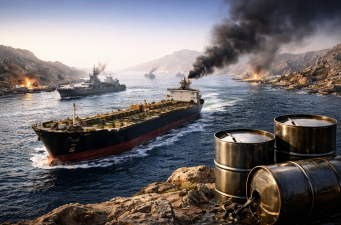
Recent events in 2026 have seen Iran effectively block the Strait of Hormuz, a critical passage for about 20% of the world’s oil supply. This move is a response to attacks by the US and Israel. The closure has caused a sharp rise in crude oil prices and disrupted global energy trade. Russia, despite sanctions, has benefited greatly from this crisis by selling more oil at higher prices. The US has temporarily eased restrictions on buying Russian oil to stabilise global markets, affecting countries like India.
Strait of Hormuz and Its Strategic Importance
The Strait of Hormuz is a narrow waterway linking the Persian Gulf to the Gulf of Oman. It is vital for global energy supply as nearly a fifth of the world’s oil passes through it daily. Iran’s blockade has disrupted shipments from major producers like Saudi Arabia, Iraq, and the UAE. This has caused global supply shortages and price spikes. The closure has also heightened geopolitical tensions in West Asia.
Russia’s Oil Revenue Windfall
Due to the Strait’s closure, global oil prices surged, benefiting Russia, a major crude exporter. Despite Western sanctions aiming to limit Russia’s oil sales to fund its Ukraine war, Russia earns an estimated $150 million daily extra revenue. Russian oil, previously discounted, now trades at par or even premium prices. The US’s temporary waiver allowing purchase of Russian oil already at sea has increased Moscow’s market access.
India’s Role in the Changing Oil Trade
India is the world’s third-largest oil consumer and relies heavily on imports. It has increased its intake of Russian crude from about 1 million barrels per day in February to 1.5 million barrels per day in early March 2026. This rise is partly due to the US waiver and the need to secure energy amid disruptions in West Asian supplies. India’s imports from traditional suppliers via the Strait of Hormuz have decreased, increasing dependence on Russian oil.
US Policy and Global Market Stability
The US has eased sanctions on Russian oil temporarily to prevent a sharp rise in fuel prices before its midterm elections. The waiver applies only to oil loaded before mid-March 2026 and aims to keep global markets stable. However, this move indirectly benefits Russia financially. The US also recognises India’s role in maintaining oil market stability through its continued purchase of Russian crude.
Topics for Prelims:
Strait of Hormuz
- Connects Persian Gulf to Gulf of Oman.
- Transits about 20% of global oil supply daily.
- Strategic chokepoint in global energy trade.
- Blockades cause global oil price spikes.
- Subject to geopolitical conflicts involving Iran, US, and allies.
Russian Oil Market Dynamics
- Russia is a top global crude exporter.
- Western sanctions target Russian oil revenues.
- Russian oil prices rose due to supply tightness.
- Russian oil previously sold at discount, now at premium.
- US waiver allows purchase of Russian oil already at sea.
India’s Energy Security
- Third-largest global crude oil consumer.
- Depends on imports for over 88% of oil needs.
- Increased Russian oil imports amid West Asia disruptions.
- US sanctions waiver aids India’s oil procurement.
- Energy security is a key policy priority.
Questions for Mains:
- Discuss the strategic importance of the Strait of Hormuz in global energy security and the impact of its closure on international relations. [GS-II-International Relations]
- Critically examine the role of economic sanctions in modern warfare with reference to Russia’s oil exports and the US sanctions regime. [GS-III-Economic Development]
- Explain the challenges and opportunities India faces in ensuring energy security amid geopolitical conflicts in West Asia and sanctions on Russian oil. [GS-III-Economic Development]
- With suitable examples, discuss the implications of geopolitical conflicts on global commodity prices and their impact on domestic economies. [GS-III-Economic Development]
Answer Hints:
1. Discuss the strategic importance of the Strait of Hormuz in global energy security and the impact of its closure on international relations. [GS-II-International Relations]
- Strait of Hormuz connects Persian Gulf to Gulf of Oman; vital chokepoint for ~20% of global oil supply daily.
- Closure disrupts oil shipments from major producers (Saudi Arabia, Iraq, UAE), causing global supply shortages and price spikes.
- Heightens geopolitical tensions involving Iran, US, Israel, and Gulf countries; risk of military escalation.
- Impacts global energy security, forcing countries to diversify supply routes and sources.
- Closure triggers international diplomatic efforts, sanctions, and strategic alliances to secure maritime routes.
- Influences global trade flows, energy markets, and power dynamics in West Asia and beyond.
2. Critically examine the role of economic sanctions in modern warfare with reference to Russia’s oil exports and the US sanctions regime. [GS-III-Economic Development]
- Sanctions aim to restrict Russia’s oil revenues to limit funding for Ukraine war.
- Russia circumvents sanctions by selling oil at premium prices and exploiting market tightness.
- US temporary waivers on Russian oil in transit ease supply shortages but indirectly benefit Russia financially.
- Sanctions create market uncertainties but have limited impact on Russia’s oil export volumes due to alternative buyers (India, China).
- Economic sanctions serve as a non-military tool but risk unintended consequences like market volatility and geopolitical shifts.
- Effectiveness depends on global cooperation and enforcement; partial compliance weakens impact.
3. Explain the challenges and opportunities India faces in ensuring energy security amid geopolitical conflicts in West Asia and sanctions on Russian oil. [GS-III-Economic Development]
- India depends on imports for over 88% of crude oil, with ~40-50% traditionally via Strait of Hormuz.
- Closure of Strait disrupts supplies from Gulf countries, forcing India to increase Russian oil imports.
- US sanctions waiver facilitates India’s procurement of Russian crude, reducing legal risks.
- Challenges include price volatility, supply uncertainties, and geopolitical pressure from Western countries.
- Opportunities lie in diversifying suppliers, securing discounted Russian oil, and enhancing strategic reserves.
- Energy security remains a key policy priority amid global conflicts and shifting alliances.
4. With suitable examples, discuss the implications of geopolitical conflicts on global commodity prices and their impact on domestic economies. [GS-III-Economic Development]
- Geopolitical conflicts like Iran’s Strait of Hormuz closure cause crude oil prices to surge (e.g., Brent crude rose ~37%).
- Higher commodity prices increase inflationary pressures, affecting fuel, transport, and manufacturing sectors domestically.
- Countries dependent on imports (e.g., India) face higher import bills, worsening trade deficits and fiscal strain.
- Conflicts disrupt supply chains, causing volatility and uncertainty in global markets.
- Governments may intervene via subsidies, strategic reserves, or policy adjustments to mitigate impact.
- Examples include US easing sanctions on Russian oil to stabilize prices before elections, and India increasing Russian oil imports to ensure supply.