
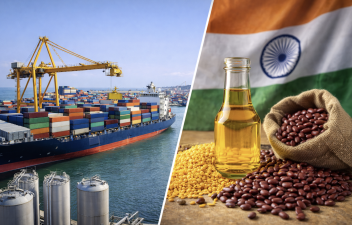
India remains the world’s largest importer of edible oils, sourcing over 60% of its consumption from overseas. In 2023-24, India imported approximately 16 million tonnes of edible oils, valued at around USD 12 billion. Palm oil accounts for nearly 55% of total imports, followed by soybean and sunflower oils. The major suppliers include Indonesia, Malaysia, Argentina, and Ukraine.
Edible Oil Import Composition
Palm oil constitutes the largest share of India’s edible oil imports due to its cost-effectiveness and versatility. Soybean oil imports have increased following disruptions in domestic oilseed production. Sunflower oil imports fluctuate based on geopolitical factors affecting Ukraine and Russia. Rapeseed and groundnut oils form a minor portion of imports.
Domestic Production and Consumption
India produces about 10 million tonnes of edible oils annually from oilseeds such as groundnut, mustard, and soybean. Domestic production meets roughly 40% of demand, with consumption estimated at 26 million tonnes per year. Rising population and changing dietary patterns have led to increased edible oil consumption.
Policy Measures and Import Regulation
The government levies customs duty on edible oil imports to protect domestic farmers and manage prices. Import duties on crude palm oil range between 45-50%, while refined oils attract higher duties. The government promotes oilseed cultivation through schemes like the National Mission on Oilseeds and Oil Palm (NMOOP). Buffer stocks and price monitoring mechanisms are in place to stabilise the market.
Impact on Food Security
Edible oil imports affect India’s food inflation and trade balance due to price volatility in international markets. Dependency on imports exposes the country to supply disruptions from geopolitical tensions and climatic events. Efforts to increase domestic oilseed production aim to reduce import dependence and enhance food security.
What to Study for UPSC Exams?
- Oilseed Crop Production Challenges
- India’s Agricultural Import Policies
- International Edible Oil Trade Dynamics
- Food Inflation and Price Stabilisation Mechanisms
Oilseed Crop Production Challenges
Oilseed crops face yield variability due to erratic monsoons and pest infestations. Soil nutrient depletion and limited irrigation restrict productivity. Smallholder farmers dominate cultivation, limiting mechanization and access to quality seeds. Climate change intensifies stress on oilseed crops, affecting oil content and quality.
India’s Agricultural Import Policies
India uses customs duties and quantitative restrictions to regulate agricultural imports. Policies aim to protect domestic farmers and control inflation. Import tariffs vary by product and processing stage, often higher on refined goods. Government schemes promote self-sufficiency alongside import regulation.
International Edible Oil Trade Dynamics
Global edible oil trade centers on palm, soybean, sunflower, and rapeseed oils. Major exporters include Indonesia, Malaysia, Argentina, and Ukraine. Trade is influenced by geopolitical tensions, climate events, and biofuel demand. Price volatility often results from supply shocks and export restrictions.
Food Inflation and Price Stabilisation Mechanisms
Food inflation is driven by supply-demand imbalances, import dependency, and seasonal factors. Governments use buffer stocks, minimum support prices, and import tariffs to stabilize prices. Price monitoring and targeted subsidies help mitigate inflation impact on vulnerable populations.
Last Modified: April 13, 2026