
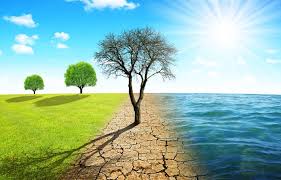
Climate-Resilient Agriculture (CRA) has evolved from a secondary ecological preference into a primary survival strategy for the Indian state. With more than 50% of the national workforce dependent on the agricultural sector, the economic stability and food security of the country are inextricably linked to the sector’s ability to withstand climatic volatility. The transition toward CRA represents a fundamental shift in philosophy: moving from a paradigm of “fighting nature” through intensive chemical and water usage toward “working with nature” through adaptive management.
Core Principles and Mechanisms of CRA
In the Indian context, CRA is defined by the ability of farming systems to “bounce back” from extreme shocks such as prolonged droughts, flash floods, and intense heatwaves. It integrates social inclusion, gender responsiveness, and nutritional security into the framework of agricultural governance.
Foundational Pillars of CRA
- Climate Resilience and Adaptation: This involves strengthening the biological and physical capacity of crops and soils to maintain high productivity during extreme weather events.
- Sustainable Natural Resource Management: Given that nearly 30% of India’s land is currently degraded, the focus is on “water stewardship” and the restoration of soil health.
- Livelihood Improvement: Ensuring financial viability for the 86% of farmers who fall under the small and marginal landholder category.
- Social and Nutritional Security: Transitioning the national objective from mere “food security” (calorie counting) to “nutrition security” (diverse, nutrient-dense diets).
Key Operational Mechanisms
- Climate-Adapted Crop Varieties: The Indian Council of Agricultural Research (ICAR) has successfully developed over 1,900 resilient varieties, including “Scuba Rice” (flood-tolerant) and specialized heat-tolerant wheat.
- Water Stewardship: Implementation of the National Mission for Sustainable Agriculture (NMSA) promotes drip and sprinkler systems to maximize water-use efficiency.
- In-situ Conservation: Methods such as Direct Seeded Rice (DSR) and Alternate Wetting and Drying (AWD) are utilized to reduce methane emissions by 40–90% and save significant water volumes.
- Institutional Frameworks: The National Innovations in Climate Resilient Agriculture (NICRA) project demonstrates these technologies in over 448 “Climate Resilient Villages.” Additionally, District Agriculture Contingency Plans (DACPs) guide local responses across 650 districts.
Implementation Strategies at the Farm Level
Practical, low-cost, and technology-driven interventions are being utilized to address three primary climate challenges: erratic rainfall, heat stress, and soil degradation.
1. Addressing Erratic Rainfall (Capture and Conserve)
- On-Farm Water Harvesting: Farmers utilize lined farm ponds to store excess runoff during heavy monsoons, providing “protective irrigation” during dry spells.
- Broad Bed Furrow (BBF) & Ridge-Furrow Systems: Crops are planted on raised beds to prevent waterlogging during floods while retaining moisture in furrows for dry periods.
- Laser Land Levelling: Laser-guided tractors ensure even water distribution, reducing total water usage by 20–25%.
- Contingency Cropping: Rapidly switching to shorter-duration varieties or hardy crops like millets if the monsoon is delayed.
2. Combating Heat Stress (Cool and Protect)
- Thermal Escaping Varieties: Using seeds that mature earlier to escape the “terminal heat stress” common in March and April.
- Micro-Irrigation for Cooling: Using sprinklers to lower the crop canopy temperature during peak heatwaves.
- Mulching and Agroforestry: Covering soil with crop residue to reduce evaporation and planting shelterbelts (trees) to block hot winds (Loo).
3. Reversing Soil Degradation (Restore and Regenerate)
- Zero Tillage (No-Till): Sowing seeds directly into the stubble of previous crops to maintain soil moisture, reduce erosion, and keep the soil temperature low.
- Residue Management: Using tools like the Happy Seeder to mulch crop residue back into the earth, building Soil Organic Carbon instead of burning stubble.
- Regenerative Practices: Initiatives like Zero Budget Natural Farming (ZBNF) help restore fertility without expensive petroleum-based fertilizers.
Comparative Analysis: Conventional vs. Sustainable vs. CRA
CRA acts as the “future-proofing” model on the agricultural spectrum, balancing the high output of conventional models with the resource ethics of sustainability.
| Feature | Conventional Agriculture | Sustainable Agriculture | Climate-Resilient (CRA) |
| Primary Goal | Maximizing current output/yield. | Maintaining resources for the future. | Surviving climate volatility and shocks. |
| Risk Profile | High. Brittle; prone to total failure during climate shocks. | Moderate. Lowered input costs, but still vulnerable to extremes. | Low. Features built-in “shock absorbers” and insurance. |
| Soil Strategy | Medium for chemicals; prone to erosion. | Living resource; focus on long-term fertility. | Sponge. Focus on moisture and carbon storage. |
| Productivity | High peaks in “perfect” years; devastating lows. | Steady, reliable, and consistent long-term yields. | Stability of Yield. Prioritizes consistent nutritional yield. |
| Water Strategy | Heavy irrigation; leads to groundwater depletion. | Focused on conservation and efficiency. | Water Independence. Rainwater harvesting and trapping. |
Critical Constraints to Large-Scale Adoption
Despite the benefits, several economic, environmental, and social barriers prevent universal adoption of CRA in India.
Economic Constraints
- Financial Exclusion: Small farmers face a financing gap of approximately $125 per acre, with banks often viewing them as high-risk.
- Upfront Capital Requirements: Technologies like solar pumps or farm ponds require significant initial investment with a lagging return on investment (ROI).
- Market Uncertainty: Transition years often involve a “yield dip” where productivity stagnates while the ecosystem recovers, leading to cash flow crises.
Environmental and Technical Constraints
- Severe Land Degradation: Roughly 30% of Indian land is so degraded that it responds poorly to initial resilient interventions.
- Trust Deficit in Bio-Inputs: Inconsistent quality in the bio-fertilizer market often pushes farmers back toward familiar chemical options.
- Pace of Change: Climate volatility is currently accelerating faster than scientific research can produce new adaptive seed varieties.
Policy Innovations and Future Outlook (2025–2026)
India is currently executing a structural paradigm shift, moving from farm-level management to a comprehensive Climate-Resilient Agricultural System (CRAS).
Policy and Institutional Reforms
- National CRA Roadmap: Integrated under the BioE3 framework to align biotechnology with climate adaptation.
- Bharat-VISTAAR: An AI tool proposed in the Union Budget 2026-27 that provides localized advisory services across India.
- Family-Centric Targeting: Shifting focus from “landowners” to “farming families” to include women and marginalized members in training.
- Climate Resilience Cells (CRC): State-level bodies, such as those in Odisha, coordinate action across water, forest, and agriculture departments.
- FPO Reform: Reforming Farmer Producer Organisations to focus on “Climate-Smart” value chains and direct market linkages.
Frontier Technologies
- AI and Precision Agri: Systems like YES-TECH and CROPIC allow for transparent, AI-enabled crop insurance based on real-time satellite data.
- Genome-Edited Seeds: Approval of non-transgenic, genome-edited rice varieties that can withstand extreme heat or salinity without foreign DNA.
- Hyper-local Forecasting: AI-based monsoon forecasting now reaches millions of farmers, with over 50% of recipients successfully adjusting their sowing strategies in 2025.
- Nanotechnology: The use of photosynthesis-enhancing nanotech and nano-encapsulated herbicides to increase efficiency and reduce chemical runoff.
Questions
- Critically examine the role of the National Innovations in Climate Resilient Agriculture (NICRA) in transforming Indian villages into climate-smart hubs. How does this institutional framework address the specific needs of small and marginal farmers? (GS-III: Economic Development)
- Explain the mechanisms of “Direct Seeded Rice” (DSR) and “Alternate Wetting and Drying” (AWD) in the context of India’s water crisis. Why is the adoption of these techniques critical for methane emission reduction in the Indo-Gangetic plains? (GS-III: Environment & DM)
- With suitable examples, discuss how genome-editing technology differs from traditional Genetically Modified Organisms (GMOs) in Indian agriculture. What are the potential implications of genome-edited seeds for national food security under rising thermal stress? (GS-III: Science & Technology)
- Point out the economic and social constraints that hinder the transition from conventional chemical-intensive farming to Zero Budget Natural Farming (ZBNF). How can government policy bridge the “yield dip” during the initial transition period? (GS-III: Economic Development)
- Analyse the significance of the “Global Hub for Millets” initiative in the light of climate-resilient agriculture. How do millets contribute to both environmental sustainability and nutritional security in rainfed regions? (GS-II: Social Justice)
- Evaluate the impact of AI-driven hyper-local weather forecasting and precision agriculture on crop insurance mechanisms in India. How can “AgriStack” and digital infrastructure mitigate the financial risks faced by farmers due to erratic monsoons? (GS-II: Governance)