
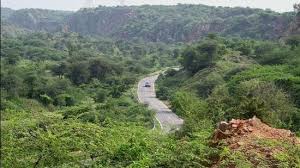
The strategic imperative of securing critical minerals for India’s future has collided with environmental concerns in the Aravalli Hills, one of the world’s oldest and most fragile mountain systems. Recent court orders, policy shifts, and official statements have sharpened a fundamental question: how should India balance ecological protection with strategic mineral needs? This balance is currently in a fragile state of legal and policy limbo. As of April 2026, the Supreme Court has paused its own previous orders to prevent irreversible ecological damage, effectively putting the government’s “strategic mining” plans on hold while a new expert committee re-evaluates the entire landscape. The conflict centers on a specific legal mechanism: the “Strategic Exemption.” This would allow mining for critical minerals—such as lithium, Rare Earth Elements (REEs), and uranium—even in ecologically “inviolate” zones, arguing that national security overrides standard environmental protections.
The “Strategic Exemption” Mechanism
To balance defense needs with conservation, the government and the Supreme Court initially proposed a “carve-out” model in late 2025.
- The Proposal: In its November 20, 2025 judgment, the Supreme Court accepted a new definition of the Aravalli Hills, limiting them to landforms 100 meters high.
- The Exemption: Crucially, while it banned general mining in “core/inviolate” areas, it created a specific exemption for critical, strategic, and atomic minerals.
- The Rationale: The defense establishment, including the Chief of Integrated Defence Staff, has argued that dependence on imported critical minerals is a “strategic vulnerability.”
- Self-Reliance: Domestic mining is seen as essential for self-reliance in producing missile systems, electronics, and aerospace alloys.
The Judicial “Emergency Brake” and Current Status
The attempt to operationalize this balance faced immediate challenges. Environmentalists and the Supreme Court itself realized the “100-meter” definition might exclude nearly 90% of the actual hill range, leaving it open to destruction.
- The Stay (December 2025): In a rare move, the Supreme Court stayed its own November judgment on December 29, 2025.
- Freeze on Mining: There is currently a total freeze on new mining leases in the Aravallis until further orders.
- New Committee: A High-Powered Expert Committee has been constituted to re-examine the definition of the hills and the scope of permitted mining.
- Status Quo: The “strategic exemption” is effectively suspended. The court ruled that no irreversible steps should be taken until a “Management Plan for Sustainable Mining” (MPSM) is finalized.
Critical Minerals: The Backbone of National Security
Critical minerals have become the “strategic backbone” of India’s national security because they are the indispensable raw materials for modern warfare and technological sovereignty. As India pushes for Atmanirbhar Bharat (self-reliance) in defense, these minerals represent a shift from importing finished weapon systems to securing the very elements needed to build them domestically.
1. Enabling Advanced Defence Systems
Modern military platforms cannot function without specific critical minerals that provide high performance, durability, and precision:
- Aerospace & Missiles: Titanium, Tungsten, and Nickel are used in superalloys for jet engines and missile components to withstand extreme heat and pressure.
- Precision Guidance: Rare Earth Elements (REEs) like neodymium are vital for the high-strength magnets used in precision-guided munitions and drone motors.
- Surveillance & Detection: Radars, sonar, and electronic warfare systems rely on REEs and minerals like gallium for superior signal processing and detection ranges.
- Night Vision & Optics: Germanium and various rare earths are essential for infrared night-vision systems and advanced optical sensors.
2. Safeguarding Strategic Autonomy
India’s national security strategy identifies over-reliance on foreign imports—particularly from China, which dominates 60-90% of global processing—as a major vulnerability.
- Preventing Coercion: Securing domestic supplies ensures that India’s military readiness is not subject to “resource nationalism,” export controls, or supply embargoes used as diplomatic leverage.
- Protecting Sensitive Programs: Local control over minerals like beryllium and zirconium keeps India’s Space and Atomic Energy programs insulated from shifting international export restrictions.
- Technological Sovereignty: Access to these minerals allows India to develop its own technological standards and high-end manufacturing IP rather than remaining a mere consumer of foreign technology.
3. Policy and Institutional Response
The government has integrated mineral security into national security planning through several key moves:
- National Critical Mineral Mission (NCMM): Launched in 2025 with a ₹16,300 crore outlay to oversee domestic exploration, processing, and strategic stockpiling.
- Legal Reforms: Amendments to the Mines and Minerals (Development and Regulation) Act now empower the Central Government to auction 24 critical minerals previously under more restrictive categories.
- Strategic Stockpiling: The Ministry of Mines has allocated funds to maintain “buffer stocks” of minerals like lithium and cobalt to tide over temporary global supply shocks.
Ecological Risks in the Aravalli Ecosystem
Mining in the Aravalli Hills poses significant and potentially irreversible ecological risks. These hills act as a critical life-support system for North India, and their degradation could trigger a regional environmental collapse.
1. Accelerated Desertification
The Aravallis serve as a “Great Green Wall,” a natural physical barrier that blocks the eastward expansion of the Thar Desert into the fertile plains of Haryana, Delhi, and Uttar Pradesh.
- Weakened Barrier: Mining strips away the hills and native vegetation that stabilize the soil and block sand-laden winds.
- Desert Advance: Satellite data shows the desert advancing as mining creates gaps in the range, allowing sand to drift toward cities like Delhi.
2. Groundwater Depletion and Contamination
Known as a “hidden water bank,” the rocky structure of the Aravallis is vital for recharging underground aquifers that supply millions in water-stressed cities like Gurugram and Jaipur.
- Aquifer Damage: Deep open-cast mining frequently “punctures” these aquifers, causing water tables to drop—in some areas by as much as 40–60 feet.
- Heavy Metal Pollution: Mining waste often leaches hazardous heavy metals into the groundwater, posing severe health risks (including high cancer risk indices) for local communities.
3. Destruction of Biodiversity and Wildlife Corridors
The Aravallis are a unique hotspot containing dry deciduous forests that support over 300 plant species and endangered wildlife.
- Habitat Fragmentation: Blasting and heavy machinery destroy the dense forests and rocky terrain essential for predators like the Indian leopard and striped hyena.
- Corridor Loss: Breaking the continuity of the range isolates wildlife populations, leading to increased human-animal conflict.
4. Climate and Air Quality Degradation
The hills function as the “green lungs” for the National Capital Region (NCR), filtering air pollutants and regulating the microclimate.
- Dust Storms: Stripping the hills increases dust loads and PM2.5 levels, worsening air pollution in Delhi-NCR.
- Urban Heat Islands: Loss of forest cover has been linked to a 4–6°C rise in temperatures in nearby urban areas, intensifying heatwaves.
5. Irreversible Geological Loss
The Aravallis are approximately 2 billion years old. Unlike forests, which can sometimes be replanted, the ancient geological formations destroyed by boring and blasting can never be rebuilt.
Comparative Strategies: Extraction vs. Alternatives
India’s strategy for mineral security has evolved into a “multi-pillar” model. As of April 2026, the government treats Urban Mining (recycling) as a “third pillar” alongside domestic extraction and overseas partnerships.
1. The “Urban Mine” vs. Traditional Mining
Recycling is now prioritized as a faster, cleaner alternative to primary extraction in sensitive zones.
- Lead Time: Traditional mines take 7–10 years from discovery to production; recycling plants can scale within 12–24 months.
- Strategic Advantage: The ₹1,500 crore Critical Mineral Recycling Scheme (launched late 2025) aims to recover 40 kilotonnes of minerals annually from e-waste and batteries.
- Target: By 2026, recycled materials are expected to meet up to 30% of battery material demand.
- Efficiency: Recycling is more energy-efficient and keeps minerals in circulation, reducing the volume of fresh ore needed.
2. Overseas Mineral Partnerships (KABIL)
For minerals with “negligible” domestic reserves, India has pivoted to direct equity in foreign mines through Khanij Bidesh India Limited (KABIL).
- Recent Success (April 2026): KABIL received environmental clearance from the Argentine government for deep exploration of five lithium brine blocks in Catamarca.
- Friend-Shoring: India is a member of the US-led Minerals Security Partnership (MSP) and the Indo-Pacific Economic Framework (IPEF) to ensure sourcing from trusted allies like Australia, Canada, and Brazil.
3. Comparison of Strategy Pillars (2026 Status)
| Alternative | Strategic Role | Key Limitation | 2026 Progress |
| Domestic Mining | Long-term sovereignty | High environmental risk; long lead times. | 46 blocks successfully auctioned as of early 2026. |
| Recycling (Urban Mining) | Immediate supply bridge | Requires formalization of the informal scrap sector. | ₹1,500 crore incentive scheme operational. |
| Overseas Partnerships | Supply chain resilience | Geopolitical risk and maritime chokepoints. | Lithium exploration started in Argentina; MOUs with Australia/Zambia. |
| Imports | Current necessity | High 100% dependency for Li, Co, and Ni. | Customs duty exemptions on 12 critical minerals. |
4. The Emerging “Midstream” Focus
India has realized that having the ore is useless without the ability to refine it. The Union Budget 2026–27 announced Dedicated Rare Earth Corridors (in Odisha, Kerala, Andhra Pradesh, and Tamil Nadu) to build domestic processing hubs. This allows India to import raw materials and refine them at home, ensuring military-grade purity.
Legal and Governance Challenges
The conflict between national security and environmental protection has created significant “Regulatory Blind Spots”—legal carve-outs that fast-track strategic projects but may strip away essential checks and balances.
1. Public Consultation and the “Strategic Exemption”
In late 2025, the MoEFCC operationalized a provision exempts mining for critical and strategic minerals from Public Consultation.
- The Challenge: While this speeds up clearances, it removes the “democratic guardrail” of public hearings.
- Legal Conflict: This creates a friction point between the Right to a Healthy Environment (Article 21) and national defense requirements.
2. Definitional Inconsistency
A major governance hurdle is the lack of a uniform, scientific definition for what constitutes a “protected hill” or “forest.”
- The Risk: Without a strict legal definition, “strategic mining” could be permitted on lands re-classified as “non-forest,” potentially destroying vital ecological barriers.
3. Federal Friction and Oversight
The Central Government has centralized the appraisal of strategic mineral blocks, often bypassing State-level environmental authorities.
- Jurisdictional Clash: States like Tamil Nadu have formally opposed these federal exemptions, arguing they undermine state autonomy.
- Oversight Gap: Centralized appraisal often relies on data provided by project developers without independent local “ground-truthing.”
4. The “Security Buffer” vs. Biodiversity
The Forest (Conservation) Amendment Act 2023 exempts land within 100 km of international borders from forest clearance for “strategic linear projects.”
- Ecological Impact: This covers nearly the entire area of several Himalayan states which are global biodiversity hotspots.
- Legal Uncertainty: Petitions in early 2026 have challenged these blanket exemptions, arguing they violate the Public Trust Doctrine.
Proposed Balanced Policy Framework
A balanced framework requires a shift toward Landscape-Level Ecological Governance. India is moving toward this through the following pillars:
1. Landscape-Level Zonation (The “No-Go” Rule)
The Management Plan for Sustainable Mining (MPSM), finalized by the ICFRE, is the cornerstone of this balance.
- Absolute Prohibition Zones: Core areas—including tiger reserves, wetlands, and CAMPA plantations—are strictly “No-Go” areas.
- Strategic Buffers: Inviolate zones now include a 500-metre buffer between adjacent hills to prevent fragmentation of wildlife corridors.
2. National Tailings Policy (Jan 2026)
India is prioritizing the extraction of critical minerals from mine waste (tailings, slag, and overburden). This turns existing industrial byproducts into strategic assets without opening new pits.
3. Independent Scientific Oversight
Governance is shifting from department-led clearances to independent expert review.
- Expert Appraisal Committees (EAC): All critical mineral projects undergo centralized review to ensure consistent environmental standards.
- High-Powered Expert Committee (HPEC): As of March 2026, a 10-member committee of independent scientists has been tasked by the Supreme Court to finalize the scientific definition of “protected” areas.
4. Post-Mining Ecological Restoration
The framework mandates that restoration is a continuous process.
- Restoration-First Mandate: New mining leases are conditional on cumulative impact assessments and a predefined rehabilitation plan.
- Aravalli Green Wall Project: This initiative aims to restore 1.1 million hectares of degraded land, creating a green buffer to offset any localized strategic mining activity.
Questions
- Critically analyse the role of the Chief of Integrated Defence Staff and the Defence Research and Development Organisation (DRDO) in securing the supply chain of rare earth elements. How does this inter-institutional coordination impact India’s strategic autonomy? {GS-III: Internal & External Security}
- What are the challenges before the National Critical Mineral Mission (NCMM) in integrating tribal rights with the auctioning of strategic mineral blocks? Point out the potential for social conflict in mineral-rich belts of Central India. {GS-II: Social Justice}
- Examine the environmental significance of the Aravalli Green Wall Project as a counter-measure against the expansion of the Thar Desert. How does this initiative align with India’s commitments under the United Nations Convention to Combat Desertification (UNCCD)? {GS-III: Environment & DM}
- Taking example of Khanij Bidesh India Limited (KABIL), discuss the effectiveness of India’s “resource diplomacy” in the Lithium Triangle of South America. What are the geopolitical risks associated with such overseas mineral partnerships? {GS-II: International Relations}
- Underline the legal implications of the Public Trust Doctrine in the light of recent amendments to the Mines and Minerals (Development and Regulation) Act. How can the judiciary ensure that “strategic exemptions” do not lead to ecological “irreversibility”? {GS-II: Constitution of India & Polity}
- With suitable examples, discuss the technological potential of Urban Mining and e-waste recycling in achieving a circular economy. Why is the formalization of the informal scrap sector essential for mineral security? {GS-III: Science & Technology}