
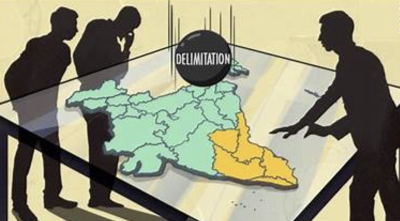
The delimitation exercise in India involves redrawing the boundaries of parliamentary and assembly constituencies. It is conducted by the Delimitation Commission, a high-powered body appointed by the President of India. The latest major exercise was based on the 2001 Census and completed in 2008, affecting several states. Delimitation aims to balance population representation in legislatures and adjust for demographic changes.
Delimitation Commission and Legal Framework
The Delimitation Commission is constituted under the Delimitation Commission Act. It comprises a retired Supreme Court judge, the Chief Election Commissioner, and respective state election commissioners. Its orders have the force of law and cannot be challenged in court. The process follows Census data to ensure equal representation by population across constituencies.
Impact on State Representation
Delimitation alters the number and boundaries of constituencies within states. It can increase or decrease a state’s legislative seats based on population shifts. For instance, states with higher population growth may gain more seats in the Lok Sabha. However, the total number of Lok Sabha seats is fixed at 543. The exercise affects political representation and resource allocation among states.
Federal Structure and Political Balance
Delimitation influences the federal balance by changing the distribution of political power between states. It affects centre-state relations by altering the composition of the Parliament and state assemblies. States with increased representation may have greater influence in central policymaking. Conversely, states with reduced seats may experience diminished political leverage.
Freeze on Delimitation and Its Extension
The Constitution was amended to freeze delimitation until after the 2026 Census to maintain stability in state representation. This freeze was imposed to encourage population control measures by states. The freeze means current disparities in population and representation persist, impacting federal equity until delimitation resumes.
What to Study for UPSC Exams?
- Delimitation Commission Act
- Centre-State Legislative Relations
- Constitutional Amendments on Representation
- Population Control and Political Representation
Delimitation Commission Act
The Delimitation Commission Act establishes the Delimitation Commission to redraw electoral boundaries based on Census data. It mandates equal population representation across constituencies. The Commission’s orders have legal sanctity and are immune to judicial review. The Act ensures periodic adjustment of constituencies to reflect demographic changes.
Centre-State Legislative Relations
Centre-state legislative relations define the division of law-making powers between Parliament and state legislatures as per the Constitution. The Union List, State List, and Concurrent List specify subjects for legislation. Disputes are resolved by the Supreme Court. Legislative relations affect federal balance and governance efficiency.
Constitutional Amendments on Representation
Several amendments regulate representation, including freezing Lok Sabha seat allocation till 2026 (42nd Amendment). Amendments adjust reservation of seats for SC/ST and modify delimitation provisions. They control the size and composition of legislatures to maintain political stability and demographic fairness.
Population Control and Political Representation
Population control policies influence political representation through delimitation. States with successful population control risk losing seats if delimitation proceeds without freeze. The 1976 constitutional freeze incentivized states to limit population growth to maintain political power. Demographic shifts directly affect resource allocation and legislative strength.
Last Modified: April 15, 2026