
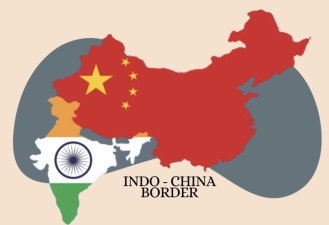
China has intensified its territorial strategy along the India-China border, focusing on infrastructure development and military deployment in disputed regions. Key areas of activity include Aksai Chin, Arunachal Pradesh, and Ladakh. The Chinese government has constructed roads, tunnels, and military outposts to strengthen its presence.
Infrastructure Expansion
China has built over 1,000 km of new roads and upgraded existing routes in Tibet Autonomous Region and Xinjiang near the Line of Actual Control (LAC). The construction includes dual-use tunnels and bridges to facilitate rapid military movement. The G219 highway running through Aksai Chin has been expanded. Rail connectivity projects linking Tibet to Xinjiang are underway.
Military Deployment and Exercises
China has increased troop levels in border areas, deploying armoured regiments and artillery units. Regular military exercises have been conducted near the LAC, including joint drills involving the People’s Liberation Army Ground Force and Air Force. Unmanned aerial vehicles and surveillance systems have been deployed for enhanced border monitoring.
Territorial Claims and Diplomatic Actions
China maintains claims over Arunachal Pradesh, referring to it as South Tibet. It has issued maps showing expanded territorial claims overlapping with Indian-administered regions. Diplomatic protests have been lodged following Indian infrastructure projects near disputed areas. China has opposed Indian moves to upgrade border villages and airstrips.
Recent Border Incidents
Several face-offs and standoffs have occurred since 2020, notably in the Galwan Valley and Pangong Tso. Both sides have engaged in disengagement talks, but patrol clashes persist. China has established new outposts on the Indian side of the LAC in certain sectors, raising tensions. The border remains militarised with frequent troop rotations.
What to Study for UPSC Exams?
- Border Management Mechanisms
- India-China Diplomatic Relations
- Geopolitics of South Asia
- International Boundary Disputes
Border Management Mechanisms
Border management involves surveillance, patrolling, and infrastructure development to secure national boundaries. Technologies like drones, sensors, and biometric systems are increasingly used. Joint border coordination centers facilitate communication between neighboring countries to reduce conflicts and manage cross-border issues.
India-China Diplomatic Relations
India-China relations feature a mix of cooperation and rivalry, with diplomatic ties established in 1950. The 1962 war remains a key historical event. Both countries engage in bilateral talks, trade partnerships, and multilateral forums despite ongoing border disputes and occasional military standoffs.
Geopolitics of South Asia
South Asia’s geopolitics is shaped by India-Pakistan rivalry, China’s Belt and Road Initiative, and regional organizations like SAARC. Strategic waterways like the Indian Ocean and Himalayas influence power dynamics. External powers like the US and Russia also impact regional security and diplomacy.
International Boundary Disputes
International boundary disputes arise from colonial legacies, ethnic divisions, and resource competition. Resolutions involve treaties, arbitration, and international courts. Notable disputes include Kashmir, Israel-Palestine, and South China Sea, often causing prolonged tensions and military confrontations.
Last Modified: April 13, 2026