
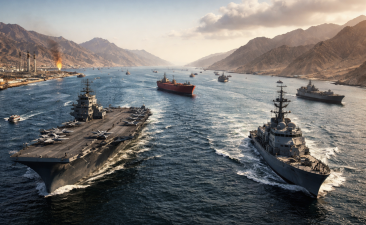
The Strait of Hormuz has become a global flashpoint in 2026. Following the death of Iran’s Supreme Leader, the Islamic Revolutionary Guard Corps (IRGC) declared the strait effectively closed to commercial shipping. This narrow waterway is vital for global oil trade. Tanker traffic has dropped by nearly 80%. The closure is not a formal blockade but caused by high risks and insurance withdrawal. The recent sinking of an Iranian frigate by a US submarine has escalated tensions. India, heavily dependent on imports through Hormuz, faces major energy and economic challenges.
Historical Significance of the Strait
The name Hormuz originates from Hormoz, linked to Ahura Mazda, the Zoroastrian deity. The strait was a sacred gateway for ancient Persians. From the 11th to 17th centuries, the Kingdom of Hormuz controlled trade here, described by Marco Polo as a jewel. In the 1500s, the Portuguese seized Hormuz Island to dominate spice trade. By the 20th century, oil replaced spices as the main commodity. During the 1980s Iran-Iraq War, the Tanker War made Hormuz a conflict zone but it never fully closed.
Geopolitical and Economic Context in 2026
The strait is just 33 km wide at its narrowest point. Deep shipping lanes lie within Iranian and Omani waters. This gives Iran strategic leverage over global oil flow. The IRGC’s declaration of closure is a risk-driven halt rather than a legal blockade. Insurance firms have withdrawn war-risk coverage. The sinking of IRIS Dena by a US submarine has worsened the standoff. The global energy market faces disruption, with Brent crude nearing 100 per barrel.</p> <h4>India’s Energy Security Concerns</h4> <p>India imports over 88% of its crude oil, half via Hormuz from Iraq, Saudi Arabia, and UAE. LPG and LNG imports through Hormuz constitute 80% and 60% respectively. Unlike crude oil, India lacks strategic reserves for LPG and LNG. A prolonged closure means immediate domestic shortages of cooking gas and power. Rising maritime insurance costs add a war premium to fuel prices. This threatens India’s economic stability and energy security.</p> <h4>Strategic Implications for Global Trade</h4> <p>Hormuz is the world’s most critical oil chokepoint. Control over it affects global energy prices and supply chains. The current crisis marks vulnerabilities in maritime trade routes. The region’s instability may push nations to diversify energy sources and routes. Increased military presence in the area raises risks of wider conflict. The situation demands international diplomatic efforts to ensure free navigation.</p> <h4>Topics for Prelims:</h4> <h5>Strait of Hormuz</h5> <ol> <li>Narrow waterway between Persian Gulf and Gulf of Oman.</li> <li>33 km wide at narrowest point.</li> <li>Key global oil transit route, 20% of world’s petroleum passes through.</li> <li>Controlled by Iran and Oman’s territorial waters.</li> <li>Site of historical conflicts and trade control since ancient times.</li> </ol> <h5>Islamic Revolutionary Guard Corps (IRGC)</h5> <ol> <li>Elite branch of Iran’s armed forces.</li> <li>Controls strategic military and economic assets.</li> <li>Declared Strait of Hormuz effectively closed in 2026.</li> <li>Engaged in asymmetric naval warfare in Persian Gulf.</li> <li>Responded to US military actions such as sinking of IRIS Dena.</li> </ol> <h5>India’s Energy Imports</h5> <ol> <li>India imports over 88% of crude oil.</li> <li>Half of crude oil imports pass through Strait of Hormuz.</li> <li>LPG and LNG imports largely dependent on Hormuz route.</li> <li>India has 10 days strategic crude oil reserves but limited LPG/LNG buffers.</li> <li>Energy security threatened by maritime disruptions and insurance hikes.</li> </ol> <h4>Questions for Mains:</h4> <blockquote> <ol> <li>Critically analyse the strategic importance of maritime chokepoints like the Strait of Hormuz in global energy security. With suitable examples, discuss how geopolitical conflicts affect international trade. [GS-III-Economic Development]</li> <li>Estimate the impact of disruptions in energy supply routes on India’s domestic economy and foreign policy. Point out India’s possible strategies to mitigate such risks. [GS-II-International Relations]</li> <li>Underlining the role of non-state actors like the Islamic Revolutionary Guard Corps, discuss the challenges they pose to international maritime security and governance. Critically analyse existing legal frameworks. [GS-II-Governance]</li> <li>With examples from history and modern times, explain the significance of controlling trade routes in shaping regional power dynamics. How does this influence contemporary geopolitical conflicts? [GS-I-Modern World History]</li> </ol> </blockquote> <h4>Answer Hints:</h4> <h5>1. Critically analyse the strategic importance of maritime chokepoints like the Strait of Hormuz in global energy security. With suitable examples, discuss how geopolitical conflicts affect international trade. [GS-III-Economic Development]</h5> <ol> <li>Strait of Hormuz is a vital chokepoint – ~33 km wide, 20% of global oil passes through it.</li> <li>Control over chokepoints grants leverage over global energy supply and prices (e.g., Iran’s influence over Hormuz).</li> <li>Historical conflicts (e.g., Iran-Iraq War Tanker War) disrupted oil flow, impacting global markets.</li> <li>2026 crisis – IRGC’s effective closure and insurance withdrawal caused ~80% drop in tanker traffic, pushing oil prices near100/barrel.
2. Estimate the impact of disruptions in energy supply routes on India’s domestic economy and foreign policy. Point out India’s possible strategies to mitigate such risks. [GS-II-International Relations]
- India imports over 88% of crude oil; ~50% passes through Strait of Hormuz from Iraq, Saudi Arabia, UAE.
- LPG (80%) and LNG (60%) imports also depend heavily on Hormuz; no strategic reserves for these fuels.
- Disruptions cause immediate shortages, domestic rationing of cooking gas and power shortages.
- Rising maritime insurance premiums add ‘war premium’ to fuel prices, affecting inflation and economy.
- Foreign policy impact – Need for diversified energy sources, stronger ties with Gulf countries, and strategic alliances.
- Mitigation strategies – Developing strategic reserves, exploring alternate routes, investing in renewable energy, and enhancing naval presence to secure sea lanes.
3. Underlining the role of non-state actors like the Islamic Revolutionary Guard Corps, discuss the challenges they pose to international maritime security and governance. Critically analyse existing legal frameworks. [GS-II-Governance]
- IRGC is a powerful non-state actor controlling Iran’s strategic military and economic assets.
- IRGC’s asymmetric naval warfare tactics create unpredictability and risks in maritime zones.
- Declaration of effective closure of Hormuz by IRGC lacks formal legal blockade status but disrupts free navigation.
- Challenges – Difficulty in enforcing international maritime laws against non-state actors with state backing.
- Existing legal frameworks (UNCLOS) focus on state actors; limited mechanisms to address hybrid threats or non-declared blockades.
- Need for enhanced international cooperation, naval patrolling, and updated legal norms to address such asymmetric threats.
4. With examples from history and modern times, explain the significance of controlling trade routes in shaping regional power dynamics. How does this influence contemporary geopolitical conflicts? [GS-I-Modern World History]
- Historically, control of Hormuz (Kingdom of Hormuz) enabled monopoly over regional trade (11th-17th centuries).
- Portuguese occupation in 1500s aimed at spice trade dominance by controlling Hormuz Island.
- Shift from spices to oil in 20th century made maritime chokepoints critical for economic power.
- Modern examples – Iran’s control over Hormuz provides asymmetric leverage; US and allies’ naval presence counters it.
- Control over trade routes influences regional dominance, economic prosperity, and military strategy.
- Contemporary conflicts (e.g., Hormuz crisis) reflect struggle for influence over energy transit, affecting global alliances and tensions.