
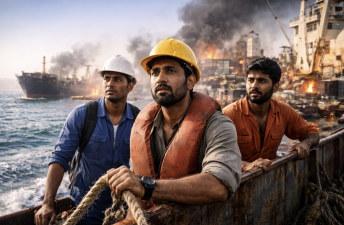
The ongoing war in West Asia has heightened risks for commercial sailors, especially Indians. Attacks on vessels near the Persian Gulf have killed at least three Indian seafarers. Ships remain stranded near the Strait of Hormuz, raising concerns over abandonments — when shipowners cut off support to their crews. Indians form about 15% of the global seafarer workforce but lead in abandonment cases. Recently, 1,125 Indian seafarers were abandoned, nearly 18% of global cases. The total abandoned ships reached a record 410 in 2025, up from 20 in 2016.
About Seafarer Abandonment
Seafarer abandonment occurs when shipowners stop paying wages and providing food, shelter, medical care or repatriation. The Maritime Labour Convention (MLC) 2006 defines it as a failure to meet these obligations. Many seafarers, especially from poor backgrounds, cannot leave ships without salary or valid documents. Visa and port restrictions often trap them onboard. Owners abandon crews due to rising costs, debts, bankruptcy or conflict risks.
Role of Flag of Convenience (FOC) Ships
Ships must register under a country’s flag, which governs laws and crew protections. The Flag of Convenience system lets owners register ships in countries with lax regulations to avoid taxes and safety rules. This system hides true ownership and encourages neglect. About 30% of the global merchant fleet flies FOCs, but 90% of abandoned ships in 2024 were FOC vessels. Panama led with 68 abandonments in 2025. FOC states often shirk responsibility, worsening crew suffering.
Why Indian Seafarers Are Most Affected
India’s large seafarer population faces abandonment due to socioeconomic factors and recruitment fraud. Many aspirants pay high fees to agents for fake jobs or certificates. Families often mortgage assets to fund these costs. The ease of obtaining sailing documents without job guarantees worsens exploitation. Indians often work on risky vessels with unstable credentials. The industry’s oversupply of labour increases vulnerability.
Recent Incidents and Support Systems
Recent cases include Indians stranded near Iran’s Bandar Abbas port amid bombings and off the UAE coast on the tanker Global Peace. Crews abandoned off Nigeria, Yemen and South Ukraine also included Indians. Abandonments spike in conflict-prone maritime zones like West Asia and the Gulf. Indian seafarers can seek help from the International Transport Workers’ Federation (ITF) and India’s Directorate General of Shipping helpline. Regulatory actions include license suspensions and blacklisting of violators.
Topics for Prelims:
Seafarer Abandonment
- Defined under Maritime Labour Convention 2006.
- Involves denial of wages, food, shelter, medical aid, repatriation.
- Caused by shipowners’ financial distress, conflicts, or bankruptcy.
- Traps seafarers aboard due to visa and port restrictions.
- Global abandoned ships rose from 20 (2016) to 410 (2025).
Flag of Convenience (FOC)
- Ships register under countries with lax laws to avoid regulations.
- Conceals true ownership of vessels.
- 30% of global merchant fleet flies FOCs.
- 90% of abandoned ships in 2024 were FOC vessels.
- Panama had highest abandonments in 2025 (68 cases).
Indian Seafarers
- Comprise 15% of global seafarer workforce.
- Top the list of abandoned seafarers worldwide.
- Many pay high fees to agents for fake jobs or certificates.
- Face vulnerability due to socioeconomic and regulatory gaps.
- 3,23,479 active seafarers registered with India’s Directorate General of Shipping.
Questions for Mains:
- Critically discuss the impact of the Flag of Convenience system on maritime labour rights and seafarer welfare. [GS-III-Internal & External Security]
- Analyse the socioeconomic factors that make Indian seafarers vulnerable to abandonment in global shipping. Discuss the role of regulatory bodies in addressing these issues. [GS-II-Governance]
- With examples from recent maritime conflicts, examine the challenges faced by seafarers during international crises and the effectiveness of international laws like the Maritime Labour Convention 2006. [GS-II-International Relations]
- Discuss in the light of global trade dynamics how geopolitical conflicts in regions like West Asia affect commercial shipping and the welfare of seafarers. [GS-III-Economic Development]
Answer Hints:
1. Critically discuss the impact of the Flag of Convenience system on maritime labour rights and seafarer welfare. [GS-III-Internal & External Security]
- FOC allows shipowners to register vessels in countries with lax regulations, bypassing safety and labour standards.
- Conceals true ownership, enabling irresponsible operators and fly-by-night companies.
- About 30% of global merchant fleet flies FOCs; 90% of abandoned ships in 2024 were FOC vessels.
- Flag States often shirk responsibility, leaving crews without wages, food, medical aid, or repatriation.
- FOC system facilitates abandonment and exploitation of seafarers, worsening labour rights violations.
- International enforcement is weak; accountability mechanisms for Flag States are limited.
2. Analyse the socioeconomic factors that make Indian seafarers vulnerable to abandonment in global shipping. Discuss the role of regulatory bodies in addressing these issues. [GS-II-Governance]
- India has a large seafarer workforce (15% globally), many from low-income, rural backgrounds seeking better livelihoods.
- High recruitment fees, fake or bought certificates, and fraudulent agents trap aspirants in exploitative contracts.
- Families often mortgage assets to fund training and placement, increasing vulnerability when abandoned.
- Regulatory gaps include ease of obtaining CDC without guaranteed jobs and lax oversight of recruitment agencies.
- Directorate General of Shipping monitors RPSLs, blacklists companies, and runs helplines for stranded seafarers.
- However, enforcement challenges remain; stricter regulation and awareness are needed to prevent exploitation.
3. With examples from recent maritime conflicts, examine the challenges faced by seafarers during international crises and the effectiveness of international laws like the Maritime Labour Convention 2006. [GS-II-International Relations]
- Seafarers stranded amid conflicts (West Asia, Ukraine) face abandonment, lack of pay, food, medical care, and repatriation.
- Examples – Indians stranded near Iran’s Bandar Abbas port (2026), tanker Global Peace off UAE coast (2025), and vessels near South Ukraine in war zones.
- MLC 2006 defines abandonment and mandates shipowner obligations but enforcement is weak during conflicts.
- Visa restrictions and port arrests trap seafarers onboard, limiting escape options.
- International bodies (ITF, ISWAN) provide support but response times are slow amid geopolitical turmoil.
- Conflict zones exacerbate abandonment risks; international law effectiveness depends on cooperation and flag state compliance.
4. Discuss in the light of global trade dynamics how geopolitical conflicts in regions like West Asia affect commercial shipping and the welfare of seafarers. [GS-III-Economic Development]
- West Asia’s conflicts disrupt shipping lanes near the Persian Gulf and Strait of Hormuz, critical for global oil trade.
- Increased attacks on tankers and merchant vessels raise risks for crews, causing casualties and abandonment.
- Shipping companies face financial strain from war risks, rising costs, sanctions, and operational uncertainties.
- Abandonments spike in conflict-prone zones (Turkey, UAE, Gulf), affecting seafarer welfare severely.
- Disruptions impact global supply chains, fuel prices, and trade flows, affecting economies worldwide.
- Need for diplomatic efforts and robust maritime security to safeguard commercial shipping and seafarers’ rights.