
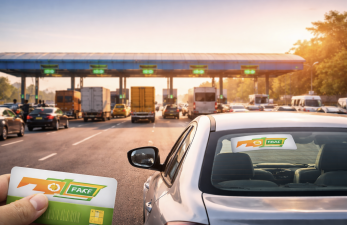
The National Highway Authority of India (NHAI) has revised the FASTag Annual Pass rate for 2026-27. From April 1, non-commercial vehicle users must pay Rs. 3075, up from Rs. 3000 last year. The pass was introduced on August 15, 2025, to reduce toll costs and ease travel on national highways.
FASTag Annual Pass Overview
The FASTag Annual Pass is for non-commercial vehicles like cars, jeeps, and vans with a valid FASTag. It allows unlimited travel up to 200 toll crossings or one year, whichever comes first. The pass covers tolls at 1150 national highway and expressway plazas. It cannot be used at state or local toll plazas, where normal FASTag charges apply. The pass is optional; users can continue with regular FASTag payments if they prefer.
Usage and Popularity
Over 50 lakh users currently hold the Annual Pass. This accounts for about 28% of all non-commercial vehicle toll transactions on national highways. Since 2016, nearly 11.86 crore FASTags have been issued, with 5.9 crore active. FASTag collects over 98% of toll fees nationwide. The Annual Pass has recorded more than 26.55 crore transactions by January 2026.
Top Toll Plazas and Regional Data
Bijwasan Fee Plaza on the Delhi-Gurugram border leads with 57% Annual Pass usage among cars. Mundka Toll Plaza in Delhi and Jhinjholi Fee Plaza near Sonipat also show over 53% usage. Regionally, Chandigarh accounts for 14% of Annual Pass transactions, followed by Tamil Nadu (12.3%) and Delhi (11.5%).
Renewal and Validity
The Annual Pass lasts for one year or 200 toll crossings. After either limit is reached, it reverts to a regular FASTag. Users can buy a new Annual Pass even if the one-year period is not over, provided the 200-trip limit is exhausted. The pass price will be revised annually as per the National Highway Fee rules.
Topics for Prelims:
FASTag Annual Pass
- Introduced on 15 August 2025 for non-commercial vehicles.
- Valid for one year or 200 toll crossings, whichever is earlier.
- Cost revised to Rs. 3075 for FY 2026-27 from Rs. 3000.
- Available via Rajmargyatra app and NHAI website.
- Applicable only at 1150 national highway and expressway toll plazas.
FASTag System in India
- Launched in 2016 to enable electronic toll collection.
- Over 11.86 crore FASTags issued till 2026.
- 5.9 crore FASTags currently active.
- More than 98% toll fees collected electronically using FASTag.
- Mandatory for all vehicles on national highways since 2021.
Key Toll Plazas and Regional Usage
- Bijwasan Fee Plaza has 57% Annual Pass usage by cars.
- Mundka Toll Plaza and Jhinjholi Fee Plaza show over 53% usage.
- Chandigarh leads with 14% of Annual Pass transactions nationally.
- Tamil Nadu and Delhi follow with 12.3% and 11.5% respectively.
- Annual Pass usage reflects urban and peri-urban commuting patterns.
Questions for Mains:
- Critically analyse the impact of electronic toll collection systems like FASTag on India’s transport infrastructure and economy. [GS-III-Economic Development]
- Comment on the role of digital payment mechanisms in enhancing governance and reducing corruption in public services with examples from the FASTag system. [GS-II-Governance]
- Explain the challenges and benefits of implementing nationwide electronic toll collection systems in India, and how they affect regional development and urbanisation. [GS-III-Internal & External Security]
- What are the environmental implications of streamlined toll collection systems like FASTag in reducing vehicular emissions? How can technology be leveraged further to promote sustainable transport? [GS-III-Environment & DM]
Answer Hints:
1. Critically analyse the impact of electronic toll collection systems like FASTag on India’s transport infrastructure and economy. [GS-III-Economic Development]
- FASTag enables cashless, contactless toll payments, reducing congestion and wait times at toll plazas, improving traffic flow.
- Enhances efficiency of national highways by minimizing delays, leading to fuel savings and reduced logistics costs.
- Increases transparency and accountability in toll collection, reducing leakages and revenue loss for government bodies.
- Promotes digital economy by integrating toll payments with digital wallets and banking systems.
- Data generated helps in infrastructure planning and maintenance by providing real-time traffic and usage statistics.
- Initial implementation challenges include user adaptation, technological infrastructure, and interoperability across states.
2. Comment on the role of digital payment mechanisms in enhancing governance and reducing corruption in public services with examples from the FASTag system. [GS-II-Governance]
- Digital payments like FASTag reduce cash handling, minimizing chances of bribery and corruption at toll plazas.
- Automated transactions ensure transparent, auditable records, enhancing accountability in toll collection.
- Integration with government portals enables real-time monitoring and grievance redressal.
- FASTag’s mandatory use on national highways since 2021 exemplifies successful digital governance adoption.
- Promotes ease of compliance and reduces human intervention, limiting discretionary powers prone to misuse.
- Challenges remain in digital literacy and infrastructure in remote areas, requiring inclusive policy measures.
3. Explain the challenges and benefits of implementing nationwide electronic toll collection systems in India, and how they affect regional development and urbanisation. [GS-III-Internal & External Security]
- Benefits include improved traffic management, reduced congestion, and faster movement of goods and people, boosting economic activities regionally.
- Supports urbanisation by facilitating smoother commutes and connectivity between urban and peri-urban areas.
- Challenges include interoperability across multiple toll operators, technological infrastructure gaps, and user awareness.
- Disparities in regional adoption can widen development gaps; requires coordinated policy and investment.
- Security concerns related to data privacy and cyber threats need robust safeguards.
- Enhances internal security by enabling vehicle tracking and reducing illegal toll evasion and fraud.
4. What are the environmental implications of streamlined toll collection systems like FASTag in reducing vehicular emissions? How can technology be leveraged further to promote sustainable transport? [GS-III-Environment & DM]
- FASTag reduces idling time at toll plazas, cutting down fuel consumption and vehicular emissions .
- Less congestion leads to smoother traffic flow, reducing pollution hotspots near toll plazas and urban centers.
- Data analytics from FASTag can inform traffic management and promote eco-friendly route planning.
- Integration with electric vehicle (EV) infrastructure and incentives can encourage green mobility.
- Further technology use includes AI-based traffic prediction, smart signaling, and promoting multimodal transport networks.
- Policy measures can mandate emission norms linked with toll pricing to incentivize cleaner vehicles.