
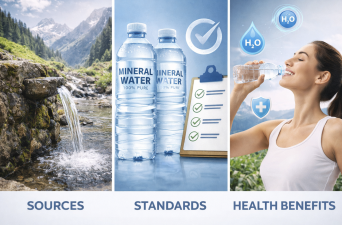
Recent years have seen a rise in mineral water consumption worldwide. This is due to concerns about unsafe tap water and a preference for natural mineral content. Governments and health bodies promote mineral water as a safe and healthy hydration source. About mineral water’s origin, regulation, packaging, and effects is essential for general knowledge.
What Is Mineral Water?
Mineral water comes from protected underground sources like springs or aquifers. It naturally contains dissolved minerals such as calcium, magnesium, and bicarbonates. These minerals enter the water as it passes through rocks like limestone or basalt over long periods. Unlike tap water, mineral water retains its natural mineral profile without chemical treatment. It can be still or sparkling depending on natural or added carbon dioxide.
Regulation and Standards
Mineral water is strictly regulated worldwide. The U.S. FDA, EU authorities, and India’s FSSAI and BIS require that mineral water must come from geologically stable, protected sources. Its mineral composition must remain consistent across batches. Chemical treatment to alter minerals is prohibited. In India, mineral water must have FSSAI and BIS certification and carry the ISI mark. Labels must show source details and mineral content without medicinal claims.
Packaging and Storage
Mineral water is usually bottled near the source to avoid contamination. It is filtered to remove particles and disinfected by ultraviolet light. Packaging options include glass bottles, PET bottles, or aluminium cans. Glass is inert but fragile. PET is light but may leach plastics under heat. Aluminium cans are recyclable but require plastic lining, raising cost and chemical concerns. Producers balance safety, cost, and environmental impact.
Mineral Effects and Other Water Types
Minerals like calcium and magnesium make water hard and influence taste and health. They support bone density and muscle function, though dietary sources are more . Bicarbonates aid digestion. Distilled water is mineral-free and used in labs but is not recommended for regular drinking. Tap water varies by region; Indian tap water often has high mineral content but may lack consistent safety due to contamination risks.
Topics for Prelims:
Mineral Water Sources
- Originates from underground springs or aquifers.
- Minerals dissolve from rocks over years or centuries.
- Protected geological formations ensure purity.
- Natural carbonation may occur.
- Different from treated tap water or purified water.
Regulation and Packaging
- Must come from stable, uncontaminated sources.
- Consistency in mineral content across batches is mandatory.
- Chemical alteration of minerals is banned.
- Packaging near source prevents contamination.
- Materials include glass, PET, and aluminium with pros and cons.
Mineral Content and Health Effects
- Common minerals – calcium, magnesium, sodium, bicarbonates.
- Hard water affects taste and household appliances.
- Supports bone and muscle health.
- Bicarbonates aid digestion.
- Distilled water lacks minerals and is not for regular drinking.
Questions for Mains:
- Discuss the role of geological formations in determining the quality and composition of mineral water. [GS-I-World & Physical Geography]
- Critically examine the regulatory frameworks governing bottled mineral water in India and compare them with international standards. [GS-II-Governance]
- Explain the health impacts of mineral-rich water consumption and analyse its significance in public health policy. [GS-III-Economic Development]
- With suitable examples, discuss the environmental and economic implications of packaging materials used for mineral water. Comment on sustainable alternatives. [GS-III-Environment & DM]
Answer Hints:
1. Discuss the role of geological formations in determining the quality and composition of mineral water. [GS-I-World & Physical Geography]
- Mineral water originates from protected underground sources like springs and aquifers formed in stable geological settings.
- Water percolates through rocks such as limestone, granite, sandstone, or volcanic basalt, dissolving minerals over years or centuries.
- Type of rock influences mineral profile – e.g., limestone increases calcium and bicarbonates; volcanic rocks may add silica and trace elements.
- Geological stability ensures consistent mineral content and prevents contamination from surface pollutants.
- Pressure differences underground push mineral-rich water to the surface, maintaining natural carbonation in some cases.
- Variations in mineral composition reflect local geology, affecting taste, hardness, and health benefits of the water.
2. Critically examine the regulatory frameworks governing bottled mineral water in India and compare them with international standards. [GS-II-Governance]
- India’s FSSAI and BIS regulate mineral water, requiring water from protected underground sources and stable mineral profiles (IS 13428).
- Prohibition on chemical treatment altering mineral composition; only filtration, aeration, UV sterilization allowed.
- Mandatory certification – FSSAI license, BIS certificate, and ISI mark on bottles; labeling must include source and mineral content without medicinal claims.
- Internationally (US FDA, EU), similar rules exist – stable geological source, no chemical alteration, and consistent mineral profile across batches.
- Indian standards allow some flexibility in mineral content due to regional variations; international standards may be stricter on source protection.
- Enforcement challenges in India due to infrastructure and monitoring gaps versus generally stricter compliance in developed countries.
3. Explain the health impacts of mineral-rich water consumption and analyse its significance in public health policy. [GS-III-Economic Development]
- Minerals like calcium and magnesium support bone density and muscle function, though dietary intake is the primary source.
- Bicarbonates in mineral water may aid digestion and help neutralize acidity.
- Hard water influences taste and household usage but also contributes minorly to mineral nutrition.
- Excess minerals (e.g., sodium) can be a concern for hypertension or kidney patients; mineral levels must be balanced.
- Public health policies promote mineral water as a safe hydration source where tap water is unsafe or contaminated.
- However, reliance on mineral water can be costly and not accessible to all; policies must balance safety, affordability, and nutrition.
4. With suitable examples, discuss the environmental and economic implications of packaging materials used for mineral water. Comment on sustainable alternatives. [GS-III-Environment & DM]
- Glass bottles – chemically inert and reusable but heavy, fragile, and energy-intensive to produce and transport.
- PET bottles – lightweight and convenient but risk plastic leaching, especially under heat; contribute to plastic pollution if not recycled.
- Aluminium cans – highly recyclable and light but require plastic lining, increasing cost and chemical concerns.
- Environmental concerns include waste generation, carbon footprint of production/transport, and pollution from improper disposal.
- Sustainable alternatives – biodegradable packaging, refillable glass or metal bottles, water kiosks to reduce single-use packaging.
- Economic implications – cost trade-offs between packaging safety, consumer convenience, and environmental impact influence industry choices and pricing.