
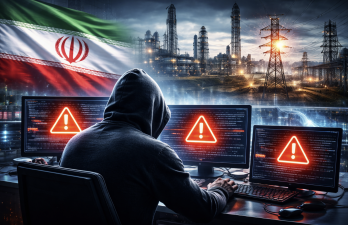
The Federal Bureau of Investigation (FBI) and the National Security Agency (NSA) have issued a joint warning about cyberattacks linked to Iran targeting critical infrastructure in the United States. These attacks aim to disrupt essential services and compromise sensitive systems, posing significant risks to national security and public safety.
Nature of the Cyber Threat
The advisory highlights that Iranian state-sponsored hackers are using advanced tactics, techniques, and procedures (TTPs) to infiltrate networks controlling critical infrastructure. These include sectors such as energy, water, transportation, and healthcare. The attackers employ malware, phishing campaigns, and exploitation of software vulnerabilities to gain unauthorized access and maintain persistence within targeted systems.
Targets and Potential Impact
Critical infrastructure is vital for the functioning of society and the economy. The targeted sectors provide essential services such as electricity, water supply, and transportation logistics. A successful cyberattack could lead to service disruptions, data breaches, and physical damage to infrastructure components. Such events could threaten public safety, economic stability, and national security.
Government Response and Mitigation Measures
The FBI and NSA have urged public and private sector organisations to enhance their cybersecurity posture. Recommended measures include regular system patching, network monitoring for unusual activity, multi-factor authentication, and employee training to recognise phishing attempts. Collaboration between government agencies and industry partners is emphasised to share threat intelligence and respond swiftly to incidents.
Geopolitical Context
The cyberattacks are part of broader tensions between the United States and Iran. Cyber operations have become a key element of state conflict, allowing nations to project power below the threshold of conventional warfare. Iran’s cyber activities reflect its strategic intent to challenge US influence and retaliate against sanctions and diplomatic pressures.
What to Study for UPSC Exams?
- Cybersecurity Frameworks in India
- Critical Infrastructure Protection Policies
- State-Sponsored Cyber Warfare
- International Cyber Law and Norms
- Role of Intelligence Agencies in Cybersecurity
Cybersecurity Frameworks in India
India’s cybersecurity frameworks encompass policies, standards, and guidelines to protect digital infrastructure. Key components include the National Cyber Security Policy (2013), CERT-In (Computer Emergency Response Team – India), and the Information Technology Act, 2000. Frameworks emphasize risk assessment, incident response, and capacity building. The National Critical Information Infrastructure Protection Centre (NCIIPC) safeguards critical sectors. India promotes public-private partnerships and international cooperation for threat intelligence sharing. Regular audits and compliance with standards like ISO/IEC 27001 are encouraged to enhance cyber resilience.
Critical Infrastructure Protection Policies
Critical infrastructure protection (CIP) involves safeguarding assets essential for societal functions, including energy, water, transportation, and healthcare. Policies focus on risk management, resilience building, and rapid recovery. Governments implement sector-specific regulations, cybersecurity standards, and incident reporting mechanisms. Public-private collaboration is key, as many critical assets are privately owned. CIP integrates physical security with cybersecurity measures. International frameworks like the NIST Cybersecurity Framework guide CIP efforts globally. Continuous threat assessment and investment in technology upgrades are vital components.
State-Sponsored Cyber Warfare
State-sponsored cyber warfare involves nation-states conducting cyber operations to achieve strategic objectives. Tactics include espionage, sabotage, and disruption of adversary systems. Targets often include critical infrastructure, government networks, and military assets. Techniques involve malware, phishing, zero-day exploits, and denial-of-service attacks. Attribution challenges complicate response strategies. International law on state cyber conduct remains evolving. Prominent actors include the US, China, Russia, Iran, and North Korea. Cyber warfare operates below conventional conflict thresholds, enabling covert influence and retaliation.
International Cyber Law and Norms
International cyber law governs state behavior in cyberspace, addressing sovereignty, non-intervention, and use of force. Key frameworks include the UN Group of Governmental Experts (GGE) reports and the Tallinn Manual on cyber warfare law. Norms promote responsible state conduct, protection of civilian infrastructure, and cooperation against cybercrime. Challenges include attribution, jurisdiction, and enforcement. Treaties like the Budapest Convention focus on cybercrime cooperation. Emerging discussions address cyber arms control and norms for artificial intelligence use in cyber operations.
Role of Intelligence Agencies in Cybersecurity
Intelligence agencies collect, analyze, and disseminate cyber threat intelligence to protect national security. They identify state and non-state actors, track advanced persistent threats (APTs), and support incident response. Agencies like the NSA (US), GCHQ (UK), and RAW (India) operate cyber espionage and defense units. Collaboration with law enforcement and private sector enhances threat mitigation. Intelligence sharing frameworks exist domestically and internationally. Agencies also develop offensive cyber capabilities for deterrence and strategic advantage. Cyber intelligence integrates signals intelligence (SIGINT) and open-source intelligence (OSINT).
Last Modified: April 8, 2026