
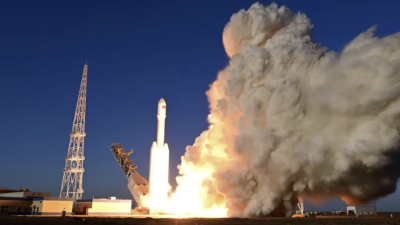
NASA’s Artemis II mission marks a significant milestone in human space exploration. It is the first crewed mission in NASA’s Artemis programme, aiming to return humans to the Moon and eventually to Mars. The success of Artemis II has heightened competition in space exploration, particularly between the United States and China, both striving for technological supremacy and strategic advantages beyond Earth.
Overview of Artemis II Mission
Artemis II is NASA’s second mission in the Artemis programme and the first to carry astronauts. The mission involves a crewed flight around the Moon using the Space Launch System (SLS) rocket and the Orion spacecraft. The flight aims to test critical systems for deep space exploration, including life support and navigation, without landing on the lunar surface. This mission lays the groundwork for Artemis III, which plans to land astronauts on the Moon.
Significance in the Global Space Race
The Artemis II success intensifies the ongoing global space race, primarily between the US and China. Both countries are investing heavily in space technology to assert dominance. NASA’s progress challenges China’s ambitious lunar missions and plans for a lunar research station. The competition extends to technological innovation, international partnerships, and strategic positioning in space for future resource utilisation and defence.
China’s Lunar Ambitions
China has advanced its space programme with multiple lunar missions, including Chang’e landers and rovers. It plans to establish a lunar research station in the 2030s and has ambitions for crewed lunar landings. China’s space agency focuses on scientific exploration, strategic autonomy, and building a long-term presence on the Moon, positioning itself as a key player in the new era of space exploration.
Implications for International Space Collaboration
The Artemis II mission also influences international collaboration frameworks. NASA promotes partnerships through the Artemis Accords, encouraging peaceful and cooperative exploration. However, geopolitical tensions and competition with China complicate global cooperation. The evolving space race may drive innovation but also raises concerns over militarisation and resource conflicts in space.
What to Study for UPSC Exams?
- Space Law and Outer Space Treaty
- International Space Station Collaborations
- Moon Exploration Missions
- Space Militarisation and Security
- Emerging Spacefaring Nations
Artemis II Mission
Artemis II is NASA’s first crewed mission in the Artemis programme, launched using the Space Launch System (SLS) and Orion spacecraft. It involves a crewed lunar flyby without landing, testing life support, navigation, and deep space systems. The mission sets the stage for Artemis III, which aims for a crewed lunar landing. Artemis II is a critical step in NASA’s plan to return humans to the Moon and prepare for Mars exploration. The mission duration is approximately 10 days, and it represents the first crewed lunar mission since Apollo 17 in 1972.
Global Space Race
The global space race involves major powers competing for technological and strategic dominance in space. The United States and China are primary rivals, investing heavily in lunar missions, space technology, and infrastructure. The race includes ambitions for lunar bases, resource extraction, and military advantages. It drives innovation in launch vehicles, spacecraft, and international space policy. Competition also influences global alliances and partnerships, shaping future space governance and security dynamics.
China’s Lunar Ambitions
China’s lunar program includes Chang’e robotic landers and rovers, with successful sample return missions. China plans a lunar research station in the 2030s and aims for crewed lunar landings. Its space agency focuses on scientific exploration, strategic autonomy, and establishing a permanent lunar presence. China’s lunar activities form part of its broader goal to become a leading space power, emphasizing both civilian and potential military applications.
International Space Collaboration
International space collaboration involves agreements like the Artemis Accords, promoting peaceful and cooperative exploration. NASA leads partnerships with multiple countries for Artemis missions and the International Space Station (ISS). However, geopolitical tensions, especially with China, limit broader cooperation. Collaborative frameworks address space law, resource sharing, and safety protocols. Challenges include balancing competition with cooperation and preventing militarization or conflicts in space.
Space Law and Outer Space Treaty
The Outer Space Treaty (1967) is the foundational legal framework governing space activities, prohibiting nuclear weapons in orbit and claiming sovereignty over celestial bodies. It mandates peaceful use of space, freedom of exploration, and international responsibility for national activities. Space law addresses property rights, resource utilization, and liability for damages. Emerging issues include space mining, militarization, and regulation of private sector activities, requiring updates to existing treaties and new international agreements.
Space Militarisation and Security
Space militarization involves the deployment of military assets and technologies in space, including satellites for surveillance, communication, and missile defense. The weaponization of space remains restricted by treaties but is a growing concern with anti-satellite weapons and space-based missile systems. Space security focuses on protecting assets from debris, cyber-attacks, and hostile actions. Nations develop doctrines for space warfare and resilience, making space a strategic domain for national security.
Emerging Spacefaring Nations
Emerging spacefaring nations include India, UAE, South Korea, and others developing launch capabilities, satellites, and interplanetary missions. India’s Chandrayaan and Mars Orbiter missions mark significant milestones. The UAE’s Hope Probe reached Mars orbit in 2021. These nations contribute to global space science, technology, and commercial space activities. Their growth diversifies space governance and competition, fostering new partnerships and challenges in space law and resource management.
Moon Exploration Missions
Moon exploration missions include robotic and crewed flights by multiple countries and private entities. Key missions: NASA’s Apollo (1969-1972), China’s Chang’e series, India’s Chandrayaan, and upcoming Artemis programme. Objectives include scientific research, resource mapping, technology demonstration, and establishing lunar bases. Missions employ orbiters, landers, rovers, and sample return technologies. The Moon serves as a platform for deep space exploration and potential resource extraction like Helium-3 and water ice.
Last Modified: April 9, 2026