
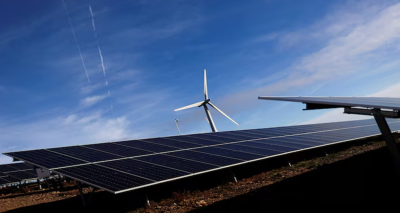
India’s renewable energy story has reached a paradoxical stage. The country is no longer struggling to build clean power. With solar and wind capacity crossing 180 GW and costs among the lowest globally, generation is no longer the binding constraint. The real challenge now lies elsewhere — in whether India’s power system can absorb, distribute, and economically utilise the green electricity it already produces.
The transition has entered a reform-intensive phase, where distribution companies, tariff design, and wholesale electricity markets will determine whether renewables translate into reliable and affordable power for consumers.
From capacity creation to system efficiency
For over a decade, India’s energy policy focused on expanding renewable capacity. That effort has largely succeeded. However, higher renewable penetration brings new system realities:
- Power supply becomes more variable across hours and seasons.
- Peak demand periods become costlier to serve.
- Forecasting, balancing, and flexibility emerge as core system functions.
These challenges are no longer technological but institutional. They require reforms in how electricity is priced, scheduled, and delivered.
Why distribution companies are the decisive bottleneck
Distribution companies (discoms) sit at the centre of India’s electricity system. Their financial and operational health determines how effectively renewable energy is integrated.
Despite repeated reform efforts such as UDAY and RDSS, aggregate technical and commercial losses remain around 16%, and many discoms continue to suffer from chronic cost under-recovery. Infrastructure upgrades and smart metering have improved capabilities, but incentives remain misaligned.
Discom revenues are still tied mainly to volumetric sales — selling more units of electricity — rather than to reliability, flexibility, or efficiency. As renewables, energy efficiency, and rooftop solar grow, this model becomes increasingly fragile.
The cross-subsidy trap and shrinking high-value demand
In many states, commercial and industrial consumers pay tariffs well above cost, effectively subsidising households and agriculture that receive electricity below cost. This structure creates two compounding problems:
- High-paying consumers are the first to adopt rooftop solar, energy efficiency, and open access.
- Discoms lose their most profitable customers but retain the obligation to serve subsidised users.
As a result, reforms that are essential for the energy transition appear financially threatening to discoms, even though they lower system costs overall.
Fixed costs, rooftop solar, and the limits of volumetric tariffs
Discoms carry large fixed costs — network maintenance, staff, and long-term power purchase agreements. When demand falls due to efficiency or rooftop solar, these costs do not fall proportionately.
Net metering further complicates the picture. When rooftop solar exports are credited at retail tariffs that include network costs and cross-subsidies, discoms are effectively paid less for providing backup grid services. Without tariff reform, utilities risk becoming under-compensated standby providers.
The issue is not rooftop solar itself, but tariff design that fails to separate energy charges from network and capacity costs.
Why dynamic tariffs need smart automation
India has mandated time-of-day tariffs and accelerated smart meter deployment, with around 49 million meters already installed. This creates the foundation for a modern, flexible grid.
However, price signals alone are insufficient. Expecting households to manually track peak prices and adjust usage is unrealistic. Effective demand response requires automation:
- Smart thermostats for cooling loads
- Smart charging for electric vehicles
- Appliance-level controls through smart plugs and switches
When paired with automation, demand response can deliver flexibility at far lower cost than building new peaking power plants or storage for short-duration peaks.
Fragmented wholesale markets and renewable curtailment
India’s renewable resources are geographically concentrated, while demand is clustered in urban and industrial regions. Although the physical grid allows power flows across states, market design limits efficient utilisation.
Most electricity is locked into long- and medium-term contracts, with discoms self-scheduling generation. Power exchanges that optimise dispatch account for only 7–9% of total electricity supplied. This fragmentation leads to avoidable renewable curtailment and higher system costs.
Two wholesale reforms that could unlock efficiency
Two changes are particularly significant:
- Market-based economic dispatch: A nationwide system that dispatches the cheapest available power first, regardless of ownership or state boundaries. Estimates by suggest annual savings of around $1.6 billion.
- Integrating captive power plants: Bringing captive generation into wholesale markets would add flexible capacity, deepen liquidity, and increase competition.
Together, these reforms would allow zero-marginal-cost renewables to be used more efficiently across the country.
Redefining the role of discoms in the energy transition
Retail and wholesale reforms can transform discoms from passive intermediaries into active system optimisers. With the right incentives, utilities can be rewarded for:
- Reducing losses
- Managing demand flexibility
- Improving reliability and power quality
If renewable integration leads to better service and stable tariffs, public support for the energy transition will deepen. If it leads to uncertainty and financial stress, resistance will grow.
What to note for Prelims?
- India has crossed 180 GW of solar and wind capacity.
- AT&C losses remain around 16% nationally.
- Power exchanges handle only 7–9% of electricity supply.
- Time-of-day tariffs and smart meters are being scaled nationwide.
What to note for Mains?
- Why distribution reform is central to renewable energy integration.
- How cross-subsidies distort discom incentives.
- Role of tariff reform and demand response in managing peak demand.
- Significance of market-based economic dispatch for efficiency and federal coordination.