
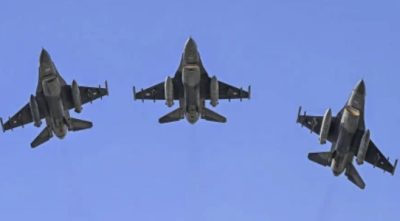
Pakistan deployed fighter and support jets to King Abdulaziz Air Base in Saudi Arabia’s Eastern Province on 11 April 2026. The deployment is the first military action under the Pakistan-Saudi mutual defence pact signed in September 2025. Pakistan hosted direct ceasefire negotiations between the United States and Iran in Islamabad during this period.
Mutual Defence Pact Details
The defence agreement commits both countries to treat an attack on one as an attack on both. It was signed during Pakistani Prime Minister Shehbaz Sharif’s visit to Riyadh in September 2025. The pact aims to strengthen military cooperation and collective security between Pakistan and Saudi Arabia.
Context of Deployment
The jets landed amid ongoing US-Iran conflict following the US-Israeli killing of Iran’s Supreme Leader Ali Khamenei on 28 February 2026. Iran launched missile and drone strikes on US targets and Saudi bases in Gulf states. Pakistani Foreign Minister Ishaq Dar warned Iran about Pakistan’s obligations to Riyadh and secured assurances that Saudi territory would not be used against Iran.
Diplomatic and Military Engagements
Army Chief Field Marshal Asim Munir visited Riyadh in early March to discuss halting Iranian strikes under the pact. Four days before the jet deployment, Prime Minister Sharif assured Saudi Crown Prince Mohammed bin Salman of Pakistan’s support. Saudi Finance Minister Mohammed al-Jadaan met Sharif in Islamabad to discuss a $5 billion Saudi investment in Pakistan.
Strategic Implications
The deployment signals Pakistan’s commitment to Saudi Arabia amid regional tensions. Security analysts describe the move as a diplomatic message to Iran rather than a major military escalation. Pakistan balances its role as mediator in US-Iran talks with its defence obligations to Saudi Arabia.
What to Study for UPSC Exams?
- Pakistan-Saudi Arabia Defence Relations
- US-Iran Conflict and Diplomacy
- Middle East Security Alliances
- Role of Pakistan in Regional Mediation
Pakistan-Saudi Arabia Defence Relations
The Pakistan-Saudi Arabia defence pact signed in 2025 binds both nations to mutual military support if either is attacked. Pakistan’s military deployments to Saudi bases mark the first operational step under this agreement. Historically, Pakistan has provided military training and personnel to Saudi Arabia since the 1980s, highlighting longstanding strategic ties beyond formal pacts.
US-Iran Conflict and Diplomacy
The US-Iran conflict escalated after the killing of Iran’s Supreme Leader Ali Khamenei in 2026, triggering missile and drone retaliations by Iran on US and Gulf targets. Diplomatic efforts have included ceasefire talks hosted by third parties like Pakistan. The conflict intertwines with US-Israel security policies and Iran’s regional proxy networks across the Middle East.
Middle East Security Alliances
Middle East security alliances often involve formal and informal pacts between Gulf states, the US, and regional powers. The Gulf Cooperation Council (GCC) and US bilateral agreements form the core of these networks. Saudi Arabia’s recent defence pact with Pakistan is a rare example of extending alliances beyond traditional Western partners.
Role of Pakistan in Regional Mediation
Pakistan has historically acted as a mediator in regional conflicts due to its strategic location and diplomatic ties with multiple Middle Eastern countries. It hosted US-Iran ceasefire negotiations in 2026, leveraging its neutral yet connected stance. Pakistan balances relations with Iran and Saudi Arabia, maintaining dialogue channels with both despite their rivalry.
Last Modified: April 12, 2026