
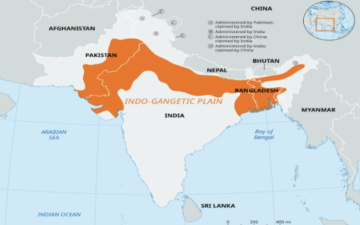
The Supreme Court of India in 2024 had issued directives addressing the escalating heat crisis in the Indo-Gangetic plains. The court mandated state governments to implement immediate measures to mitigate heatwave impacts. The order was passed during a hearing on public health and environmental governance.
Heat Crisis in Indo-Gangetic Region
Temperatures in the Indo-Gangetic plains have exceeded 45°C in several locations. The region includes states such as Uttar Pradesh, Bihar, Punjab, Haryana, and West Bengal. Prolonged heatwaves have caused health emergencies and increased mortality rates during recent summers.
Supreme Court Directives
The court instructed state authorities to activate heat action plans before peak summer months. It ordered the establishment of dedicated heatwave monitoring cells. The court also mandated public awareness campaigns on heat-related precautions and hydration.
State Government Responsibilities
States must ensure availability of water and cooling centres in urban and rural areas. Authorities are required to coordinate with health departments for timely medical response. The court emphasised inter-departmental collaboration for effective heatwave management.
Environmental Governance Measures
The court highlighted the need for afforestation and urban greening to reduce heat intensity. It urged implementation of pollution control measures to improve air quality. The court called for integrating climate resilience in urban planning policies.
What to Study for UPSC Exams?
- Heatwave Action Plans in India
- Indo-Gangetic Plain Geography
- Environmental Jurisprudence in India
- Climate Change and Public Health
Heatwave Action Plans in India
India’s Heatwave Action Plans are state-specific protocols designed to reduce heatwave mortality. They include early warning systems, public advisories, and emergency response mechanisms. Maharashtra was the first state to implement a formal heat action plan in 2010, later adopted nationally by the Ministry of Earth Sciences.
Indo-Gangetic Plain Geography
The Indo-Gangetic Plain spans over 700,000 sq km across northern India, Pakistan, and Bangladesh. It is formed by the alluvial deposits of the Indus, Ganges, and Brahmaputra rivers. The region is one of the most fertile and densely populated areas globally, with extensive agriculture and urban settlements.
Environmental Jurisprudence in India
Environmental jurisprudence in India evolved significantly after the 1972 Stockholm Conference. The Constitution was amended to include environmental protection under Directive Principles (Article 48A) and Fundamental Duties (Article 51A). The judiciary has pioneered public interest litigation (PIL) to enforce environmental laws and principles like the precautionary principle and polluter pays.
Climate Change and Public Health
Climate change influences public health by increasing heat-related illnesses, vector-borne diseases, and respiratory disorders. Rising temperatures exacerbate air pollution and water scarcity. Vulnerable populations, including children and the elderly, face higher risks from climate-induced health impacts worldwide.
Last Modified: April 13, 2026