
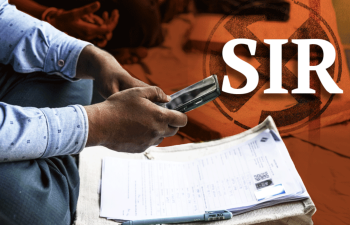
The Supreme Court of India commenced hearings on the scrutiny of electoral rolls related to the Bengal Special Infrastructure Region (SIR) issue. The case involves allegations of irregularities in voter registration within the SIR jurisdiction in West Bengal. The court examined documents and submissions from state and central election authorities.
Background of the Bengal SIR Electoral Dispute
The Bengal SIR was notified under the Special Economic Zones Act for industrial development. Disputes arose over the inclusion of certain areas within the SIR in the electoral rolls. Petitions challenged the accuracy and legality of voter lists, citing possible manipulation and exclusion of eligible voters.
Supreme Court Proceedings and Key Stakeholders
The Supreme Court bench includes senior justices overseeing election law compliance. The Election Commission of India (ECI) and West Bengal State Election Commission (WBSEC) submitted reports on voter verification processes. Legal representatives of affected residents and political parties also presented arguments.
Electoral Roll Verification Measures
The ECI outlined the use of door-to-door verification and biometric data to update voter lists. The WBSEC reported steps to remove duplicate and fake entries. The court requested detailed data on voter enrolment, deletions, and objections filed during the revision process.
Implications for Electoral Integrity and Governance
The Supreme Court’s scrutiny aims to ensure compliance with the Representation of the People Act, 1950. The court may issue directions for re-verification or re-drafting of electoral rolls in the SIR. The ruling will impact future elections and administrative boundaries in the region.
What to Study for UPSC Exams?
- Electoral Laws in India
- Role of Election Commission
- Special Economic Zones Act
- Judicial Review of Election Processes
Electoral Laws in India
Electoral laws in India are primarily governed by the Representation of the People Act, 1950 and 1951, which regulate voter registration, conduct of elections, and dispute resolution. The Model Code of Conduct guides political parties during elections but lacks statutory backing. India uses Electronic Voting Machines (EVMs) since 1999, with Voter Verified Paper Audit Trail (VVPAT) introduced in 2013 for transparency.
Role of Election Commission
The Election Commission of India (ECI) is a constitutional body established in 1950 to conduct free and fair elections. It supervises elections to Parliament, state legislatures, and the offices of President and Vice-President. ECI has quasi-judicial powers to enforce the Model Code of Conduct and can order repolls or disqualify candidates for violations.
Special Economic Zones Act
The Special Economic Zones (SEZ) Act, 2005, provides for the establishment, development, and management of SEZs to promote exports and economic growth. SEZs enjoy tax exemptions, simplified customs procedures, and relaxed labor laws. The Act allows setting up SEZs in any sector except agriculture and forestry.
Judicial Review of Election Processes
Judicial review in election processes allows courts to examine the legality and fairness of elections and electoral practices. Indian courts have invalidated elections due to corrupt practices or procedural lapses. The Supreme Court has the power to ensure compliance with electoral laws and can intervene in cases of malpractices or administrative failures.
Last Modified: April 13, 2026