
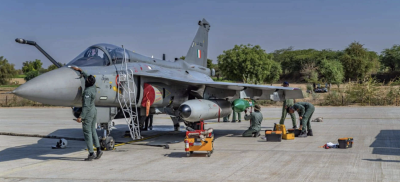
General Electric (GE) has signed an agreement with the Indian Air Force (IAF) to establish a repair and overhaul facility for the F404-GE-IN20 engines used in Tejas fighter jets. The deal aims to enhance the maintenance capabilities of the indigenous Light Combat Aircraft (LCA) fleet. The facility will be located in India and is expected to reduce turnaround time for engine servicing.
Details of the Agreement
The contract involves setting up a dedicated repair and maintenance unit for the F404 engines, which power the Tejas Mk1 and Mk1A variants. GE will provide technical support, training, and transfer of technology to Indian personnel. The agreement includes provisions for spares, tools, and diagnostic equipment necessary for engine overhaul.
Significance for Tejas Fleet
The repair facility will enable faster engine turnaround and increased operational availability of Tejas jets. It will reduce dependency on foreign repair centres and logistics delays. The move supports the Indian government’s push for self-reliance in defence manufacturing under the Atmanirbhar Bharat initiative.
Technical Specifications of F404 Engine
The F404-GE-IN20 is a low-bypass afterburning turbofan engine developed by GE Aviation. It delivers a thrust of approximately 84 kN (19,000 lbf) with afterburner. The engine features modular design, digital engine control, and enhanced durability suited for the LCA’s lightweight frame.
Implementation Timeline and Capacity
The repair facility is expected to become operational within two years of contract signing. It will initially focus on routine maintenance and minor repairs, scaling up to major overhauls and upgrades. The facility capacity will be aligned with the expanding Tejas fleet, projected to exceed 100 aircraft by 2030.
What to Study for UPSC Exams?
- Defence Procurement Procedures
- Indigenous Defence Manufacturing
- Jet Engine Technologies
- Atmanirbhar Bharat in Defence
Defence Procurement Procedures
Defence procurement involves formal processes governments use to acquire military equipment, often governed by strict regulations to ensure transparency and efficiency. Procedures include tendering, evaluation, contract awarding, and performance monitoring. Many countries adopt offset policies requiring foreign vendors to invest locally. India’s Defence Procurement Procedure (DPP) has evolved to promote indigenous participation and streamline acquisitions, balancing strategic needs with budget constraints.
Indigenous Defence Manufacturing
Indigenous defence manufacturing refers to domestic production of military equipment and technology. Countries like India and Brazil emphasize self-reliance to reduce foreign dependency. It involves complex ecosystems of public and private sectors, R&D institutions, and supply chains. Indigenous production often faces challenges like technology gaps, quality standards, and scale but can boost strategic autonomy and local economies.
Jet Engine Technologies
Jet engines operate on the Brayton cycle, compressing air, mixing it with fuel, and igniting it to produce thrust. Key types include turbojets, turbofans, turboprops, and turboshafts. Modern military turbofans feature afterburners for extra thrust and digital engine controls for efficiency. Materials like titanium and single-crystal superalloys withstand extreme temperatures. Engine modularity aids maintenance and upgrades.
Atmanirbhar Bharat in Defence
Atmanirbhar Bharat is India’s initiative for self-reliance, emphasizing domestic defence production and technology development. Launched in 2020, it includes policy reforms like increased FDI limits, prioritization of indigenous products, and support for startups. The initiative aims to reduce imports, enhance export potential, and build a robust defence industrial base aligned with Make in India goals.
Last Modified: April 14, 2026