
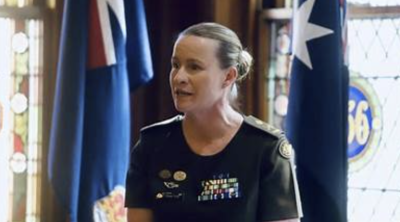
Australia appointed Lieutenant General Susan Coyle as the first female Chief of Army on 5 June 2024. The appointment marks the first time a woman has led the Australian Army since its establishment. Lieutenant General Coyle succeeded Lieutenant General Simon Stuart in this role.
Background and Career
Susan Coyle has served in the Australian Army for over 35 years. She has held key leadership positions including Deputy Chief of Army and Commander Forces Command. Coyle’s military career includes deployments in East Timor, Iraq, and Afghanistan. She holds degrees in Arts and Defence Studies.
Role and Responsibilities
As Chief of Army, Coyle oversees approximately 30,000 personnel. Her responsibilities include force readiness, training, and operational deployments. She reports directly to the Chief of the Defence Force. The role involves managing the Army’s budget, strategic planning, and international military cooperation.
Significance of Appointment
Coyle’s appointment is the first female leadership in the Australian Army’s 118-year history. It reflects ongoing efforts to improve gender diversity in the Australian Defence Force. The Army has set targets to increase female representation to 25% by 2025. Coyle’s leadership is expected to influence policy on inclusion and career progression for women.
Australian Army Overview
The Australian Army is a branch of the Australian Defence Force responsible for land operations. It operates various combat brigades, aviation regiments, and special forces units. The Army participates in national defence, disaster response, and international peacekeeping missions.
What to Study for UPSC Exams?
- Women in Indian Armed Forces
- Defence Forces and Gender Policies
- Military Leadership Structures
- India-Australia Defence Cooperation
Women in Indian Armed Forces
Women were first inducted in the Indian Armed Forces in 1992 as short service commission officers. Permanent commission and command roles became available to women only after 2020 Supreme Court rulings. Women serve in all three services, including combat support roles, but direct combat roles remain limited. The Indian Navy commissioned its first all-women submarine crew in 2020.
Defence Forces and Gender Policies
Gender policies in defence forces aim to increase female recruitment, retention, and leadership opportunities. Many militaries have implemented zero-tolerance policies on harassment and gender discrimination. Some countries offer maternity benefits and gender-specific equipment. Integration of women into combat roles varies globally, with progressive policies in Nordic countries and more restrictive ones elsewhere.
Military Leadership Structures
Military leadership typically follows a hierarchical command system with ranks from junior officers to generals/admirals. Leadership structures include strategic, operational, and tactical levels. Joint command structures coordinate across army, navy, and air force branches. Civilian oversight is maintained through defense ministries or departments.
India-Australia Defence Cooperation
India and Australia engage in bilateral military exercises such as AUSINDEX and Exercise Malabar. Both are part of the Quad grouping enhancing Indo-Pacific security. Defence cooperation includes intelligence sharing, maritime security, and joint training. Agreements like the Mutual Logistics Support Arrangement facilitate operational interoperability.
Last Modified: April 14, 2026