
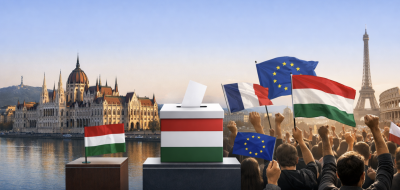
Political developments in Hungary have shown significant changes in electoral patterns, influencing broader European trends. The recent elections saw altered voter preferences and party performances, marking a shift in Hungary’s political landscape.
Election Results and Party Performance
The latest parliamentary elections in Hungary resulted in a reduced majority for the ruling party Fidesz. Opposition parties, including the United for Hungary coalition, increased their vote shares. Voter turnout was approximately 70%, reflecting active political engagement.
Emergence of Opposition Coalitions
Opposition parties formed a united front, combining forces across ideological lines. This coalition included liberal, green, and left-wing parties. The alliance aimed to counterbalance the dominant Fidesz party’s influence.
Impact on European Political Dynamics
Hungary’s electoral shifts coincide with rising political pluralism in other European countries. Similar patterns of coalition-building and voter realignment have been observed in Poland, Slovakia, and the Czech Republic. These trends affect EU policies on governance and regional cooperation.
Role of Socio-Economic Factors
Economic issues such as inflation and unemployment influenced voter behaviour in Hungary. Public concerns over corruption and media freedom also shaped electoral outcomes. These factors contributed to the changing support base for political parties.
What to Study for UPSC Exams?
- European Union Governance
- Electoral Systems and Coalitions
- Political Economy of Central Europe
- Media Freedom and Democracy
European Union Governance
The EU operates through a complex system involving the European Commission, European Parliament, and European Council. It uses qualified majority voting in many decisions, balancing member states’ sovereignty and collective interests. The EU Charter of Fundamental Rights codifies citizens’ rights across all member countries, making it a supranational legal framework unique among international organizations.
Electoral Systems and Coalitions
Electoral systems vary widely, including proportional representation, majoritarian, and mixed models. Coalitions often form in proportional systems to achieve legislative majorities. Strategic voting and coalition bargaining significantly influence policy outcomes and government stability, especially in multi-party democracies.
Political Economy of Central Europe
Central Europe’s political economy is marked by rapid post-communist transitions to market economies since the 1990s. Foreign direct investment surged, but regional disparities persist. EU integration accelerated institutional reforms, yet challenges like corruption and informal economies remain prevalent in several countries.
Media Freedom and Democracy
Media freedom indexes measure press independence, with restrictions often correlating with democratic backsliding. State ownership and regulatory capture can limit pluralism. Digital platforms have transformed information dissemination, but also facilitated disinformation campaigns affecting democratic processes worldwide.
Last Modified: April 16, 2026