
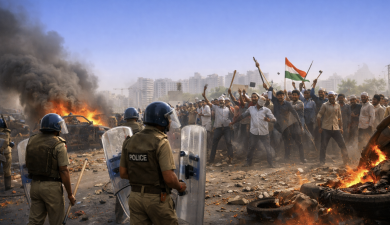
The Noida violence incident occurred in Uttar Pradesh, involving clashes that resulted in multiple injuries and property damage. Local police and paramilitary forces were deployed to control the situation. Authorities arrested several individuals suspected of inciting violence. The administration imposed curfew and internet restrictions to prevent further unrest.
Details of the Noida Violence Incident
The violence erupted following a protest that escalated into clashes between groups. Police reported damage to public and private property, including vehicles and shops. Several police personnel and civilians sustained injuries. Law enforcement used tear gas and baton charges to disperse the crowds.
Security Measures and Law Enforcement Response
The Uttar Pradesh government deployed additional police and Rapid Action Force units. Curfew was imposed in affected areas to restore normalcy. Internet services were suspended temporarily to curb misinformation and mobilisation. Police registered cases under relevant sections of the Indian Penal Code and the Unlawful Activities Prevention Act.
Claims of External Involvement
Authorities claimed that some arrested individuals had links with organisations allegedly operating from across the border. Intelligence agencies are investigating possible external funding and coordination. The government is monitoring social media platforms for inflammatory content linked to foreign entities. Diplomatic channels have been alerted regarding cross-border security threats.
Political and Administrative Actions
The state government announced compensation for the injured and affected families. A high-level inquiry committee was constituted to examine the causes of the violence. Political leaders from various parties issued statements condemning the incident. Efforts to restore communal harmony and public order were prioritised.
What to Study for UPSC Exams?
- Internal Security Mechanisms
- Role of Intelligence Agencies
- Communal Violence Management
- India’s Border Security Challenges
Internal Security Mechanisms
Internal security in India includes paramilitary forces like CRPF, BSF, and ITBP tasked with counter-insurgency and border security. The National Security Act (NSA) empowers preventive detention. Cybersecurity is increasingly integral, with agencies monitoring digital threats to maintain law and order.
Role of Intelligence Agencies
India’s primary intelligence agencies include RAW (external intelligence), IB (internal intelligence), and NTRO (technical intelligence). RAW was established in 1968 post-China war. These agencies coordinate with law enforcement to prevent terrorism and espionage.
Communal Violence Management
Communal violence management involves law enforcement, judicial intervention, and community engagement. The Prevention of Communal and Targeted Violence Bill was proposed to address hate crimes. Rapid response teams and peace committees are deployed in sensitive regions.
India’s Border Security Challenges
India shares borders with six countries, facing challenges like infiltration in Kashmir and insurgency in the Northeast. The BSF guards the western borders, while ITBP secures the northern Himalayan frontier. Terrain and cross-border terrorism complicate surveillance and control.
Last Modified: April 16, 2026