
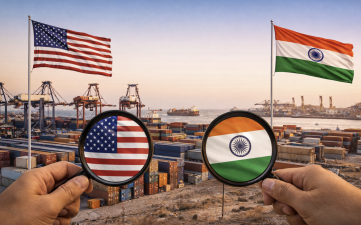
Recent developments in 2026 reveal that the United States has launched two major investigations targeting India and other countries. These probes aim to examine if certain trade practices are unfair or discriminatory against U.S. commerce. The investigations could lead to new tariffs, affecting India’s exports and trade balance with the U.S.
Background on US Tariffs and Legal Framework
The U.S. Supreme Court invalidated former President Donald Trump’s use of the International Emergency Economic Powers Act (IEEPA) for imposing high tariffs on trade partners. Previously, India faced tariffs up to 50% which were later reduced to 25%. After the ruling, Trump imposed a 10% global tariff for 150 days under the Trade Act of 1974, with the possibility of increasing it. The Act’s Section 301(b) allows the U.S. to respond to unfair foreign trade practices, which is the basis for the current investigations.
First Investigation – Excess Manufacturing Capacity
On March 11, 2026, the U.S. Trade Representative (USTR) began investigating 16 countries, including India, for allegedly using excess manufacturing capacity to flood the U.S. market. The U.S. claims India has a $58 billion bilateral trade surplus (Indian data states $42.2 billion). Sectors cited include textiles, health, construction, automotive, solar modules, petrochemicals, and steel. The U.S. alleges India’s production capacity far exceeds domestic demand, harming American businesses.
Second Investigation – Forced Labour and Trade Practices
A day later, the USTR launched a probe into 60 countries, including India, examining whether they have taken adequate steps to prevent imports made with forced labour. This investigation assesses the impact of forced labour on U.S. workers and companies. It also uses Section 301(b) of the Trade Act, signalling potential for new trade restrictions if countries are found non-compliant.
Responses from India and Industry
India’s government has not issued a public response yet. The European Union has expressed concerns and seeks clarity on how the investigation aligns with existing trade agreements. Indian industry leaders show the ongoing tariffs on steel, aluminium, autos, and textiles, noting added uncertainty but urge calm as investigations will take time. Export promotion bodies expect impacts only after investigations conclude.
Topics for Prelims:
Section 301 of Trade Act 1974
- Allows U.S. to counter unfair foreign trade practices.
- Used to impose tariffs or trade restrictions.
- Basis for recent investigations on India and others.
- Enables response to discriminatory or unreasonable policies.
- Key legal tool in U.S. trade policy enforcement.
India-U.S. Trade Relations 2025-26
- India had a trade surplus with the U.S. of $42.2 billion (Indian data).
- U.S. alleged $58 billion surplus from India.
- Tariffs imposed on Indian goods – steel, aluminium, autos, textiles.
- Tariffs fluctuated between 10%-50% during 2025-26.
- Trade tensions linked to manufacturing capacity and labour issues.
Forced Labour and Global Trade
- Forced labour involves coercive work conditions.
- U.S. investigates countries on preventing forced labour imports.
- Trade Act Section 301 used for these probes.
- Impacts U.S. workers and business competitiveness.
- Global supply chains under increasing scrutiny for ethics.
Questions for Mains:
- Critically analyse the role of Section 301 of the Trade Act of 1974 in shaping U.S. trade policy and its implications for developing countries like India. [GS-II-International Relations]
- With suitable examples, estimate the impact of tariffs on bilateral trade relations and domestic industries in emerging economies. [GS-III-Economic Development]
- Point out the challenges and opportunities in addressing forced labour in global supply chains and how international trade laws can be leveraged to combat it. [GS-II-International Relations]
- Critically analyse how excess manufacturing capacity in one country can affect global trade dynamics and suggest policy measures to manage such challenges. [GS-III-Economic Development]
Answer Hints:
1. Critically analyse the role of Section 301 of the Trade Act of 1974 in shaping U.S. trade policy and its implications for developing countries like India. [GS-II-International Relations]
- Section 301 empowers the U.S. to investigate and respond to unfair, discriminatory foreign trade practices affecting U.S. commerce.
- Allows imposition of tariffs or trade restrictions as retaliatory or corrective measures.
- Used recently to launch investigations against India and others for alleged excess manufacturing capacity and forced labour issues.
- Acts as a unilateral tool, sometimes criticized for bypassing multilateral dispute resolution mechanisms like WTO.
- Implications for developing countries include increased trade barriers, uncertainty, and pressure to reform domestic policies.
- India faces tariffs on steel, aluminium, autos, textiles, impacting exports and industry competitiveness.
2. With suitable examples, estimate the impact of tariffs on bilateral trade relations and domestic industries in emerging economies. [GS-III-Economic Development]
- Tariffs raise import costs, reducing competitiveness of foreign goods but may invite retaliatory tariffs harming exports.
- Example – U.S. tariffs (up to 50%) on Indian steel, aluminium, autos disrupted trade and increased costs for Indian exporters.
- Tariffs create uncertainty, affecting investment decisions and supply chain stability in emerging economies.
- Domestic industries may benefit short-term from protection but face challenges like inefficiency and lack of innovation long-term.
- Trade tensions can strain bilateral relations, complicating negotiations and cooperation in other sectors.
- India’s $42.2 billion trade surplus with U.S. under scrutiny, denoting tensions linked to tariffs and trade imbalances.
3. Point out the challenges and opportunities in addressing forced labour in global supply chains and how international trade laws can be leveraged to combat it. [GS-II-International Relations]
- Challenges include identifying and verifying forced labour practices across complex, multi-tiered supply chains.
- Economic pressures and lack of enforcement in some countries perpetuate forced labour issues.
- Opportunities lie in leveraging trade laws (e.g., Section 301 investigations) to pressure countries to eradicate forced labour.
- Trade restrictions on goods produced with forced labour can incentivize ethical sourcing and corporate responsibility.
- International cooperation and agreements needed to standardize definitions and enforcement mechanisms.
- U.S. investigation into 60 countries, including India, exemplifies use of trade policy as a tool against forced labour.
4. Critically analyse how excess manufacturing capacity in one country can affect global trade dynamics and suggest policy measures to manage such challenges. [GS-III-Economic Development]
- Excess capacity leads to overproduction, causing dumping of cheap goods in global markets, harming other countries’ industries.
- Example – U.S. alleges India’s excess capacity in solar modules, petrochemicals, steel affecting American businesses.
- Distorts fair competition, creates trade imbalances, and may trigger retaliatory tariffs or trade wars.
- Policy measures include capacity rationalization, export controls, and adherence to international trade rules.
- Multilateral dialogue and dispute resolution (e.g., WTO) can help manage capacity issues cooperatively.
- Domestic reforms to improve efficiency and diversification reduce risks of excess capacity buildup.