
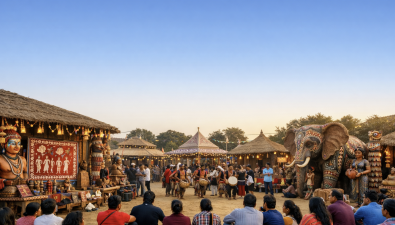
The Tribes Art Fest 2026 was held from 3rd to 13th March at Travancore Palace, New Delhi. Organised by the Ministry of Tribal Affairs with NGMA and FICCI, it showcased over 1,000 artworks by 75 tribal artists. The festival brought into light more than 30 tribal art traditions, promoting indigenous culture and heritage. It combined exhibitions, workshops, discussions, and mentorship to support tribal artists and preserve their living traditions.
Significance of Tribes Art Fest 2026
The festival was more than an art display. It was a platform for cultural exchange and livelihood support. Panel discussions addressed tribal art revival, sustainability, and market linkages. Over 100 tribal art students received mentorship and exposure to live creative processes. The event strengthened the connection between traditional knowledge and modern audiences, encouraging young artists to pursue tribal art.
Major Tribal Art Forms Featured
The festival presented diverse tribal arts including Warli, Rabha, Tamang masks, Gond, and Bhil paintings. Warli art from Maharashtra uses white rice paste on clay walls to depict nature and community life with geometric shapes. Rabha and Tamang masks from Assam, West Bengal, and the Himalayas represent mythological and spiritual beings used in rituals. Gond paintings from Madhya Pradesh are known for intricate dots and lines telling folklore and ecological stories. Bhil paintings feature thousands of tiny dots forming animals and deities, reflecting deep connection with nature.
Legal Recognition and Cultural Importance
Warli and Gond arts hold Geographical Indication (GI) tags, legally protecting their origin and authenticity. These tags help preserve traditional knowledge and support artists economically. Tribal art carries ancestral stories, community values, and ecological wisdom. Artists like Madhukar Rambhau Vadu (Warli), Shanti Ram Rabha (masks), Japani Shyam Hurley (Gond), and Ram Singh Bhavor (Bhil) play vital roles in preserving and promoting these art forms.
Impact on Tribal Communities and Future Prospects
The festival promotes cultural pride and economic opportunity for tribal artists. It encourages youth participation and inter-tribal dialogue. The event encourages sustainable livelihoods by connecting artists with buyers and markets. Such festivals help keep tribal art alive as evolving traditions rather than static relics. They also raise awareness among wider audiences about India’s rich indigenous heritage.
Topics for Prelims:
Warli Painting
- Originates from Warli tribe in Maharashtra.
- Uses white rice paste on clay walls as pigment.
- Depicts nature, farming, rituals with geometric shapes.
- Has Geographical Indication (GI) tag since 2014.
- Linked to prehistoric cave paintings and Neolithic art.
Gond Painting
- Practised by Gond community in Madhya Pradesh.
- Uses dots and lines to create rhythmic patterns.
- Tells stories of folklore, animals, and forest ecology.
- Holds GI tag protecting traditional knowledge.
- Famous artists include Japani Shyam Hurley.
Rabha and Tamang Masks
- Rabha tribe mainly in Assam and North Bengal.
- Masks carved from wood, bamboo, clay, gourd.
- Used in folk theatre and ritual dances.
- Tamang masks represent Himalayan spiritual beings.
- Artists like Shanti Ram Rabha revived mask-making post-retirement.
Questions for Mains:
- Discuss in the light of tribal art festivals how cultural heritage can be preserved while promoting economic development. [GS-II-Governance]
- Analyse the role of Geographical Indications in protecting indigenous art forms and supporting tribal livelihoods. [GS-III-Economic Development]
- With suitable examples, examine the relationship between tribal art and ecological conservation in India. [GS-I-Indian Society]
- Critically discuss the challenges and opportunities in integrating traditional tribal knowledge systems with contemporary art markets. [Optional Paper
Anthropology]
Answer Hints:
1. Discuss in the light of tribal art festivals how cultural heritage can be preserved while promoting economic development. [GS-II-Governance]
- Tribal art festivals like Tribes Art Fest 2026 provide platforms for showcasing and reviving indigenous art traditions.
- They facilitate cultural exchange, awareness, and appreciation among wider audiences, helping preserve living heritage.
- Such festivals connect artists with buyers and markets, enabling sustainable livelihoods and economic upliftment.
- Mentorship and workshops encourage youth participation, ensuring transmission of skills and continuity of traditions.
- Government involvement (e.g., Ministry of Tribal Affairs) ensures institutional support and policy backing for cultural and economic goals.
- Panel discussions on sustainability and market linkages help address challenges of commercialization without cultural dilution.
2. Analyse the role of Geographical Indications in protecting indigenous art forms and supporting tribal livelihoods. [GS-III-Economic Development]
- GI tags legally recognize the unique regional origin of tribal arts like Warli (2014) and Gond paintings, preventing unauthorized commercial use.
- They protect traditional knowledge and cultural identity, ensuring authenticity and heritage preservation.
- GI status enhances market value and consumer trust, enabling better income for tribal artists.
- It encourages local communities to continue traditional practices by providing economic incentives.
- Government registration under the Geographical Indications of Goods Act (1999) provides legal recourse against exploitation.
- GI helps in branding tribal art in national and international markets, promoting sustainable economic development.
3. With suitable examples, examine the relationship between tribal art and ecological conservation in India. [GS-I-Indian Society]
- Tribal art forms are deeply connected to nature, reflecting ecological knowledge and reverence for environment (e.g., Warli paintings depict farming, animals, and natural cycles).
- Materials used are often natural and locally sourced, such as rice paste, clay, bamboo, and natural pigments, promoting sustainable use of resources.
- Gond paintings narrate folklore and forest ecology, emphasizing harmony between humans and nature.
- Bhil dot paintings symbolize seeds and pulses, representing nature’s rhythm and biodiversity.
- These art forms serve as cultural expressions of ecological conservation and community stewardship of natural habitats.
- By preserving tribal art, communities also maintain traditional ecological knowledge crucial for biodiversity and sustainable living.
4. Critically discuss the challenges and opportunities in integrating traditional tribal knowledge systems with contemporary art markets. [Optional Paper Anthropology]
- Challenges include risk of cultural commodification, loss of authenticity, and dilution of traditional meanings in commercial contexts.
- Limited access to mainstream markets and lack of marketing skills hinder tribal artists’ economic benefits.
- Language barriers, infrastructural deficits, and exploitation by middlemen pose additional obstacles.
- Opportunities lie in platforms like Tribes Art Fest that provide exposure, mentorship, and direct market linkages.
- Legal protections such as GI tags safeguard indigenous knowledge and empower communities economically.
- Integration can lead to cultural revival, inter-tribal dialogue, youth engagement, and sustainable livelihoods if managed sensitively.