
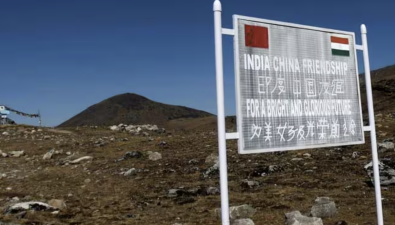
China has renamed over 50 places in Arunachal Pradesh, a state administered by India, as part of its cultural expansion efforts. The renaming targets towns, rivers, and mountains in the region claimed by China as South Tibet. The move has been officially documented by Chinese state media and government agencies since 2022.
Details of Renaming Initiative
The renamed places include key administrative and geographical locations such as Tawang, Ziro, and Pasighat. The new Chinese names often reflect Tibetan cultural or historical references. The initiative is part of a broader effort to assert Chinese sovereignty claims over Arunachal Pradesh.
Geopolitical Context
Arunachal Pradesh borders China’s Tibet Autonomous Region. The area has been disputed since the 1962 Sino-Indian War. China’s renaming coincides with increased military infrastructure development along the Line of Actual Control (LAC). India maintains administrative control and rejects Chinese claims over Arunachal Pradesh.
International and Diplomatic Responses
India has lodged diplomatic protests against China’s renaming campaign. The Indian government describes Arunachal Pradesh as an integral part of India. The United States and other countries have expressed support for India’s territorial integrity in official statements. The renaming has raised tensions in bilateral relations.
Impact on Local and Cultural Identity
The renaming affects indigenous tribal communities in Arunachal Pradesh, including Monpa, Adi, and Nyishi groups. These communities have distinct languages and cultural practices. Indian authorities continue to promote local languages and cultural preservation programmes in the region.
What to Study for UPSC Exams?
- India-China Border Disputes
- International Law on Territorial Claims
- Indigenous Cultures of Northeast India
- Geopolitics of the Himalayas
India-China Border Disputes
The India-China border spans 3,488 km, with three main disputed sectors: Aksai Chin, Arunachal Pradesh, and Sikkim. The 1962 Sino-Indian War was triggered by these disputes. The Line of Actual Control (LAC) is a de facto border but lacks formal demarcation, leading to frequent standoffs and skirmishes.
International Law on Territorial Claims
Territorial claims rely on principles like uti possidetis, effective control, and historic title under international law. The UN Charter prohibits acquisition of territory by force. Disputes often invoke treaties, colonial-era maps, and arbitration mechanisms like the International Court of Justice.
Indigenous Cultures of Northeast India
Northeast India hosts over 200 ethnic groups with distinct languages from Tibeto-Burman, Austroasiatic, and Indo-Aryan families. Many practice animism, shifting cultivation, and maintain oral traditions. Festivals like Losar and Hornbill reflect their rich cultural heritage.
Geopolitics of the Himalayas
The Himalayas span five countries and are a strategic buffer zone between South and Central Asia. The region controls vital river systems feeding over 1.3 billion people. It hosts multiple territorial disputes and is key for military logistics and energy corridors.
Last Modified: April 17, 2026