
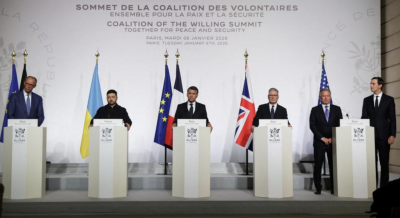
French President Emmanuel Macron and UK Labour leader Keir Starmer have initiated efforts to form a multinational security coalition for the Strait of Hormuz. The mission aims to secure the vital maritime corridor amid rising tensions in the Gulf region. The initiative involves several European and Middle Eastern countries.
Objective of the Security Mission
The coalition intends to protect commercial shipping lanes in the Strait of Hormuz, a strategic chokepoint for global oil transit. It seeks to counter threats such as maritime attacks and ensure freedom of navigation. The mission will coordinate naval patrols and intelligence sharing among member states.
Participating Countries and Support
France, the United Kingdom, and the United States are leading the initiative. Other European Union members and Gulf Cooperation Council (GCC) countries have been invited to join. Discussions include contributions of naval assets, logistical support, and command structures.
Geopolitical Context
The Strait of Hormuz connects the Persian Gulf to the Gulf of Oman and the Arabian Sea. Approximately 20% of the world’s petroleum passes through this 21-mile-wide waterway. Recent incidents involving tanker seizures and missile attacks have escalated regional tensions.
Operational Framework and Challenges
The mission will likely operate under a multilateral command with shared rules of engagement. Challenges include coordinating diverse naval forces and managing political sensitivities among Gulf states. Legal frameworks under international maritime law will guide operations.
What to Study for UPSC Exams?
- International Maritime Law
- Geopolitics of Energy Security
- Multilateral Naval Cooperation
- Strait of Hormuz Strategic Importance
International Maritime Law
International Maritime Law governs navigation rights, territorial waters, and maritime disputes under conventions like UNCLOS (1982). It defines Exclusive Economic Zones (EEZs) extending 200 nautical miles from coastlines. The law regulates piracy, shipping safety, and environmental protection in international waters.
Geopolitics of Energy Security
Energy security geopolitics focuses on stable access to energy resources, often oil and gas. Key chokepoints like the Strait of Hormuz control global supply routes. Energy dependencies influence alliances, conflicts, and economic policies worldwide.
Multilateral Naval Cooperation
Multilateral naval cooperation involves joint maritime operations by multiple countries for security and humanitarian goals. It enhances interoperability, intelligence sharing, and crisis response. Examples include NATO naval exercises and anti-piracy coalitions off Somalia.
Strait of Hormuz Strategic Importance
The Strait of Hormuz is a 21-mile-wide passage connecting the Persian Gulf to the Arabian Sea. About 20% of global petroleum trade transits here daily. Its narrowness and geopolitical tensions make it a critical global energy chokepoint.
Last Modified: April 17, 2026