
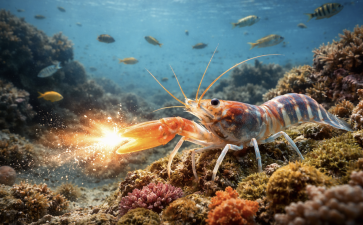
A team of researchers from the School of Industrial Fisheries at Cochin University of Science and Technology (Cusat) has identified a new species of pistol shrimp in the Kochi backwaters. Named Alpheus madhusoodanai, the discovery adds to India’s marine biodiversity records and highlights the ecological richness of estuarine ecosystems along the Kerala coast. The finding, published in the Journal of the Marine Biological Association of the United Kingdom, also underscores the limited scientific exploration of certain crustacean families in Indian waters.
The Discovery in Kochi’s Estuarine Ecosystem
4
The newly discovered species belongs to the family Alpheidae, commonly known as pistol or snapping shrimps. It was found in the estuarine backwaters of Kochi, a region characterised by mangroves, brackish waters, and tidal influences.
Named Alpheus madhusoodanai, the species honours Prof B. Madhusoodana Kurup, a noted fisheries scientist and the first Vice-Chancellor of Kerala University of Fisheries and Ocean Studies.
Researchers note that this is the first alpheid shrimp species recorded from an estuary in this region, making the discovery significant for regional marine taxonomy.
What Makes Pistol Shrimps Unique?
4
Pistol shrimps are known for their asymmetrical claws, one of which can snap shut at high speed, producing:
- A loud snapping sound.
- A high-pressure cavitation bubble.
- A shockwave capable of stunning prey.
This snapping mechanism is among the most powerful biological movements relative to body size in the animal kingdom. Beyond their striking hunting adaptation, many species exhibit symbiotic relationships with goby fishes and play roles in sediment turnover.
Ecological Role in Mangrove and Estuarine Systems
The Kochi backwaters are ecologically sensitive zones where freshwater mixes with seawater. Within such habitats, pistol shrimps contribute significantly to ecosystem functioning.
Their burrowing behaviour:
- Aerates swampy soil.
- Releases toxic gases trapped in sediment.
- Enhances nutrient cycling in mangrove ecosystems.
By maintaining sediment health, these shrimps indirectly support fish nurseries and other estuarine life forms. Though they have limited commercial value and are often incidental catch in stake nets, their ecological importance is considerable.
Scientific Validation: Morphology and Molecular Evidence
To confirm that Alpheus madhusoodanai was indeed a distinct species, researchers conducted:
- Detailed morphological comparisons with closely related alpheid species.
- Molecular genetic analysis to establish phylogenetic distinction.
The integration of traditional taxonomy with DNA-based methods reflects the growing use of molecular tools in marine biodiversity research.
The study was published in the Journal of the Marine Biological Association of the United Kingdom, adding international visibility to the discovery.
Why This Discovery Matters for India
India’s long coastline and estuarine systems remain underexplored in terms of crustacean biodiversity. Limited research on the Alpheidae family suggests that more undocumented species may exist.
The discovery is significant because:
- It expands India’s marine biodiversity inventory.
- It reinforces the ecological value of mangrove-rich backwaters.
- It highlights the need for conservation-focused estuarine studies.
- It supports academic collaboration in taxonomy and marine science.
In the context of climate change, coastal degradation, and urban expansion around Kochi, documenting species diversity becomes crucial for informed environmental management.
What to Note for Prelims?
- New species: “Alpheus madhusoodanai”.
- Family: Alpheidae (pistol/snapping shrimps).
- Habitat: Estuarine backwaters of Kochi, Kerala.
- Known for: Snapping claw producing cavitation bubble.
- Published in: Journal of the Marine Biological Association of the United Kingdom.
What to Note for Mains?
- Importance of marine biodiversity documentation in India.
- Role of estuarine and mangrove ecosystems in ecological balance.
- Application of molecular taxonomy in species identification.
- Conservation challenges in coastal urban regions.
- Link between biodiversity research and sustainable fisheries policy.