
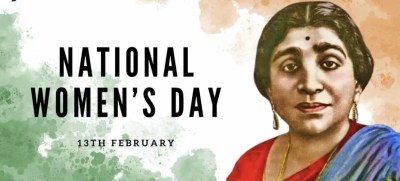
National Women’s Day is observed in India every year on 13 February to mark the birth anniversary of Sarojini Naidu. The day recognises her role in the freedom struggle, her literary contribution, and her commitment to women’s empowerment. It also marks the wider need for gender equality and women’s leadership in public life.
Why 13 February Matters
13 February commemorates the birth of Sarojini Naidu, born in Hyderabad in 1879. She is widely remembered as the Nightingale of India for her poetry and public life. The observance is used to reflect on women’s rights, social reform, and the participation of women in national development.
Sarojini Naidu’s Public Role
- She was a prominent poet, orator, and nationalist leader.
- She took part in India’s freedom movement and worked closely with major national leaders.
- She became the first woman to serve as Governor of an state of India, heading Uttar Pradesh after Independence.
- She supported women’s education, political participation, and social reform.
Contribution to Women’s Empowerment
Sarojini Naidu advocated for women’s rights at a time when social restrictions were strong. She encouraged women to take part in public affairs and to seek independence from patriarchal norms. Her life remains relevant in discussions on equal opportunity, representation, and social justice.
Relevance in Contemporary India
National Women’s Day is not only a tribute to a historical figure. It also serves as a reminder of continuing challenges such as gender discrimination, unequal access to education and employment, and underrepresentation in leadership. The day encourages renewed focus on dignity, agency, and equal rights for women.
Last Modified: April 28, 2026