
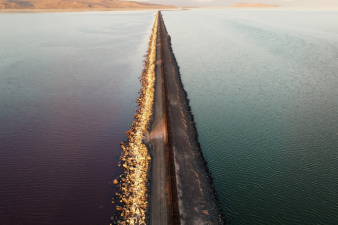
A new geological study has identified a vast underground reservoir of freshwater beneath Utah’s Great Salt Lake. Scientists found that freshwater saturates rock and sediment below the lake to depths of about 13,000 feet. The discovery may help address severe environmental problems linked to the lake’s shrinking size, including toxic dust storms from exposed lakebed areas.
What the Study Found
Researchers from the University of Utah mapped the eastern margin of the lake, especially Farmington Bay, using helicopter-mounted electromagnetic sensors. The survey showed a clear boundary between saline water near the surface and freshwater deeper below. The team estimated that the freshwater extends far beneath the lakebed and may cover a large underground area.
How the Survey Was Conducted
The scientists used electromagnetic equipment to detect differences in conductivity. Salt water conducts electricity more easily than freshwater, allowing the team to distinguish brine from freshwater underground. Circular mounds of reeds growing on the dried lakebed first drew attention, as they were being fed by pressurised freshwater rising from below.
Environmental Significance
The Great Salt Lake has shrunk sharply in recent years, leaving more than 2,000 square kilometres of dry lakebed exposed. Strong winds lift toxic dust from these areas and spread it to nearby communities. The newly identified freshwater could potentially be used to reduce dust hotspots and support environmental mitigation efforts.
Scientific and Policy Relevance
The study suggests that underground freshwater resources may be more extensive than previously known in arid lake systems. It also marks the value of geophysical surveying in water resource assessment. Further mapping of the lake could help determine the full volume and practical use of the reservoir.
Last Modified: April 29, 2026