
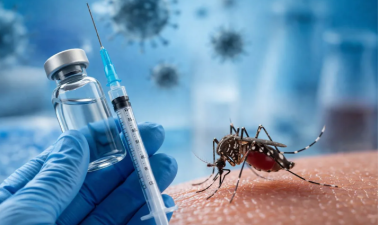
On 25 April 2026, the University of Oxford, through Oxford University Innovation, and the Serum Institute of India entered into a licence agreement for the development and manufacture of the R78C malaria vaccine candidate. R78C is a multi-stage vaccine candidate based on two Plasmodium falciparum blood-stage antigens, RIPR and CyPRA.
R78C Vaccine Design
R78C is designed as a next-generation multi-stage malaria vaccine. It targets the parasite at multiple points in its lifecycle and is intended for clinical use. The agreement gives Serum Institute of India a non-exclusive, worldwide licence for development.
Malaria Vaccine Research
Malaria vaccine candidates are tested against Plasmodium falciparum, the parasite responsible for the most severe form of human malaria. Blood-stage antigens are used in vaccine research because they are linked to the parasite stage that infects red blood cells.
Clinical Trials and Manufacturing
In September 2025, Phase 1b study VAC093 and Phase 2b study VAC087 began in Nanoro, Burkina Faso, for R78C and other blood-stage malaria vaccine candidates. These trials also assess the candidates alone and in combination with the R21/Matrix-M vaccine. On 10 November 2025, the University of Oxford and ReciBioPharm Advanced Bio expanded a collaboration to manufacture R78C and RH5.1 for phase I/II clinical trials. The stated plan is to generate robust data in Africa by 2028.
Serum Institute of India
The Serum Institute of India is a major vaccine manufacturer based in Pune, Maharashtra. It has global manufacturing capacity and supplies vaccines to many low- and middle-income countries. The partnership between Oxford and Serum Institute of India aims to support large-scale production and affordable supply of successful malaria vaccine candidates for endemic regions. Professor Simon Draper led the laboratory that developed R78C at Oxford University.
Last Modified: April 29, 2026