
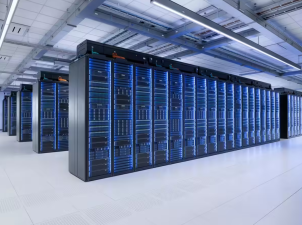
The expansion of India’s data center capacity is rapidly accelerating, driven by the emergence of gigawatt-scale artificial intelligence factories, hyperscale cloud demand, and increasing digital penetration. Mumbai currently anchors the national data center landscape, hosting nearly half of the country’s total operational capacity. This dominance is supported by strategic advantages such as reliable power availability, extensive submarine cable landing stations, and immense demand from the banking and financial services sector. As the ecosystem evolves, cities like Chennai, Hyderabad, and Delhi NCR are fast emerging as major hyperscale destinations to support next-generation compute workloads.
Capacity Growth and Future Projections
India is witnessing an unprecedented surge in digital infrastructure development, positioning itself as a dominant player in the Asia Pacific region.
Current Status and Decadal Growth
- India’s built data center capacity has grown exponentially, expanding from approximately 375 megawatts in 2020 to roughly 1.6 gigawatts by the end of 2025.
- Industry reports project this capacity to nearly triple, reaching close to 5 gigawatts by 2030, reflecting a compound annual growth rate of 26 percent.
- The domestic ecosystem currently accounts for about 4 percent of the global data center market, despite India attaining digital parity with the global average in terms of its internet user base.
- Data center capacity per million internet users in India stands at just 1.2 megawatts, presenting immense headroom for growth compared to the global average of 5 megawatts per million users.
Investment and Economic Value
- Expanding the infrastructure pipeline to support 4 to 5 gigawatts of capacity will require a capital investment of approximately USD 23 to 25 billion over the next five years.
- When accounting for the internal IT equipment and server deployments by tenants, the overall investment potential scales up to nearly INR 3 to 4 lakh crore.
- The capital expenditure required to establish a data center in India is estimated to be 30 to 40 percent lower than in competing markets like the United States and China, primarily due to lower land and labor costs.
- Hyperscalers currently account for 50 to 55 percent of market activity, with public markets, real estate investment trusts, and infrastructure investment trusts emerging as primary funding mechanisms.
Regional Distribution and Key Hubs
Data center capacity is geographically concentrated in a few metropolitan nodes, though secondary markets are gradually gaining traction.
| City Hub | Projected Share of New Capacity | Primary Growth Drivers |
| Mumbai | 47 Percent | Banking sector demand, existing infrastructure, submarine cable density |
| Chennai | 15 Percent | Three new international subsea cables landing by 2026-27 |
| Hyderabad | 11 Percent | Rapid expansion of hyperscale cloud providers and artificial intelligence zones |
The Dominance of Mumbai
- Mumbai serves as the undisputed anchor of India’s data center market, housing nearly 50 percent of the total operational stock.
- The city currently operates over 800 megawatts of capacity, with another 750 megawatts either under construction or actively committed by developers.
- Industry projections indicate that Mumbai will attract roughly 47 percent of all additional data center capacity developed in India over the next five years.
Emerging Hyperscale Destinations
- Chennai is projected to receive approximately 15 percent of the new national capacity, heavily supported by its coastal connectivity and upcoming subsea cables.
- Hyderabad is emerging as a premier artificial intelligence hub, expected to capture 11 percent of new capacity as technology giants expand their local compute infrastructure.
- Delhi NCR is seeing continuous expansion for hyperscale setups, while Bangalore maintains its position as the primary hub for enterprise colocation demand.
- Tier II cities like Jaipur, Ahmedabad, and Lucknow are witnessing an uptick in edge-style, containerized data centers typically ranging between 8 and 10 megawatts.
The Artificial Intelligence Catalyst
The transition from traditional cloud storage to artificial intelligence application lifecycles is fundamentally changing the economics and design of modern data centers.
AI Factories and GPU Deployments
- India’s ecosystem is preparing for the deployment of 650,000 to 700,000 Graphics Processing Units over the next five years to support large language models and enterprise automation.
- Developers have an active pipeline of nearly 1 gigawatt dedicated exclusively to artificial intelligence workloads.
- These new facilities operate as gigawatt-scale compute campuses, requiring decentralized locations with abundant land, dedicated power sub-stations, and dense fiber connectivity.
Power and Cooling Infrastructure
- High-density artificial intelligence facilities require advanced thermal management, prompting the industry to adopt direct-to-chip liquid cooling, adiabatic cooling, and immersion cooling to reduce water consumption.
- The Ministry of Power estimates that electricity demand from data centers will reach 13.56 gigawatts by the fiscal year 2031-32.
- To secure a steady, low-carbon baseload energy supply, developers and policymakers are exploring the integration of small modular nuclear reactors directly into compute campuses.
IASPOINT Booster Facts for UPSC
- Data Center Components: A facility setup is highly capital-intensive, typically allocating 40 percent of costs to real estate, 40 percent to electrical systems, and 20 percent to heating, ventilation, and cooling mechanisms.
- Hyperscalers vs. Colocation: Hyperscalers are massive cloud service providers (like Amazon Web Services or Microsoft Azure) that require enormous, dedicated infrastructure. Colocation facilities rent out space, power, and cooling to multiple smaller enterprises within a single building.
- IndiaAI Mission: The government has onboarded over 38,000 Graphics Processing Units through empanelled service providers, offering them to startups and researchers at a highly subsidized average rate of INR 65 per hour.
- Neocloud Operators: A newly emerging class of specialized cloud providers that own top-tier Graphics Processing Units and lease computing power strictly as a service to artificial intelligence labs, gaming companies, and startups.
- Submarine Cable Landing Stations: These are critical coastal facilities where international underwater fiber-optic cables connect to the domestic terrestrial network, dictating the latency and bandwidth capacity of a region. Mumbai and Chennai host the majority of India’s landing stations.
- SHANTI Act: The recently passed Sustainable Harnessing and Advancement of Nuclear Energy for Transforming India Act aims to strengthen the deployment of micro nuclear reactors, directly supporting energy-intensive sectors like artificial intelligence data centers.