
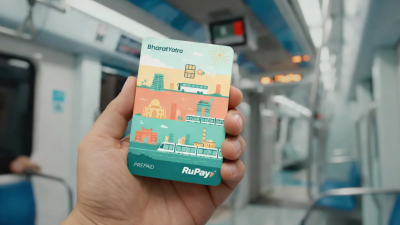
The Delhi Metro Rail Corporation launched co-branded RuPay On-The-Go cards in partnership with Airtel Payments Bank on 10 May 2026. Operating on the National Common Mobility Card network, these open-loop cards enable commuters to make contactless payments across various public transport systems, toll plazas, parking lots, and retail outlets nationwide. The cards function as debit and prepaid instruments that users can recharge digitally using the DMRC or Airtel mobile applications. This initiative supports the Government of India’s One Nation One Card framework, with the cards becoming available across all Delhi Metro stations within ten days of the initial rollout.
Architecture and Framework of National Common Mobility Card
The National Common Mobility Card is an interoperable transport card conceived by the Ministry of Housing and Urban Affairs to unify transit ticketing across India.
The Open-Loop Payment Ecosystem
Traditional transit cards are closed-loop systems, meaning they only function within a specific transport operator’s network, such as a single city’s metro rail. The National Common Mobility Card uses an open-loop system. This design allows financial institutions to issue a single card that acts as both a standard bank debit or prepaid card and a transit ticketing instrument across different state and central transport networks.
Technological Infrastructure
The system operates on the RuPay card network, developed by the National Payments Corporation of India. The card uses dual-interface technology, supporting both contact and contactless transactions. It incorporates a secure chip that holds two balances: a standard bank account balance for retail payments and an offline transit wallet balance for quick tap-and-go clearance at metro turnstiles and bus validators without requiring a real-time internet connection.
Key Features of the DMRC-Airtel Co-Branded Card
The integration introduces specific administrative and operational changes to the Delhi Metro ticketing infrastructure.
Issuance and Digital Management
- Procurement: Commuters can purchase the co-branded RuPay On-The-Go cards directly from customer care counters across all Delhi Metro stations.
- Recharging: Users can top up the transit wallet digitally via the DMRC smart server portal, the Airtel Thanks application, or internet banking facilities, eliminating the need to stand in physical queues at station counters.
- Co-existence: The introduction of the new open-loop cards does not invalidate legacy DMRC smart cards. Existing closed-loop metro cards remain fully operational alongside the new system.
Cross-Sector Interoperability
The card’s utility extends beyond the Delhi Metro network to multiple everyday transaction points:
| Transaction Sector | Application and Operational Usage |
| Metro Rail Networks | Valid across DMRC, Noida Metro, Mumbai Metro, Bengaluru Metro (Namma Metro), and Ahmedabad Metro. |
| Bus Transit Systems | Acceptable on state road transport undertakings equipped with electronic ticket vending machines. |
| National Highways | Functions at toll plazas across the country as an alternative to or integrated with RFID tags. |
| Urban Parking | Usable at designated municipal and commercial parking lots equipped with digital readers. |
| Retail and E-commerce | Operates as a standard RuPay debit card at point-of-sale merchant terminals and online shopping portals. |
Institutional Governance and Implemental Stakeholders
The deployment of the nationwide common mobility ecosystem involves multiple government ministries, corporate bodies, and financial regulators.
Ministry of Housing and Urban Affairs (MoHUA)
MoHUA acts as the nodal ministry responsible for conceptualizing the transit standards and ensuring state-level metro corporations upgrade their Automatic Fare Collection gates to read the contactless chip specifications.
National Payments Corporation of India (NPCI)
NPCI developed the underlying RuPay card technology and manages the clearinghouse backend that settles financial transactions between the transit operators, issuing banks, and acquiring merchants.
Centre for Development of Advanced Computing (C-DAC)
C-DAC served as the technical partner that developed ‘Sweekar’, the indigenous Automatic Fare Collection software system, and ‘Swachal’, the gate hardware standards, reducing Indian dependence on foreign transit ticketing technologies.
IASPOINT Booster Facts for UPSC
- Launch Timeline: The National Common Mobility Card was officially launched by the Prime Minister of India on 4 March 2019 under the ‘One Nation One Card’ initiative.
- Committee on Digital Payments: The framework aligns with the recommendations of the High-Level Committee on Deepening Digital Payments, which was chaired by Nandan Nilekani under the aegis of the Reserve Bank of India.
- RuPay Specifications: The National Common Mobility Card complies with the international EMV (Europay, Mastercard, and Visa) security standards but relies entirely on domestic financial switch infrastructure.
- Prepaid Payment Instruments (PPIs): These cards are classified by the Reserve Bank of India as PPIs, which are payment instruments that facilitate the purchase of goods and services against the value stored on them.