
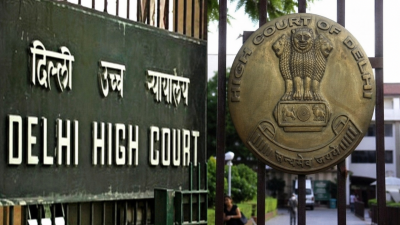
On 17 June 2026 the Delhi High Court waived the one‑year waiting period under the Special Marriage Act for an interfaith couple seeking divorce by mutual consent; a day earlier the court refused to dilute the Act’s 30‑day public notice for solemnisation, producing a clear judicial contrast.
What is the current issue?
Two recent Delhi High Court rulings have clarified how courts may treat procedural safeguards in the Special Marriage Act, 1954 (SMA). One ruling granted an exception to the statutory one‑year waiting period for divorce by mutual consent. The other upheld the mandatory 30‑day public notice before solemnisation. The contrast raises questions about legislative intent, individual liberty and procedural safeguards.
Why this matters for governance and society
- Governance: Judicial interpretation fixes practical limits on administrative discretion and reveals the need for legislative clarity to reduce ad hoc remedies.
- Rights and liberty: Procedural rules under SMA intersect with Article 21 (personal liberty and privacy) and Article 14 (equality), affecting citizens’ ability to marry and to exit marriage.
- Social order: Public notice can expose couples to harassment while safeguards aim to prevent fraud and forced marriages.
Legal and constitutional framework
Special Marriage Act — key provisions
- Section 16: Notice of intended marriage — 30‑day public display at the Marriage Officer’s office.
- Section 28: Petition for divorce by mutual consent.
- Section 29: Restriction — petition for divorce by mutual consent permissible only after one year of marriage, except by court’s special dispensation.
| Dimension | Statutory rule | Recent judicial stance |
|---|---|---|
| Pre‑marriage notice | Section 16 — 30‑day public notice | Delhi HC refused waiver; treated as legislative safeguard not subject to dilution for mere personal hardship |
| Divorce waiting period | Sections 28–29 — one‑year cooling off before mutual‑consent divorce | Delhi HC waived period in exceptional circumstances where marriage had not commenced in substance |
Recent judicial interpretation — compact summary
- Waiver of one‑year period: Division Bench allowed waiver where marriage had no cohabitation, no consummation and no social acceptance; waiting period would serve no meaningful purpose and prolong hardship.
- Upholding 30‑day notice: Single‑judge bench refused to waive notice despite employment urgency abroad; the court held the 30‑day requirement is legislative and cannot be diluted for mere personal inconvenience.
Rationale for the judicial distinction
- Purpose test: Courts apply a purposive reading — if a statutory period no longer serves its protective purpose, relief may be granted.
- Separation of functions: Pre‑marriage notice is a procedural safeguard prescribed by Parliament; courts are reluctant to override explicit legislative mandates on policy grounds.
- Case‑specific equity: Divorce waiver was granted on facts showing the marriage never came into being socially or physically; remedy was fact‑driven rather than a general rule.
Constitutional implications
- Article 21: Right to marry and right to privacy (see K.S. Puttaswamy) — public notice may infringe privacy and expose couples to risk; courts must balance state interest and personal liberty.
- Article 14: Equality — procedure under SMA may produce disparate impact on interfaith couples compared with those married under personal laws.
- Precedents: Judicial authority recognises choice of partner as part of personal liberty (cases such as Lata Singh and Shafin Jahan are relevant to the principle that state and family cannot nullify individual choice). Courts situate SMA interpretation within this framework.
Practical challenges faced by interfaith couples
- Privacy and safety risks: Public notice can trigger harassment, threats, or honour‑based violence.
- Bureaucratic delay: Mandatory waiting periods and variable officer practices cause scheduling conflicts and uncertainty.
- Social backlash: Early public disclosure often invites family or community pressure, affecting consent and autonomy.
- Inconsistent remedies: Reliance on judicial exceptions creates uneven access — relief depends on litigation and judicial discretion rather than predictable administrative processes.
Role of the judiciary
- Interpreter of statute: Courts apply purposive interpretation to reconcile procedural safeguards with fundamental rights.
- Provider of individualized relief: Where statutory requirements produce disproportionate hardship, courts may grant exceptions on factual grounds.
- Limitations: Courts defer to legislative choices on procedural design when the statute is clear; systemic reform requires legislative action for general applicability.
Policy options and way forward
- Legislative amendment: Parliament could revise Section 16 to permit non‑public alternatives (in‑camera notice to authority, anonymised display, or digital verification) while preserving safeguards against fraud.
- Guidelines for officers: Ministry of Law & Justice or Ministry of Home Affairs could issue standard operating procedures for timely processing, confidentiality measures and protection protocols for at‑risk couples.
- Expedited administrative remedies: Fast‑track registration channels for time‑bound cases and formal rules for granting exemptions to avoid litigation.
- Legal aid and protection: Legal Aid institutions and district administrations should provide protection and counsel to interfaith couples facing threats after notice publication.
- Judicial directions: Supreme Court may be asked to lay down uniform principles to harmonise lower courts’ discretionary relief and to clarify the constitutional limits of public notice.
- Awareness and training: Sensitisation of marriage officers, police and administrative staff to protect privacy and personal liberty.
Model Questions
- Critically examine how the Special Marriage Act, 1954, seeks to provide a secular framework for interfaith marriages and evaluate how recent Delhi High Court rulings balance the Act’s procedural safeguards with individual rights. [GS-II: Constitution of India & Polity]
- Discuss the constitutional validity and social consequences of the 30‑day public notice and the one‑year divorce waiting period under the Special Marriage Act. What reforms can reduce hardship for interfaith couples while preventing misuse? [GS-I: Indian Society]
- Analyse the legal reasoning behind the Delhi High Court’s decision to waive the one‑year mutual‑consent waiting period in one case while refusing to waive the 30‑day notice in another. What are the broader implications for legal recognition of interfaith marriages? [GS-II: Constitution of India & Polity]
- Examine the evolving role of the judiciary in protecting autonomy of individuals in interfaith marriages under the Special Marriage Act. Should courts or Parliament lead reform of procedural safeguards? Give reasoned recommendations. [GS-II: Governance]
Hint: Define SMA purpose; explain Sections 16, 28, 29. Analyse two Delhi HC rulings — waiver of one‑year divorce waiting period in exceptional facts versus upholding 30‑day notice. Assess tension between legislative safeguards and Article 21/14 rights. Recommend legislative clarity and administrative safeguards for predictable relief.
Hint: Examine privacy and safety risks from public notice; equality concerns and disproportionate impact on interfaith couples. Consider legitimate state interests (preventing fraud/forced marriage). Propose reforms: in‑camera or anonymised notices, digital processing, fast‑track exemptions, protective measures and parliamentary amendment to Section 16.
Hint: Use purposive statutory interpretation concept. Explain factual basis for waiver (marriage never commenced) and legislative nature of notice. Discuss implications: case‑specific judicial relief, need for uniform administrative rules, potential pressure on courts to provide ad hoc remedies, and legislative response to align procedure with rights.
Hint: Outline judiciary’s functions — interpret statute, protect fundamental rights, grant equitable relief. Argue necessity of legislative reform for systemic change while courts provide immediate relief in exceptional cases. Recommend combined approach: judicial guidance on standards plus legislative amendment and administrative protocols for uniform, rights‑protective implementation.