
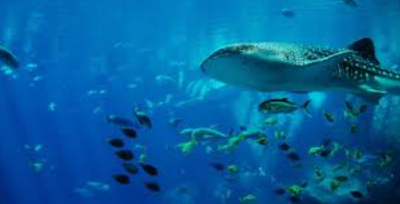
Oceans are warming, sea level has risen about 21–24 cm since 1880 and marine heat accumulation is driving more frequent rapid-intensification cyclones, coastal flooding, acidification and ecosystem loss. International instruments (30×30 target, BBNJ in force) and national monitoring (INCOIS CBAS) frame response options but implementation gaps remain.
Why this matters for governance, economy, society, security, environment and technology
- Governance: Expanded spatial regulation, marine spatial planning and enforcement across EEZ and high seas are required to meet 30×30 and BBNJ obligations.
- Economy: Ports, fisheries, tourism and coastal agriculture face recurring damage and productivity loss from sea-level rise and storms.
- Society: Millions in low-lying coastal zones face displacement, saltwater intrusion and food-security risks from declining fish stocks.
- Security: Altered cyclone tracks and stronger storms increase disaster-response burdens and critical infrastructure vulnerability.
- Environment & technology: Ocean heat and acidification impair primary production and blue carbon storage; satellite and in‑situ monitoring, plus climate-resilient restoration technologies, are essential.
Biophysical functions of the ocean
The planetary heat and carbon sink
The ocean absorbs roughly 90% of excess anthropogenic heat and about 30% of emitted CO2. This buffering slows atmospheric warming but causes thermal expansion, changes in circulation and stratification that alter nutrient supply and biogeography.
Oxygen production mechanisms
Marine phytoplankton in the euphotic zone produce nearly 50% of atmospheric oxygen. Stratification and thermal stress reduce nutrient upwelling and primary productivity, threatening oxygen provision and marine food webs.
Core dimensions of marine degradation
Sea-level rise and coastal vulnerability
Sea level has risen 21–24 cm since 1880; current global rate exceeds 4 mm per year. Thermal expansion and melting land ice increase coastal flooding, saltwater intrusion into aquifers, and risk of permanent submergence for deltas, ports and urban coastlines.
Ocean acidification chemistry
Absorbed CO2 reacts with seawater: CO2 + H2O → H2CO3 → H+ + HCO3−. Increased H+ reduces carbonate ion availability and depletes CaCO3, constraining calcifying organisms (corals, mollusks, some plankton) and weakening reef frameworks.
Thermal stress on blue carbon habitats
Coral reefs, mangroves and seagrass beds store large amounts of carbon—blue carbon—and provide shoreline protection. Marine heatwaves cause coral bleaching by expelling zooxanthellae; coastal reclamation and tidal rise degrade mangroves. Loss of these habitats reduces carbon sequestration and coastal defence.
Threats to oxygen and food security
Thermal stratification lowers nutrient flux to surface waters. Declines in plankton productivity and habitat collapse reduce fishery yields and alter trophic dynamics. Microplastic ingestion causes trophic transfer and biomagnification of synthetic toxins, affecting human food safety.
Cyclonic intensification in the North Indian Ocean
Thermodynamics of rapid intensification
SSTs above ~28°C supply latent heat that can drive rapid intensification — defined as ≥35 knots increase in maximum sustained winds within 24 hours. Recent cyclones demonstrated this behaviour, producing shorter lead times for forecasting and evacuation.
Altered track dynamics in the Arabian Sea
Rising western Indian Ocean temperatures have increased severe-storm frequency in the Arabian Sea, narrowing the historical Bay-of-Bengal bias. Western coasts of India now face higher cyclone risk and different landfall patterns.
Socio-economic impacts for India
- Infrastructure: Port damage, coastal road and power disruptions raise reconstruction costs.
- Livelihoods: Fishers, aquaculture and tourism suffer recurrent losses.
- Displacement: Repeated evacuations and permanent migration from low-lying zones.
- Disaster response: Greater demand on emergency services and fiscal capacity.
Global and national conservation frameworks
The Kunming‑Montreal 30×30 target requires at least 30% of terrestrial, inland water and coastal and marine areas to be effectively conserved by 2030. The BBNJ treaty, now in force, enables high-seas area-based protection and standardised EIAs. The London Convention prohibits deliberate dumping from ships.
| Conservation instrument | Spatial jurisdiction | Core objective |
| Marine Protected Areas (MPAs) | National territorial waters and EEZ | Restrict extraction; regulate fishing, tourism and local activities. |
| OECMs | Community/indigenous zones; coastal areas | Deliver biodiversity outcomes outside formal reserves. |
| BBNJ framework | High seas (beyond 200 nm) | Enable MPAs in international waters; standardise EIAs and benefit‑sharing. |
India: first Marine National Park in Gulf of Kutch (1982); INCOIS Coral Bleaching Alert System issues bi‑weekly SST anomaly alerts; kelp, mangroves and seagrass are recognised blue carbon stocks requiring restoration and protection.
Challenges and governance gaps
Enforcement and institutional issues
EEZ governance involves multiple agencies; enforcement capability and inter‑agency coordination are uneven. High-seas protection requires international cooperation under BBNJ mechanisms.
Data, finance and capacity
Monitoring gaps exist for sub‑surface heat, acidification and biodiversity baselines. Large-scale restoration and MPA management require dedicated finance (public, private and blue carbon markets) and technical capacity.
Pollution and cumulative stressors
Plastic pollution, nutrient runoff and untreated sewage compound climate-driven stress. Microplastic trophic transfer and chemical contaminants increase health and food-security risks.
Way forward: policy and operational measures
- Legal implementation: Translate 30×30 targets into national MPA expansion with clear management plans, and incorporate BBNJ mechanisms into coastal and external affairs planning.
- Marine spatial planning: Use MSP to balance conservation, fisheries, ports and offshore energy; apply cumulative‑impact EIAs for seabed mining and large infrastructure.
- Blue carbon restoration: Scale mangrove, seagrass and reef restoration; integrate blue carbon into national climate finance and NDCs.
- Pollution abatement: Enforce bans on dumping, expand waste‑management infrastructure, adopt extended producer responsibility for plastics and reduce land‑based nutrient loads.
- Disaster risk reduction: Strengthen early warning, upgrade coastal infrastructure, prioritise nature‑based defences and planned retreat in highly vulnerable zones.
- Science and monitoring: Invest in satellite, autonomous and in‑situ systems; strengthen INCOIS and coastal observatories; support coral resilience research and selective breeding for heat tolerance.
- Fisheries and livelihoods: Promote rights‑based fisheries, co‑management with coastal communities, alternative livelihoods and value‑chain improvements to reduce pressure on stocks.
- International cooperation: Mobilise finance and technology transfer for developing states, use BBNJ for high‑seas MPAs, and enhance regional cyclone forecasting and response collaboration.
- Community engagement: Mainstream indigenous knowledge into OECMs, involve local stakeholders in enforcement and restoration, and scale awareness campaigns on marine stewardship.
Model Questions
- Discuss the biophysical functions of the ocean and analyse how ocean warming and acidification accelerate marine ecosystem degradation. What are the specific implications for blue carbon habitats? [GS-III: Environment & DM]
- Critically examine the efficacy of global frameworks such as the Kunming‑Montreal 30×30 target and the BBNJ treaty in addressing marine biodiversity loss. How can India strengthen its marine conservation to align with these frameworks? [GS-II: Governance] Answer should explain 30×30 objective and BBNJ role for high‑seas MPAs and EIAs. Assess gaps: implementation, finance, enforcement and high‑seas governance. Recommend India actions: expand national MPAs to meet 30×30, formalise OECMs, integrate BBNJ obligations into policy, scale blue carbon restoration, strengthen INCOIS monitoring, enhance MSP, boost enforcement capacity and access international finance and technology transfer.
- Analyse thermodynamic factors driving rapid intensification of tropical cyclones in the North Indian Ocean and discuss observed shifts in cyclone tracks, especially in the Arabian Sea. What are the socio‑economic repercussions for India’s coastal regions? [GS-III: Environment & DM]
- Evaluate socio‑economic vulnerabilities arising from sea‑level rise and microplastic pollution in India. Suggest integrated strategies for sustainable marine resource management and coastal resilience. [GS-III: Economic Development]
Answer should state ocean roles: heat sink (≈90% excess heat), carbon sink (≈30% CO2), and planktonic oxygen production (~50%). Explain warming effects: thermal expansion, stratification, reduced nutrient upwelling, marine heatwaves causing coral bleaching. Describe acidification chemistry (CO2 + H2O → H2CO3 → H+ + HCO3−) and CaCO3 depletion. Conclude with impacts on blue carbon: reduced carbon storage, habitat loss and diminished coastal protection.
Answer should describe SST threshold (~28°C), increased latent heat, and rapid intensification metric (≥35 knots in 24 hours). Note western Indian Ocean warming has increased Arabian Sea storm frequency, altering landfall zones. Discuss impacts: infrastructure and port damage, fisheries and tourism losses, displacement, higher reconstruction costs and pressure on disaster management budgets; propose improved forecasting, nature‑based defences and resilient infrastructure.
Answer should identify vulnerabilities: inundation of deltas and ports, saltwater intrusion affecting agriculture and drinking water, livelihood loss for fishers, and food‑safety risks from microplastics and biomagnified toxins. Propose integrated strategies: mangrove and seagrass restoration, MSP, rights‑based fisheries, waste‑management and plastic reduction measures, port adaptation, community‑based planning, and mobilisation of blue‑carbon finance and public‑private investment.