
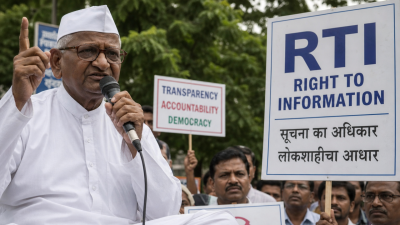
Maharashtra withdrew the provision requiring applicants to disclose the purpose for seeking information from its RTI Rules, 2026 on 19 June 2026, a week after those rules were notified. Several other contentious measures — mandatory identity proof, a 150‑word subject limit, restrictions on legal representation, and higher fees including appeal charges — remain in force.
Issue and immediate significance
What happened: the state removed the purpose‑disclosure clause after sustained criticism from transparency activists and legal experts. What remains: procedural and financial changes that affect who uses RTI and how effectively it holds public authorities to account. Why it matters: RTI is a primary tool for citizen access to governance. Procedural barriers and higher costs alter incentives to seek information, with consequences for accountability, service delivery oversight and anti‑corruption effort.
Legal and constitutional framework
Central Act and state rules
- Section 6(2) (RTI Act, 2005): an applicant need not give any reason for requesting information.
- Rule‑making powers: the RTI Act empowers Central and State Governments to frame rules for implementation. Rules must conform to and not be inconsistent with the parent Act.
- Judicial review: state rules are subject to court scrutiny for repugnancy to the Act and for arbitrariness under administrative law principles.
Contents of the Maharashtra RTI Rules, 2026 (current status)
- Purpose clause: initial rule requiring disclosure of purpose was withdrawn on 19 June 2026.
- Remaining provisions: mandatory proof of identity; 150‑word limit for the subject of the request; limits on legal representation for applicants.
- Fee structure: application fee raised from ₹10 to ₹30; A4 copy fee from ₹2 to ₹5 per page; first appeal fee ₹50; second appeal fee ₹100.
| Dimension | Central RTI Act, 2005 | Maharashtra RTI Rules, 2026 (current) |
|---|---|---|
| Requirement to state purpose | Section 6(2): no reason required. | Purpose clause withdrawn; not required now. |
| Identity | No statutory requirement in the Act to mandatorily produce ID for every request. | Mandatory proof of identity required for applicants. |
| Form of request | Act requires specific information about records sought; procedure left to rules. | 150‑word limit for subject line introduced. |
| Fees and appeals | Act prescribes fee framework; rules can fix rates. | Application and copy fees increased; appeal fees newly introduced. |
Impact on citizen access and governance
- Financial barrier: higher application, copy and appeal fees raise the cost of using RTI. This discourages repeated queries and follow‑up appeals, especially among low‑income users.
- Procedural friction: mandatory ID and tight word limits complicate filing. Word limits can force vague or incomplete requests, increasing refusals or transfers.
- Chilling effect on whistleblowers and activists: ID requirements deter anonymous or sensitive disclosures and may limit oversight of powerful actors.
- Restricting representation: limits on legal or authorised representation hamper civil society groups, lawyers and public interest litigants who file complex or collective requests.
- Accountability deficit: reduced use of RTI weakens public scrutiny over procurement, welfare schemes, finances and regulatory action, raising governance risks.
- Administrative effects: higher fees may reduce RTI caseload but shift disputes to courts, increasing litigation and delaying disclosure.
Role of civil society, media and public pressure
- Rapid detection and response: transparency activists and legal experts flagged the purpose clause as inconsistent with Section 6(2); public pressure led to its withdrawal within a week.
- Continuing mobilisation: announcements of protests and an indefinite fast (scheduled from 5 July 2026) show that civil society remains poised to challenge the remaining rules.
- Mechanisms used: public campaigns, media scrutiny, petitions, possible public interest litigation and appeals to oversight bodies are standard tools to contest regressive rules.
- Checks and balances: civil society acts as a corrective to administrative overreach and a defender of statutory rights when legislative or executive action narrows access.
Policy and legal options (way forward)
- Legal alignment: revise rules formally to align with Section 6(2) and with jurisprudence; remove or modify provisions that negate statutory rights.
- Fee design: adopt a graded fee structure with exemptions for BPL, marginalised groups, social audits, academic research and public interest requests; make appeals affordable.
- Procedural reform: drop rigid word limits; allow concise but clear subject lines; permit alternative identity verification mechanisms for sensitive requests.
- Proactive disclosure: strengthen Section 4 implementation so routine information is available without application, reducing burden and transaction costs.
- Technology and access: improve e‑filing, enable fee waivers or online payments, provide local facilitation centres and legal aid for RTI users.
- Accountability measures: periodic statutory review of rules; stakeholder consultation before rule changes; parliamentary/state assembly oversight of rule‑making.
Model Questions
1. Critically examine how the recent changes and subsequent withdrawal of the purpose‑disclosure provision in the Maharashtra RTI Rules, 2026, reflect the interplay between state rule‑making powers and the spirit of the Central RTI Act, 2005. [GS‑II: Governance]
Answer: State rule‑making under the RTI Act is permitted but subordinate to the Act. Section 6(2) prohibits requiring reasons, so the purpose clause conflicted with the Act. The swift withdrawal shows corrective pressure but raises governance concerns about legal scrutiny in rule drafting. Remedies include formal alignment of rules with the Act, judicial review where needed, and enhanced stakeholder consultation in the rule‑making process.
2. Analyse the implications of remaining provisions in the Maharashtra RTI Rules, 2026 — mandatory identity proof, a 150‑word subject limit, restrictions on legal representation, and higher fees — for the accessibility and effectiveness of RTI for ordinary citizens. [GS‑II: Governance]
Answer: Higher fees and appeal charges increase the cost of access, deterring low‑income users and repeated queries. Mandatory ID chills anonymous or sensitive requests and reduces whistleblower protection. A strict subject word limit can lead to vague or truncated applications, causing refusals or improper transfers. Restrictions on representation hinder collective public interest use. Collectively these measures lower RTI uptake and weaken accountability.
3. Examine the role of civil society in the recent Maharashtra RTI Rules episode and its broader significance for citizen access to governance. [GS‑II: Governance]
Answer: Civil society identified the unlawful purpose clause and prompted its withdrawal through expert critique, media attention and public mobilisation. Continued actions, including planned fasts and litigation, aim to challenge other restrictive provisions. This episode shows how organised public scrutiny and legal advocacy preserve statutory rights, compel administrative correction, and sustain pressure for participatory and transparent rule‑making.
4. Evaluate the ethical dimensions that public administrators must consider when framing RTI rules, in light of the recent Maharashtra experience. [GS‑IV: Ethics, Integrity and Aptitude]
Answer: Ethical obligations include duty to facilitate citizen access, equity, proportionality and non‑discrimination. Rules must balance administrative concerns with citizens’ right to know; imposing undue costs or barriers violates principles of fairness and public trust. Administrators should justify restrictions on narrow, evidence‑based grounds, provide exemptions for vulnerable groups, and prioritise proactive disclosure to fulfil ethical responsibilities in public service.
Last Modified: June 23, 2026