
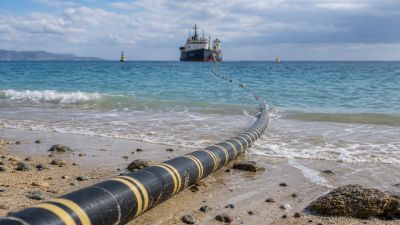
Recent regulatory moves and commercial contracts show growing state and corporate attention to submarine cables. The FCC made new rules effective 8 July 2026, the UK is planning tougher protections, and industry activity spans new regional fibre projects and HVDC subsea advances.
What is the issue
Submarine cables carry over 95% of intercontinental internet traffic and handle most cross-border data, financial messages and cloud services. Ownership, terminal equipment and repair access determine who can protect, disable, or restore connectivity. Geopolitical control of cable routes and repair capacity therefore has direct implications for governance, economy, security and digital sovereignty.
Why it matters for public policy
- Economy: Disruption affects e-commerce, cloud services, financial markets and AI-dependent businesses.
- Security: Cable outages or tampering degrade military and diplomatic communications and intelligence sharing.
- Resilience: Long repair times and limited specialised assets create single-point failure risks.
- Technology and energy: Increasing HVDC subsea links add an energy-security dimension to maritime infrastructure.
Global ownership and repair ecosystem
Structure and capacity determine control and access.
| Dimension | Key facts |
|---|---|
| Owners | About 470 entities co-own subsea systems; major carriers (Orange, BT, Vodafone, Telstra, Tata Communications) and hyperscalers (Google co-owns 34 systems; Meta 19) hold multiple stakes. |
| Faults and repair | Average 150–200 faults annually; mean repair time ~55 days. Repair ships cost USD 80–130 million and require specialised crews. |
| Global repair fleet | 63 major subsea cable repair ships exist; SubCom owns the largest fleet. |
| Geopolitical index | UNGA-based alignment correlates with ownership/repair access: countries such as Australia, China, India and the US register high ownership/repair indices (0.72–0.87); Iran and Syria low (0.28–0.34). |
Geopolitical hotspots and chokepoints
- Strait of Hormuz: Several major cables transit this route (2Africa, AAE‑1, FALCON, Gulf Bridge International, Tata‑TGN Gulf). Control or interference here affects connectivity between South/Southeast Asia, the Middle East and Europe.
- State measures: Iranian media reported lawmakers considering measures to take control of cables in the Hormuz area, increasing operational risk for operators and investors.
- Maintenance access: Geopolitical alignment shapes which repair vessels and crews can be deployed to a fault location.
National regulatory and policy responses
United States
- Regulatory update: FCC rules effective 8 July 2026 modernise submarine cable regulation, clarify licensing, and insert targeted national‑security safeguards including a “foreign adversary” definition.
- SLTE oversight: Submarine Line Terminal Equipment (SLTE) is now subject to direct licensing of owners/operators because it is the most vulnerable system element.
- Policy aim: Accelerate secure cable buildout and strengthen oversight of vulnerable equipment.
United Kingdom
- Planned measures: The UK is preparing new security obligations for cable owners and operators to prevent, detect and respond to compromises.
- Emergency powers: Proposals include government authority to direct businesses to protect subsea infrastructure during incidents.
Commercial and technical developments
- Regional fibre projects: Canalink unveiled a Morocco project to link the Canary Islands with Tarfaya, reinforcing the Canary Islands as a connectivity bridge between Europe and Africa.
- Inter-island resilience: Hawaiian Telcom engaged WFN Strategies as Purchaser’s Representative for the Kunoa North cable to strengthen island connectivity.
- HVDC advances: LS Cable & System passed PQ for a 525 kV, 80°C‑class HVDC submarine cable, increasing transmission capacity by up to 25% for next‑generation grids. SSEN Transmission signed a framework for HVDC supply and installation for projects including the proposed Shetland 2 link.
- Energy‑data convergence: Growth of HVDC subsea links places power transmission alongside fibre as strategic maritime infrastructure.
Role of hyperscalers and private actors
Hyperscalers now directly shape routes and resilience by co‑owning cables. Their investments reduce transit costs and latency for cloud services, but also concentrate control of global data paths within corporate actors, altering traditional state‑centric governance of undersea infrastructure.
Emerging technical options for resilience
- LEO satellite constellations: Operationalising Low Earth Orbit satellites as backup links can reduce single‑point dependence on submarine cables for critical services.
- HVDC subsea systems: New HVDC technology expands subsea strategic assets beyond communications to electrical transmission.
- Terminal equipment security: Hardening SLTE and promoting certified suppliers reduce hardware supply‑chain risk.
India: exposure and policy options
India’s digital economy depends on submarine cables, many transiting geopolitically sensitive routes. Key vulnerabilities: concentrated landing stations, dependence on foreign co‑owners, limited indigenous repair capacity and exposure to chokepoint politics.
Practical policy measures for India
- Increase domestic and allied ownership: Encourage Indian carriers and sovereign investment in new cables; offer incentives for consortium shares and landing‑station partnerships with trusted allies.
- Develop sovereign repair capability: Invest in a national repair vessel or bilateral access to allied repair fleets; train specialised crews and maintain technical readiness.
- Stockpile spares and SLTE safeguards: Hold strategic cable spares and certify trusted SLTE vendors; require asset registration and direct oversight for critical terminals.
- Operationalise LEO backhaul: Deploy LEO services for government critical services, emergency routing and remote areas as a resilience layer.
- Domestic industry and R&D: Support manufacturing of cable components, specialised vessels and R&D in subsea technologies through targeted schemes and public‑private partnerships.
- Diplomacy for maintenance zones: Negotiate expanded maintenance‑zone agreements with regional partners to secure repair access and overflight/port support for repair vessels.
International cooperation, norms and future trends
- Bilateral and multilateral frameworks: Agreements on secure routing, coordinated maintenance, threat intelligence sharing and joint exercises for cable protection reduce operational risk.
- Standards and certification: International standards for SLTE security, repair protocols and salvage rules can limit unilateral interference.
- Market structure: Continued hyperscaler investment and energy‑sector subsea projects will expand the set of actors with strategic interest in undersea infrastructure.
- Operational reality: Limited repair ships and specialist crews will keep physical repair capacity a strategic asset; states able to deploy or access such assets will have resilience advantages.
Model Questions
1. Evaluate the role of submarine cables in global connectivity and national security, and analyse the vulnerabilities arising from ownership and repair mechanisms. [GS-III: Internal & External Security]
Submarine cables carry the majority of global data and underpin finance, cloud services and military comms. Vulnerabilities include concentrated ownership, exposed SLTE, limited repair ships (63 globally), long mean repair times (~55 days), and chokepoints such as the Strait of Hormuz. Remedies include diversified ownership, SLTE licensing, sovereign or allied repair access, stockpiles of spares, and redundancy through satellite links.
2. Analyse recent regulatory measures by leading states on submarine cable security and propose components of a comprehensive Indian policy framework to strengthen sovereign control. [GS-II: Governance]
Recent measures include the FCC rules (effective 8 July 2026) introducing foreign‑adversary definitions and direct SLTE licensing, and UK proposals for owner obligations and emergency powers. India’s framework should combine: legal oversight of SLTE and landings; incentives for domestic/allied ownership; sovereign repair capacity; emergency response protocols; LEO backups; industry R&D support; and bilateral maintenance agreements.
3. Discuss economic and strategic implications of hyperscaler and energy‑sector investments in submarine cable systems. How do these reshape geopolitics of digital and energy infrastructure? [GS-III: Economic Development]
Hyperscaler co‑ownership (Google 34, Meta 19) reduces latency and cost for cloud services but centralises route control in corporations. HVDC subsea projects convert maritime space into energy corridors. Together they diversify strategic stakes beyond state actors, shift leverage to private owners with global reach, and require new governance models addressing commercial interests, state security prerogatives and cross‑sector interdependencies.
4. Examine India’s specific vulnerabilities arising from submarine cable dependence and recommend a multi‑pronged resilience strategy. [GS-III: Internal & External Security]
Vulnerabilities: reliance on cables through sensitive chokepoints, limited domestic repair assets, foreign co‑ownership and concentration at landing stations. Strategy: expand Indian/allied cable equity, build or secure access to repair vessels and crews, stockpile spares and certify SLTE suppliers, operationalise LEO backups for critical services, invest in indigenous manufacturing and negotiate regional maintenance‑zone agreements.
Last Modified: July 9, 2026