
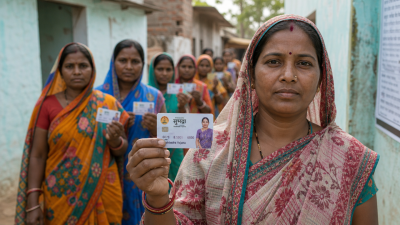
Recent state-level adoption of unconditional cash transfers to women has created a large, visible safety net. An EAC‑PM working paper has recommended continuation and periodic revision; evidence from Maharashtra and Odisha shows clear household benefits, while fiscal pressures and investment trade‑offs pose governance challenges.
What is the current issue?
More than 15 states now run unconditional women cash transfer (UWCT) schemes. The annual outlay is about ₹1.7 trillion for nearly 120 million beneficiaries. Transfers typically range from ₹1,000–2,500 monthly; Maharashtra pays ₹1,500 per month under Mukhyamantri Majhi Ladki Bahin, Odisha pays ₹10,000 annually under Subhadra.
Why it matters for governance and economy
- Social protection: Direct income to women alters intra‑household resource flows and welfare outcomes.
- Fiscal management: Large recurrent liabilities affect states’ budget space and capital spending choices.
- Policy trade‑offs: Balancing immediate welfare gains with long‑term growth and debt sustainability is a central governance test.
Key schemes — quick comparison
| State | Scheme | Benefit | Eligibility | Launch |
|---|---|---|---|---|
| Maharashtra | Mukhyamantri Majhi Ladki Bahin Yojana | ₹1,500 per month | Women aged 21–65 | June 2024 |
| Odisha | Subhadra Yojana | ₹10,000 annually (two instalments) | Women 21–60; household income < ₹2.5 lakh | Sept 2024 |
| Others | Ladli Behna, Maiya Samman, Magalir Urimai Thogai | Typically ₹1,000–2,500 monthly | State‑specific criteria | Varied |
Social impact and women’s empowerment
- Consumption and savings: EAC‑PM analysis reports Maharashtra beneficiaries’ month‑end balances rose by 84% (~₹6,884) and monthly spending by 46% (~₹1,349). Odisha showed 45% higher balances (~₹6,887) and 28% higher spending.
- Expenditure patterns: Share of spending on medical, education and lifestyle needs increased, indicating unmet needs being met.
- Household spillovers: Odisha data links a 10% rise in women’s balances with a 1.9% fall in relatives’ expenditure; in Maharashtra, relatives’ balances rose 23% and their spending fell 49%, suggesting improved household resilience.
- Financial autonomy: Regular transfers to women strengthen their control over liquid resources and decision‑making room.
Fiscal implications for states
- Scale of liability: FY 2025‑26 outlay ~₹1.7 trillion; exceeds the Union allocation for MGNREGA (₹86,000 crore), making it a sizeable component of sub‑national welfare spending.
- Debt and fiscal space: Aggregate state consolidated debt declined from ~31% to ~29.2% of GSDP; several states retain high debt ratios — Punjab 46.4%, West Bengal 38.9%, Bihar 36.8% — increasing vulnerability to recurrent scheme obligations.
- Crowding out risk: RBI and fiscal analysts warn that sustained recurrent transfers can reduce funds available for capital expenditure and productive investment.
- Intergovernmental considerations: Variations in state capacities create asymmetric fiscal pressures; central support, borrowing limits and incentivised transfers matter for sustainability.
Trade‑offs and long‑term sustainability
- Immediate gains vs durability: Cash transfers raise welfare quickly but create entrenched recurrent commitments.
- Targeting vs universality: Broad coverage improves political acceptability and reach but costs more; means‑tested models save resources at the expense of exclusion risk.
- Inflation and labour supply: Evidence to date shows consumption and savings rises; no clear wage suppression signal. Monitoring is required.
- Fiscal buffers: States need to preserve capital expenditure to prevent long‑term growth loss; otherwise welfare gains may be offset by weaker public services and investment.
Policy design and implementation: operational measures
- Periodic revision: Follow EAC‑PM advice to review transfer size and beneficiary criteria regularly to maintain real value and cost‑effectiveness.
- Targeting and eligibility: Combine simple means tests or income ceilings with life‑cycle criteria to focus resources while limiting exclusion.
- Delivery mechanism: Use DBT into women’s bank accounts, Aadhaar‑enabled payment rails and mobile notifications to reduce leakage and delays.
- Complementary measures: Link with financial literacy, Jan‑Aadhaar/identity consolidation, health and education programmes to amplify developmental outcomes.
- Monitoring and evaluation: Require MIS, third‑party evaluations and periodic impact assessments to adjust design and cut misuse.
- Fiscal governance: Ring‑fence capital expenditure, set budgetary ceilings for recurrent welfare transfers, and consider phased implementation or pilots before scale‑up.
- Alternative financing: Explore conditional central matching grants, results‑based funding, or targeted cess rather than open‑ended state liabilities.
Implementation challenges and risks
- Administrative capacity: Accurate beneficiary lists, grievance redressal and timely payments require strong state systems.
- Leakage and exclusion: Errors of inclusion/exclusion remain risks without updated databases and field verification.
- Political economy: Schemes are politically salient; removing or reducing benefits is difficult once instituted.
- Macro‑fiscal shocks: Recessions or revenue shortfalls can force difficult trade‑offs between social spending and debt control.
Policy priorities for maximising developmental impact
- Evidence‑based scaling: Use pilot results and impact data to set transfer size and coverage.
- Protect capital spending: Enforce fiscal rules that prevent social transfers from supplanting public investment.
- Integrate services: Coordinate cash transfers with maternal, child and educational services to convert income into long‑term human capital gains.
- Transparency: Publish scheme budgets, beneficiary lists and evaluation reports to strengthen accountability.
Model Questions
1. Evaluate the role of unconditional women cash transfer schemes in promoting women’s empowerment and improving household welfare in India. [GS‑II: Social Justice]
UWCTs increase women’s liquidity and decision‑making space. Evidence from Maharashtra and Odisha shows large rises in account balances and higher spending on health and education. Positive household spillovers indicate improved financial resilience. To deepen empowerment, schemes should be paired with financial literacy, secure DBT, grievance redressal and measures ensuring cash reaches and is controlled by intended women beneficiaries.
2. Analyse the fiscal implications of unconditional cash transfers for women for Indian states. [GS‑III: Economic Development]
Annual outlay ~₹1.7 trillion creates sizeable recurrent liabilities and may crowd out capital expenditure. Aggregate state debt fell modestly but several states remain highly indebted (Punjab, West Bengal, Bihar), constraining fiscal space. Policy must balance welfare with sustainability via targeting, periodic revision, ring‑fencing capital spending and exploring central support or innovative financing to avoid long‑term growth costs.
3. Discuss the economic and social trade‑offs involved in widespread implementation of unconditional cash transfer schemes for women and suggest measures to ensure long‑term sustainability and effectiveness. [GS‑III: Economic Development]
Trade‑offs include immediate poverty relief and empowerment versus increased fiscal burden and risk to public investment. Sustainability measures: better targeting or income ceilings, indexation and periodic review of transfers, strong DBT systems, rigorous monitoring and sunset or pilot phases. Complementary investments in health, education and livelihoods convert transfers into durable human capital gains and reduce long‑run dependency.
4. In light of recent EAC‑PM recommendations, critically examine policy design and implementation strategies for women‑centric unconditional cash transfers to maximise developmental impact. [GS‑II: Governance]
Design must specify clear eligibility, transfer size and revision rules. Use DBT, robust MIS and third‑party evaluations per EAC‑PM advice. Integrate transfers with health and education services, provide financial literacy and grievance mechanisms. Protect state capital budgets through fiscal rules and phased scaling. Regular impact assessment should inform adjustments to maintain cost‑effectiveness and developmental outcomes.
Last Modified: July 9, 2026