
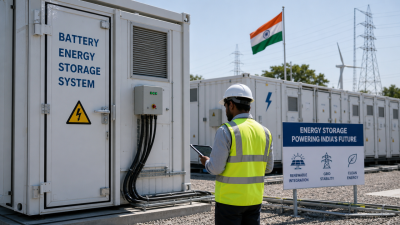
India’s battery energy storage requirement is set to expand sharply as renewables scale up; BESS capacity is projected at 321 GWh by 2035–36 (888 GWh including pumped storage). Installed BESS rose from 0.78 GWh at end‑2025 to 8.7 GWh in H1 2026, but financing and execution gaps threaten delivery.
What is the current issue
Short statement
Rapid capacity additions and a large project pipeline coexist with acute financing stress. High input costs, supplier pricing reversals and limited debt availability are stalling projects and forcing a re‑pricing of earlier low tariffs.
Why it matters
- Governance: Delays in BESS deployment affect meeting centrally and state‑level renewable targets and obligations tied to auctions and PPAs.
- Economy: Rising project costs raise tariffs and increase fiscal support needs (VGF, PLI and other subsidies).
- Grid security: Insufficient storage reduces ability to absorb variable renewables, increasing stress on system operation and ancillary markets.
- Strategic & supply chains: Dependence on imported critical minerals exposes projects to geopolitics and global price shocks.
Current status and scale
Projected BESS requirement: 321 GWh; total storage including pumped hydro: 888 GWh by 2035–36. Installed BESS rose to 8.7 GWh by mid‑2026 and should reach ~10 GWh by year‑end. Pipeline: ~260 GWh under development. Execution gap: only 219 MWh (under 2%) of ~12.8 GWh auctioned (2022–May 2025) is operational.
Major financing and execution challenges
- High borrowing costs: Lending rates up to 15% increase lifecycle project costs and strain cash flows.
- Low debt share: Debt contributes roughly 20% of project costs, increasing reliance on equity or expensive mezzanine funding.
- Unsustainable tariff baselines: Lowest quoted tariff in 2025 (₹148,000/MW/month) is now deemed unsustainable given higher input prices.
- Supplier commitment failures: Some financed projects stalled after suppliers reneged on earlier price commitments, per SBI official statements.
- Execution gap: Auction awards have not translated into operational capacity due to financing shortfalls, supply delays and contractual stress.
Economic and market drivers of cost escalation
- Commodity prices: Lithium, copper and aluminium price increases raise cell and balance‑of‑plant costs.
- China export incentive changes: Reduced export incentives increase global procurement costs for cells and components.
- Geopolitical shocks: Events affecting commodity supply chains (for example, regional conflicts) amplify price volatility.
- Contract mismatch: Aggressive bid tariffs locked to earlier price assumptions leave developers exposed to cost escalation.
Government policy and support measures
- National Energy Storage Framework: Policy architecture for planning, procurement and techno‑economic assessments.
- Viability Gap Funding (VGF): Support for strategically important but otherwise unviable projects.
- Production Linked Incentive for Advanced Chemistry Cells (PLI‑ACC): Incentivises domestic cell manufacturing to reduce import dependence.
- Mandates: Requirements for energy storage alongside new renewable projects to increase uptake.
- Customs duty relief and state policies: Targeted duties and state‑level storage policies to support manufacturing and deployment.
Gaps in current policy and implementation
- Financial assessment: Standard project appraisal tools do not reflect BESS cash‑flow profiles, life‑cycle degradation and ancillary revenue streams.
- Risk allocation: Contracts lack standardised clauses for input price escalation, supply default and force majeure covering upstream suppliers.
- Market mechanisms: Insufficient organised ancillary and capacity markets to monetise multiple value streams from storage.
- Access to long‑term, low‑cost capital: Absence of tailored debt instruments (long tenors, partial credit guarantees) and limited investor familiarity.
Impact on renewable transition and grid stability
Delayed BESS rollout reduces the system’s capability to integrate higher shares of wind and solar. This can cause increased curtailment, higher reliance on peaking thermal plants, elevated grid balancing costs and upward pressure on consumer tariffs. Execution failures also deter investor confidence in auctions and long‑term procurement.
Policy and market actions to bridge the gap
| Challenge | Targeted action |
|---|---|
| High cost of capital | Introduce long‑tenor concessional debt, partial credit guarantees, and infrastructure bonds for BESS. |
| Tariff realism and bid discipline | Set benchmark tariffs reflecting current input costs; include indexed clauses for material cost pass‑through. |
| Supplier price reversals | Mandate performance and price‑lock bonds; strengthen contract enforcement and escrow mechanisms. |
| Revenue stacking | Enable participation in ancillary, frequency response and capacity markets; standardise settlement rules. |
| Supply chain risk | Scale PLI, incentivise recycling, diversify import sources and promote domestic mineral exploration and processing. |
Operational and financial instruments
- Blended finance: Combine concessional public capital with private finance to lower overall returns required by equity investors.
- Indexed PPAs and auctions: Allow material‑cost indexing or periodic renegotiation triggers to prevent project stress.
- Risk‑sharing facilities: Government or multilateral credit enhancement for first‑loss protection and debt guarantees.
- Standardised project bankability checklist: Financial appraisal templates that capture degradation, replacement cycles and multiple revenue streams.
Implementation priorities for government and regulators
- Immediate: Issue standard contractual clauses for auctions and PPAs addressing supplier defaults and material cost escalation.
- Short term: Create an infrastructure debt window with concessional rates for BESS and fast‑track guarantees for awarded projects.
- Medium term: Strengthen domestic cell manufacturing, mineral processing and recycling through PLI and targeted fiscal measures.
- Market reforms: Operationalise ancillary and capacity market products that reward storage for multiple services.
Key institutions and roles
| Stakeholder | Role |
|---|---|
| Central government (MNRE, MoF) | Policy, fiscal support (VGF, PLI), guarantees and customs duty policy. |
| State governments | State storage policies, land and clearance facilitation, distribution reforms. |
| Financial institutions (SBI, specialised banks) | Provide debt; develop tailored loan products and risk assessment frameworks. |
| Manufacturers and developers | Scale supply chain, enter long‑term contracts, improve project execution capability. |
| Regulators (CEA, CERC, SERCs) | Market rules, tariff frameworks, ancillary market design and settlement standards. |
Practical measures for developers
- Hedging and supply agreements: Secure long‑term supply contracts and hedges for critical commodities.
- Financial structuring: Use blended capital, milestone‑linked disbursements and escrow mechanisms to reduce execution risk.
- Revenue diversification: Design projects to capture energy arbitrage, capacity payments and ancillary services.
- Contract safeguards: Include liquidated damages, supplier bonds and delivery guarantees in vendor contracts.
Risks that remain
- Sharp commodity price swings and geopolitical shocks.
- Insufficiently developed market mechanisms to monetise storage services.
- Institutional delays in rolling out financial support and guarantees.
Model Questions
1. Analyse the key financing challenges facing India’s battery energy storage projects and their implications for the renewable energy transition. [GS-III: Economic Development]
Answer: Key financing challenges include high borrowing costs (up to 15%), low debt share (~20% of costs), unsustainably low bid tariffs (₹148,000/MW/month in 2025) and supplier pricing reversals causing stalled projects. Implications: slower BESS deployment, higher curtailment of renewables, greater reliance on thermal peaking plants, increased system balancing costs and reduced investor confidence in future auctions.
2. Critically examine the effectiveness of current government measures (National Energy Storage Framework, VGF, PLI‑ACC) in addressing BESS financing barriers and suggest further policy interventions. [GS-II: Governance]
Answer: Existing measures provide demand signals and manufacturing incentives but do not fully address cost volatility, supplier defaults or access to long‑term debt. Further interventions: concessional long‑tenor debt windows, partial credit guarantees, indexed PPA clauses, standard contractual templates for auctions, expanded VGF with milestone disbursement and instruments for blended finance to reduce perceived project risk.
3. Discuss the economic and technological factors driving rising BESS costs in India and propose mitigation measures. [GS-III: Science & Technology]
Answer: Economic drivers include rising lithium, copper and aluminium prices and reduced Chinese export incentives; geopolitical events amplify volatility. Technological factors include dependence on specific chemistries and import‑intensive supply chains. Mitigation: scale domestic cell manufacturing (PLI), diversify sourcing, invest in alternative chemistries and recycling, and support R&D to lower material intensity and improve cycle life.
4. Analyse reasons for the ‘execution gap’ in India’s BESS rollout and recommend strategies to bridge it with focus on finance and project implementation. [GS-III: Economic Development]
Answer: The execution gap stems from aggressive low bids, supplier price reversals, financing shortfalls and immature revenue stacking. Remedies: realistic tariff benchmarks with indexed adjustments, enforceable supplier price‑lock bonds, tailored debt products and guarantees, streamlined clearances, stronger contract enforcement and mechanisms enabling storage to earn multiple revenue streams through ancillary and capacity markets.
Last Modified: July 8, 2026